Forget AI Hyperscalers: Tesla May Own the Most Valuable AI Application
While investors fixate on Tesla's vehicle deliveries and margins, a quieter transformation is underway that positions the company to compete directly with the hyperscalers reshaping the global economy.

The first phase of the artificial intelligence boom rewarded the companies building the digital infrastructure. Hyperscalers are spending hundreds of billions of dollars expanding data centers to power the next generation of AI services.
That investment cycle is not over, but the market’s attention is shifting toward businesses turning that computing power into products consumers actually use. Few companies are better positioned for that transition than Tesla (NASDAQ:TSLA | TSLA Price Prediction), which pairs an AI application with something few competitors can match: its own computing infrastructure.
Tesla Controls More of the AI Stack
Most AI application companies operate as tenants. They rent computing power from cloud providers, pay for inference every time a model runs, and absorb lower margins as usage scales up.
Tesla has taken a different path. The company has invested billions building its own AI training infrastructure, anchored by its Cortex supercomputer cluster at Gigafactory Texas, which houses roughly 67,000 H100-equivalent GPUs. It also designs its own Full Self-Driving chips that power vehicles already on the road, and is developing next-generation AI5 and AI6 processors under a production agreement with Samsung. Tesla’s earlier Dojo custom-chip project was shut down in August 2025 after CEO Elon Musk concluded it was “an evolutionary dead end,” but the broader goal of chip self-sufficiency has not changed.
Rather than leaning entirely on outside cloud providers, Tesla owns more of the technology stack, from silicon and data collection to model training and the finished consumer product. Every layer Tesla controls is one less layer where profits can leak to someone else.
That infrastructure advantage matters most when you look at where Tesla is monetizing its AI investment: robotaxis. Unlike most competitors in autonomous ride-hailing, Tesla controls the hardware, the computing infrastructure, and the vehicle manufacturing behind it.
The table below illustrates how that compares.
| Company | AI Application | Owns the Infrastructure | Vehicle Manufacturing |
| Tesla | Robotaxi, FSD | Yes | Yes |
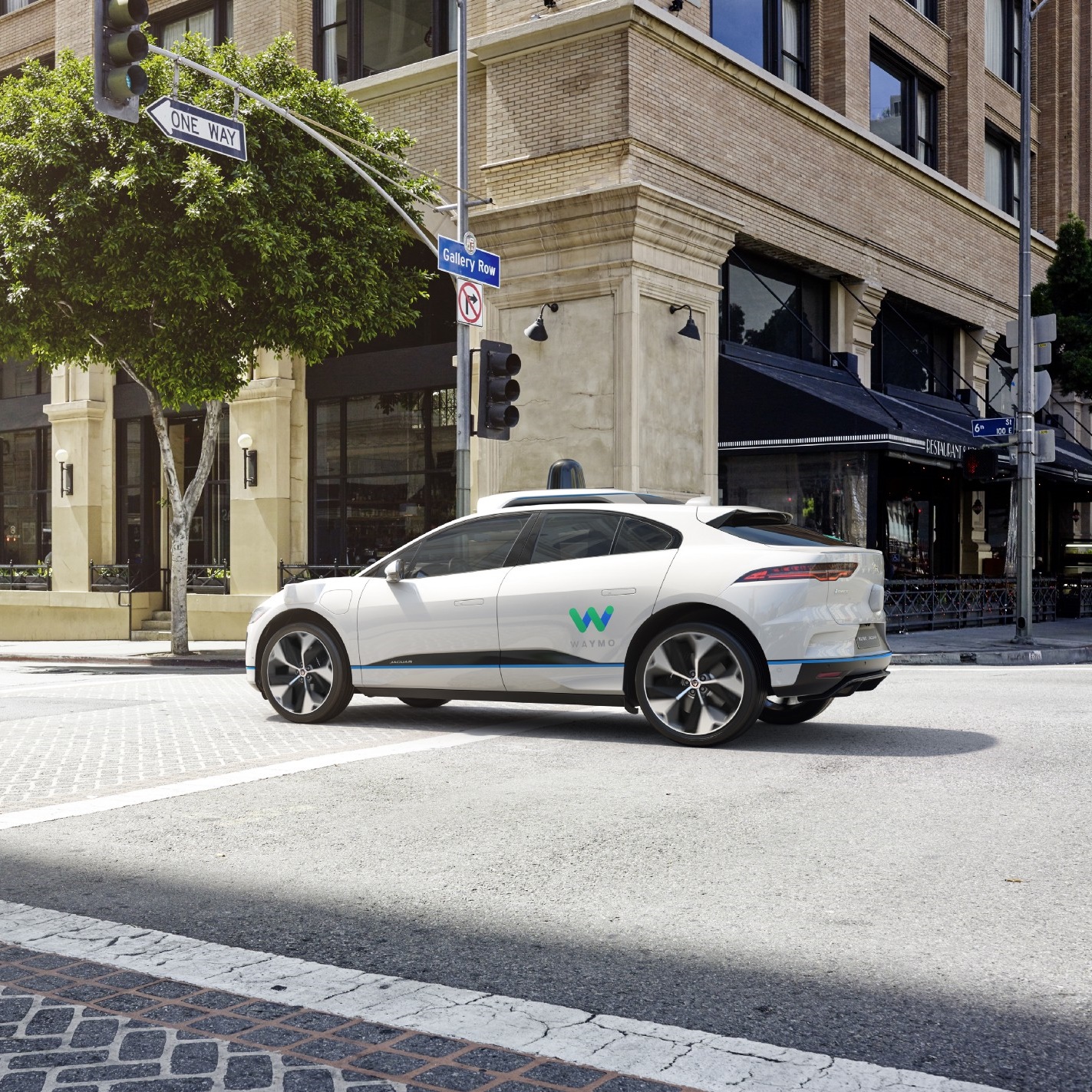
| Waymo | Robotaxi | No | No |
| Uber Technologies (NYSE:UBER) | Ride-hailing | No | No |
That combination makes Tesla resemble a scaled-down hyperscaler rather than a traditional software company.
Texas Changed the Robotaxi Story
Robotaxis spent years caught between technological progress and regulatory caution. That balance has already shifted. Texas Senate Bill 2807, passed by the 89th Legislature in 2025, established a statewide authorization framework for commercial autonomous vehicles, requiring companies to receive approval from the Texas Department of Motor Vehicles before operating driverless on public roads. Tesla secured its transportation network company license from the Texas Department of Licensing and Regulation in August 2025, clearing the legal path to operate supervised and unsupervised robotaxis statewide.
Tesla’s limited robotaxi service launched in Austin on June 22, 2025, initially covering a small geofenced area with Model Y vehicles. By June 2026, coverage had expanded to roughly 245 square miles across the Austin metro. As of September 2026, the service runs without an in-vehicle safety supervisor in Austin, Dallas, and Houston in Texas, and in Miami, Orlando, and Tampa in Florida. Tesla also received an autonomous vehicle network company permit in Nevada in August 2026, authorizing up to 5,000 robotaxis across Clark County.
The market still values Tesla largely on vehicle deliveries, automotive gross margins, and EV demand. Those metrics matter, but they may not capture the economics of a software-driven transportation network. Software businesses generate higher margins because each additional customer adds little incremental cost. As robotaxi adoption expands across more cities, Tesla could layer recurring software revenue on top of vehicles already rolling off its production lines.
The Cybercab and Manufacturing Advantage
Tesla’s biggest advantage over rivals like Waymo and Uber is not just artificial intelligence. It is manufacturing. Waymo must partner with automakers and retrofit existing vehicles with autonomous hardware. Uber depends on outside fleets and third-party drivers. Scaling either model requires coordinating multiple companies across a complex supply chain.
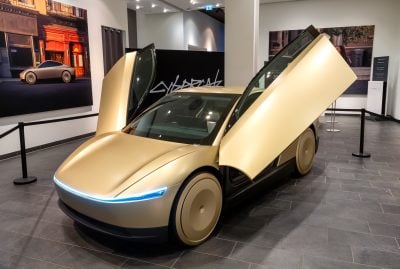
Tesla starts with millions of vehicles already designed around its technology, and it is now adding a purpose-built product to the mix. The Cybercab, a two-seat fully autonomous vehicle with no steering wheel and no pedals, formally launched on September 3, 2026, in Austin and opened to paying customers the following day. It is powered by Tesla’s AI4 computer and has been in production at Gigafactory Texas since the first half of 2026. Unlike any previous Tesla product, the Cybercab has no provision for a human to take over, making it a genuine end-to-end autonomous system rather than a supervised one.
New vehicles leaving Tesla factories are already prepared for autonomous capability as the software improves, and that production scale lowers deployment friction. It could allow Tesla to expand faster than competitors that must build or modify vehicles one fleet at a time.
Regulatory approval remains uneven outside Texas and Florida, and fully autonomous driving still faces technical and legal hurdles in several markets. Consumer trust is also a work in progress. Those risks deserve attention alongside any opportunity.
Key Takeaway
Tesla is becoming more than an automaker. It is building an AI ecosystem that combines proprietary chips, dedicated computing infrastructure, massive real-world driving data, and a consumer application now operating commercially across multiple U.S. cities. Few companies outside the hyperscalers control that much of the value chain.
The market still focuses heavily on quarterly vehicle deliveries. If robotaxis evolve into the first truly mass-market AI application, investors may begin valuing Tesla less like a car company and more like an AI platform with manufacturing capabilities. That combination remains rare in today’s market, and Tesla is the only company currently operating it at commercial scale.
Editor’s note: This article has been updated to reflect that Tesla’s Dojo supercomputer project was shut down in August 2025 and replaced by the Cortex cluster (roughly 67,000 H100-equivalent GPUs) and an AI5/AI6 chip roadmap; that Tesla’s robotaxi service launched in Austin in June 2025 and now operates across six U.S. cities without a safety supervisor; that the purpose-built Cybercab entered public service in Austin on September 4, 2026; and that Texas SB 2807 and a Tesla TNC permit granted in August 2025 formalized the state’s regulatory framework for driverless operations.
Contact [email protected] for any questions or corrections.
After two decades of patrolling the dark corners of suburbia as a police officer, Rich Duprey hung up his badge and gun to begin writing full time about stocks and investing. For the past 20 years, he’s been cruising the markets looking for companies to lock up as long-term holdings in a portfolio while writing extensively on the broad sectors of consumer goods, technology, and industrials. Because his experience isn’t from the typical financial analyst track, Rich is able to break down complex topics into understandable and useful action points for the average investor. His writings have appeared on The Motley Fool, InvestorPlace, Yahoo! Finance, Money Morning, and, of course, 24/7 Wall St. He has been featured in both U.S. and international publications, including MarketWatch, Financial Times, Forbes, Fast Company, and USA Today.