China’s EV Makers Have Poured $100 Billion Into Overseas Factories. Here’s Why It’s a Global Power Shift
Chinese automakers are quietly planting factories inside the markets that tried to lock them out, and the strategy is working in ways that tariffs alone cannot stop.

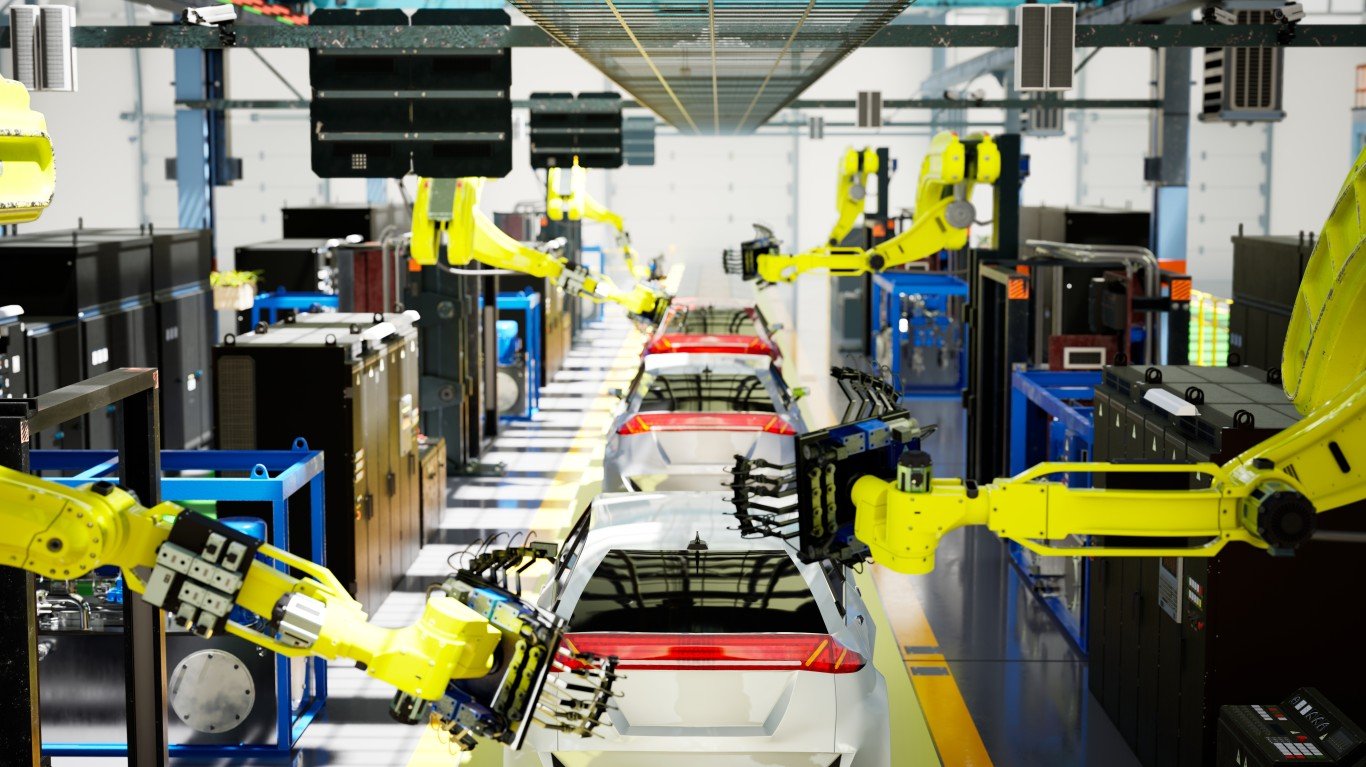
A July 13, 2026, CNBC segment on China’s global EV factory investment spree laid out a striking picture of how the balance of power in electric vehicle manufacturing has shifted.
Chinese automakers have poured more than $100 billion into EV and battery factories abroad since 2019, according to Atlas Public Policy, dwarfing the overseas capacity commitments of U.S. companies. This long-term development suggests that China will become a leader in the global EV industry due to structural advantages.
China Is Building the Global EV Industry at Unmatched Scale
The Rhodium Group estimates that China received 3-4x more EV and battery investment than the U.S. domestically, while Chinese firms are outspending U.S. companies by roughly 4-6x on international EV and battery projects, per an estimate laid out in the segment.
“We’re facing a situation where companies like BYD from China are becoming essentially the new GMs and Fords of the EV era, and they’re benefiting from scale from building out these global supply chains, from long-term investments all around the world.”
Trade Barriers Are Pushing Chinese Automakers Overseas
The push for China to expand overseas comes from increasing domestic competition. “China’s domestic auto market has become brutally competitive. You see price wars, heavy discounts, really, really subsidized financing from the automakers themselves… it’s a really tough place to make profits. So what’s the next alternative? The next alternative is to export or to look to global markets,” the segment noted.
The U.S. has effectively blocked Chinese EVs from its market, and the EU has imposed tariffs. One workaround has been for Chinese companies to build global factories. “One way to get around trade barriers is to build factories in or near the countries they want to sell cars… tariffs have forced Chinese cars to get creative, make investments around the world that cement their lead in the global EV automotive industry,” the segment argued.
Every New Factory Makes Chinese EVs Harder to Keep Out
The strategy also builds political constituencies inside host countries. “If you have a factory in a town in Hungary or in Indonesia that employs 3000 people, then all of a sudden you have a state and a federal government that are invested in that company… and will put in place a bunch of supports to ensure that that company is able to stay strong within the domestic market,” the segment explained.
Once a plant is embedded in a local economy, future tariff hikes or import restrictions become politically costly for the host government, which helps strengthen the foothold Chinese EV makers have in these markets.
The Three Forces That Could Reshape China’s EV Expansion
Chinese EV and battery exports have soared since 2019, but overseas factories could turn that export boom into a permanent global manufacturing presence.
Three forces could determine what happens next: U.S. and EU tariff policies covering Chinese vehicles assembled in countries such as Mexico, Hungary, Morocco, and Indonesia; clean-tech subsidies that influence where manufacturers invest; and any move by Beijing to restrict outbound capital or technology transfers. Each could accelerate or slow China’s overseas expansion, ultimately shaping which automakers and suppliers lead the next phase of the global EV market.
Contact [email protected] for any questions or corrections.
Thomas Richmond is a financial writer and content strategist with 5+ years of experience covering stocks and financial markets. He has published over 500 articles focused on individual stock analysis, helping investors better understand business fundamentals, stock valuations, and long-term opportunities.
Thomas previously served as a Content Lead at TIKR, a stock research platform, where he helped scale the company’s blog to hundreds of articles per month and contributed to a weekly newsletter reaching more than 100,000 investors.
Outside of work, Thomas enjoys weight lifting and soccer.