Beijing’s Chip Crackdown: Was Nvidia Just Locked Out of China Forever?
For years, China stood as a powerhouse market for Nvidia (NASDAQ:NVDA | NVDA Price Prediction), whose graphics processing units (GPUs) fuelled everything from gaming rigs to artificial intelligence (AI) supercomputers. In 2022, the region accounted for a staggering 26% of…


For years, China stood as a powerhouse market for Nvidia (NASDAQ:NVDA | NVDA Price Prediction), whose graphics processing units (GPUs) fuelled everything from gaming rigs to artificial intelligence (AI) supercomputers.
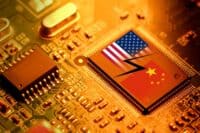
In 2022, the region accounted for a staggering 26% of Nvidia’s revenue, with sales soaring as Chinese tech giants snapped up chips to power their digital ambitions. But the U.S.-China trade war turned that golden era upside down.
Starting in late 2022, stringent U.S. export controls under the Biden administration banned Nvidia’s most advanced AI chips like the H100 from being sold to China, citing national security risks over military applications. Its sales in the country cratered by an estimated 20% in fiscal 2023, forcing the company to redesign lower-powered alternatives just to stay in the game.
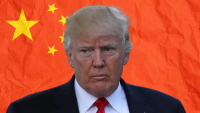
Those tensions escalated further after President Trump came into office, and even Nvidia’s dumbed-down AI accelerators developed specifically to comply with the export controls were banned.
However, in a surprising pivot this summer, Trump tossed a lifeline to Nvidia and other chipmakers as he granted them export licenses once more for select compliant chips in exchange for revenue sharing from sales. This unprecedented move reignited investor hopes that Nvidia could recapture lost revenue and market share.
The chipmaker quickly rolled out China-specific models, and orders began trickling back in, though the optimism was short-lived. Beijing urged Chinese firms to shun Nvidia products due to potential security vulnerabilities and data risks. Now, a new bombshell report casts serious doubt on Nvidia’s comeback. If the report is accurate, it could be the final nail in the coffin for Nvidia’s return to China.
Beijing’s Bold Blockade
According to The Financial Times, Beijing just slammed the door shut on Nvidia’s comeback bid. The Cyberspace Administration of China (CAC) has ordered tech behemoths such as TikTok parent ByteDance and Alibaba (NYSE:BABA) to cancel all orders for Nvidia’s RTX Pro 6000D chip and halt any future purchases of the company’s AI semiconductors.
This directive, issued just this week, targets the specialized GPU Nvidia unveiled just two months ago exclusively for the Chinese market. Designed for automated manufacturing and compliant with U.S. export rules, it was meant to be Nvidia’s bridge back into the fray, with initial testing underway among suppliers.
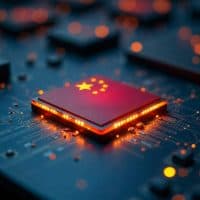
The CAC’s move stems from a fierce push for semiconductor self-reliance. As one tech executive told the newspaper, “The message is now loud and clear. Earlier, people had hopes of renewed Nvidia supply if the geopolitical situation improves. Now it’s all hands on deck to build the domestic system.”
Beijing views Nvidia’s chips as potential espionage vectors, echoing long-standing fears of backdoors in foreign tech. This isn’t isolated; it builds on prior guidance against Nvidia’s H20 chip and involves summoning domestic players like Huawei, Cambricon, Alibaba, and Baidu (NASDAQ:BIDU) to benchmark their homegrown alternatives against Nvidia’s offerings.
Insiders claim China’s AI processors now rival or surpass the neutered U.S.-approved versions, fueling confidence in a full pivot.
Billions at Stake in the Short Term
The immediate fallout for Nvidia is brutal. China was once a $10 billion-plus annual revenue stream; even partial recovery could have added billions more. The RTX Pro 6000D orders alone — potentially tens of thousands of units from ByteDance, Alibaba, and others — represented a critical foothold. Canceling them means instant lost sales, estimated in the hundreds of millions for this quarter, as testing phases were already budgeted.
Nvidia’s stock dipped 1.6% on the news yesterday, but broader ripple effects could include stalled partnerships with server makers and a chilling effect on other Chinese firms eyeing Nvidia tech. It could potentially shave 5% to 10% off Nvidia’s overall estimated revenue forecasts for 2026 if the ban sticks.
Antitrust Scrutiny and Geopolitical Storms
Looking ahead, the implications are seismic. This ban accelerates China’s “Made in China 2025” blueprint, tripling domestic AI chip output next year and sidelining U.S. giants like Nvidia. It could lead to a split global AI ecosystem, where Nvidia dominates outside China but loses innovation feedback loops from one of the world’s largest data pools. Supply chain snarls might hike costs for Nvidia’s global customers, too.
Compounding the pain: a Chinese antitrust probe into Nvidia over its $6.9 billion acquisition of Mellanox Technologies in 2020. Regulators said they found the AI chipmaker broke antitrust laws by not complying with conditions laid on the acquisition — though they didn’t specify what Nvidia did wrong.
In a world of escalating tariffs and tech nationalism, Nvidia’s China dreams are turning into a nightmare.
Key Takeaway
While you should never say never — trade relations could always thaw with diplomatic breakthroughs — the current situation seems to doom any hope of Nvidia regaining lost sales and market share in China for the foreseeable future.
Is Nvidia still the same investment opportunity without a role in China? Although the chipmaker’s business no longer hinges on the region, recapturing lost revenue and share could have accelerated its growth trajectory. It is now clear that investors can no longer rely on China to drive Nvidia’s growth.
Contact [email protected] for any questions or corrections.
After two decades of patrolling the dark corners of suburbia as a police officer, Rich Duprey hung up his badge and gun to begin writing full time about stocks and investing. For the past 20 years, he’s been cruising the markets looking for companies to lock up as long-term holdings in a portfolio while writing extensively on the broad sectors of consumer goods, technology, and industrials. Because his experience isn’t from the typical financial analyst track, Rich is able to break down complex topics into understandable and useful action points for the average investor. His writings have appeared on The Motley Fool, InvestorPlace, Yahoo! Finance, Money Morning, and, of course, 24/7 Wall St. He has been featured in both U.S. and international publications, including MarketWatch, Financial Times, Forbes, Fast Company, and USA Today.