Why I Won’t Buy A Rivian
Rivian keeps winning SUV awards, but a growing list of red flags is making at least one longtime car shopper walk away for good. The quality scores, the pricing, the service gaps, and the CEO's pay package all tell a…

This post may contain links from our sponsors and affiliates, and Flywheel Publishing may receive compensation for actions taken through them.

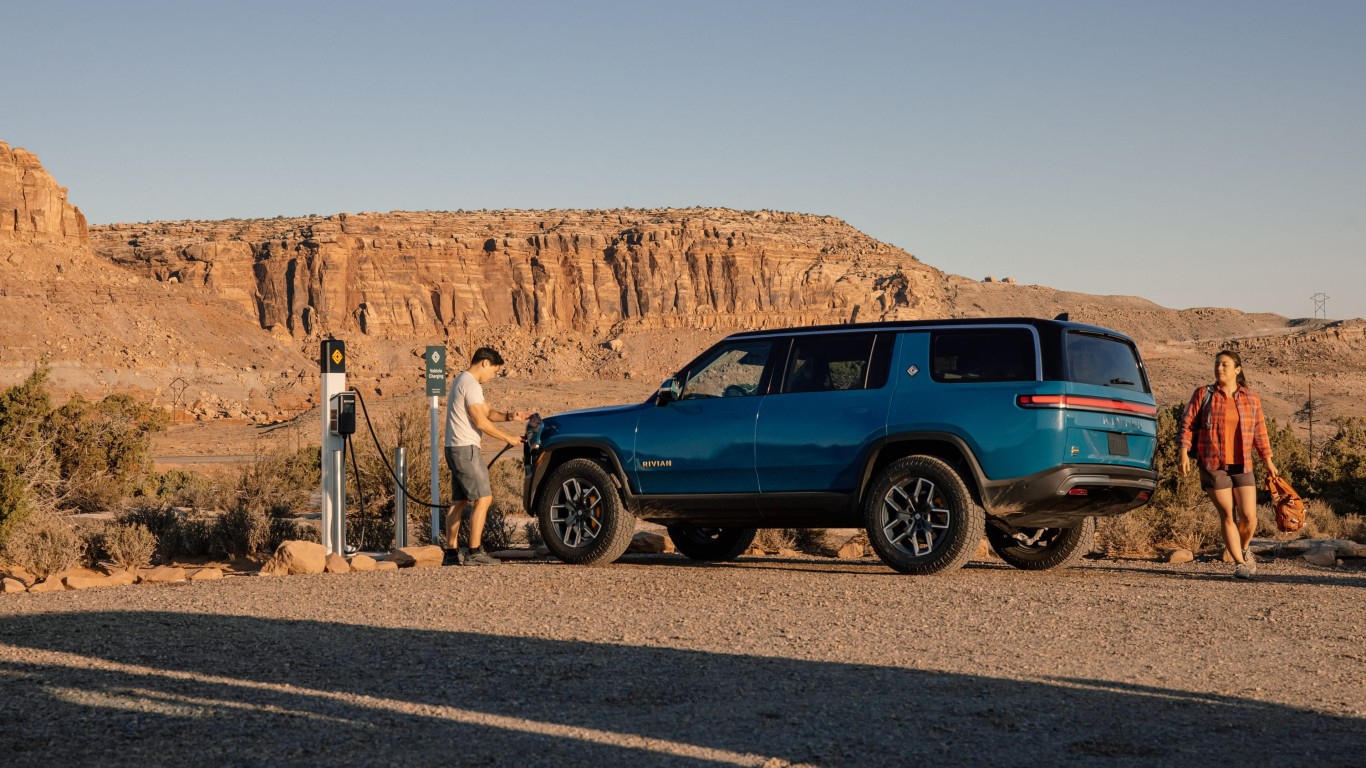
There are several reasons not to buy a Rivan. And the list is growing.
Rivian (NASDAQ: RIVN | RIVN Price Prediction) has won several awards as one of the best SUVs. But when it comes to the gold standard of quality measurements, that starts to fall apart. In the JD Power U.S. Initial Quality Survey 2026, there are 246 problems per 100 vehicles owned over the first 90 days of ownership. It is one of the brands marked “it does not meet award criteria.” Power decided to publish it nevertheless. And the press that covers cars jumped on the low-quantity numbers. The number was worse than that of any of the brands evaluated. I use J.D. Power when I shop for cars.
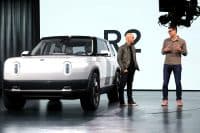
The new R2 SUV is supposed to save the company. Rivian says its base price will be $44,990. Recently, it launched the Performance Launch Edition priced at $59,485. The less expensive model will be released later. So, it is hard to evaluate whether it can measure up to what Rivian says it will
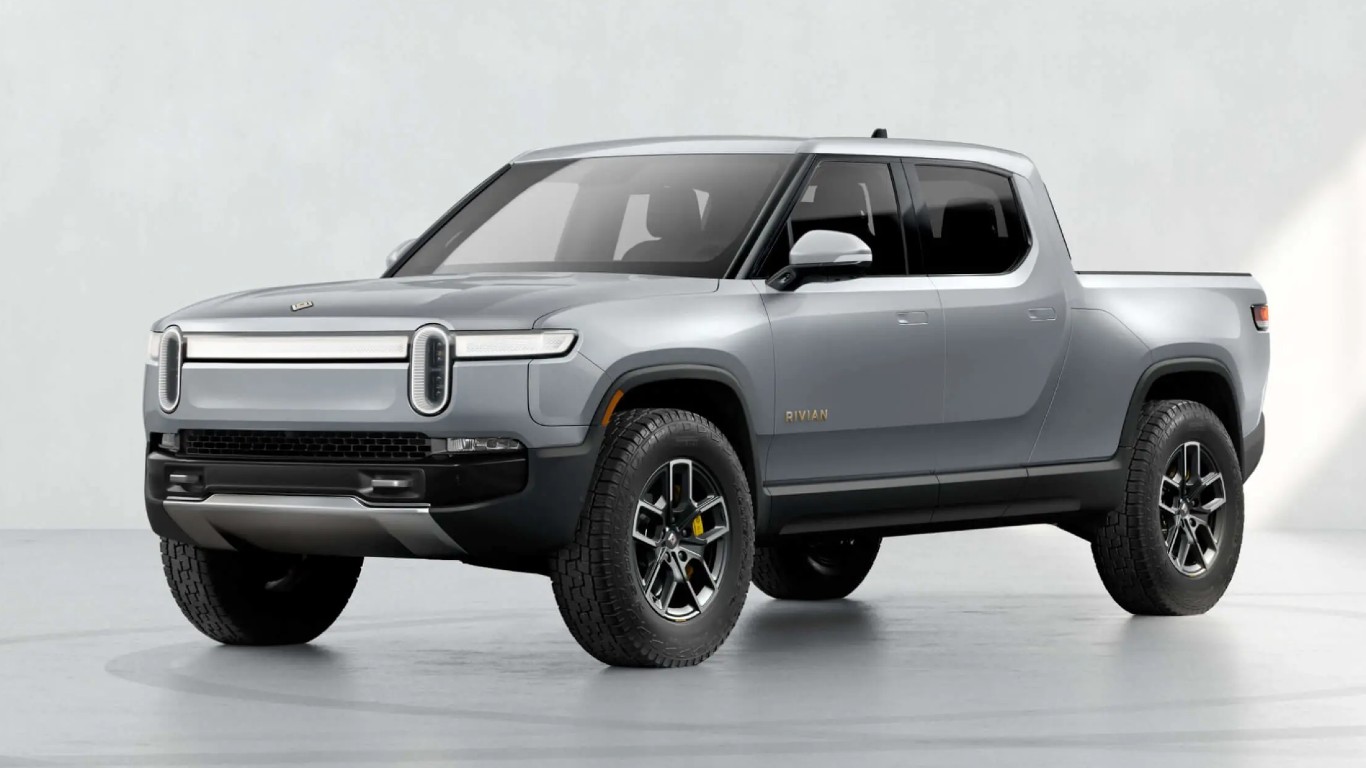
In the meantime, I can buy the R1S SUV, which has a base price of $83,990. It has seven seats. And the R1T pickup costs $79,990. Add a few features, and the prices move above $100,000. The sticker shock gets unbelievable.
Rivan doesn’t have many service centers. So, where should they go for service? In Texas, the second most populous state in America, Rivan has four. It has one in Arizona. However, Rivian has a service called its Mobile Service. Rivian Technicians staff it. The company says, “We prioritize the safety of our technicians and owners by limiting repairs to what’s safe in a Mobile Service environment.”
Rivan has a management problem, based on its results. RJ Scaringe is the founder and CEO. He has voting control of the company. It is not certain whether that was true since he got divorced. In the meantime, he received a $406 million pay package. That is a lot for the CEO of a company that has lost billions of dollars.
One of the things that worries me most is how long Rivian will be around. The company says it has enough cash to stay in business for years. However, in the second quarter, it produced only 12,613 vehicles. In the first quarter, it lost $416 million on revenue of $1.38 billion.
Finally, I usually agree with the view Wall St. has of a company. Rivan’s stock is down 11% this year. The drop since it went public is 87%.
If I’m going to buy an EV SUV, I’d rather get one of the few F-150 Lightnings Ford (NYSE: F) has left. At least I’m sure it can get serviced–for decades.
Contact [email protected] for any questions or corrections.
Douglas A. McIntyre is the co-founder, chief executive officer and editor in chief of 24/7 Wall St. and 24/7 Tempo. He has held these jobs since 2006.
McIntyre has written thousands of articles for 24/7 Wall St. He is an expert on corporate finance, the automotive industry, media companies and international finance. He has edited articles on national demographics, sports, personal income and travel.
His work has been quoted or mentioned in The New York Times, The Wall Street Journal, Los Angeles Times, The Washington Post, NBC News, Time, The New Yorker, HuffPost USA Today, Business Insider, Yahoo, AOL, MarketWatch, The Atlantic, Bloomberg, New York Post, Chicago Tribune, Forbes, The Guardian and many other major publications. McIntyre has been a guest on CNBC, the BBC and television and radio stations across the country.
A magna cum laude graduate of Harvard College, McIntyre also was president of The Harvard Advocate. Founded in 1866, the Advocate is the oldest college publication in the United States.
TheStreet.com, Comps.com and Edgar Online are some of the public companies for which McIntyre served on the board of directors. He was a Vicinity Corporation board member when the company was sold to Microsoft in 2002. He served on the audit committees of some of these companies.
McIntyre has been the CEO of FutureSource, a provider of trading terminals and news to commodities and futures traders. He was president of Switchboard, the online phone directory company. He served as chairman and CEO of On2 Technologies, the video compression company that provided video compression software for Adobe’s Flash. Google bought On2 in 2009.