A $10,000 Investment in JPMorgan When Jamie Dimon Took Over Is Worth This Much Now
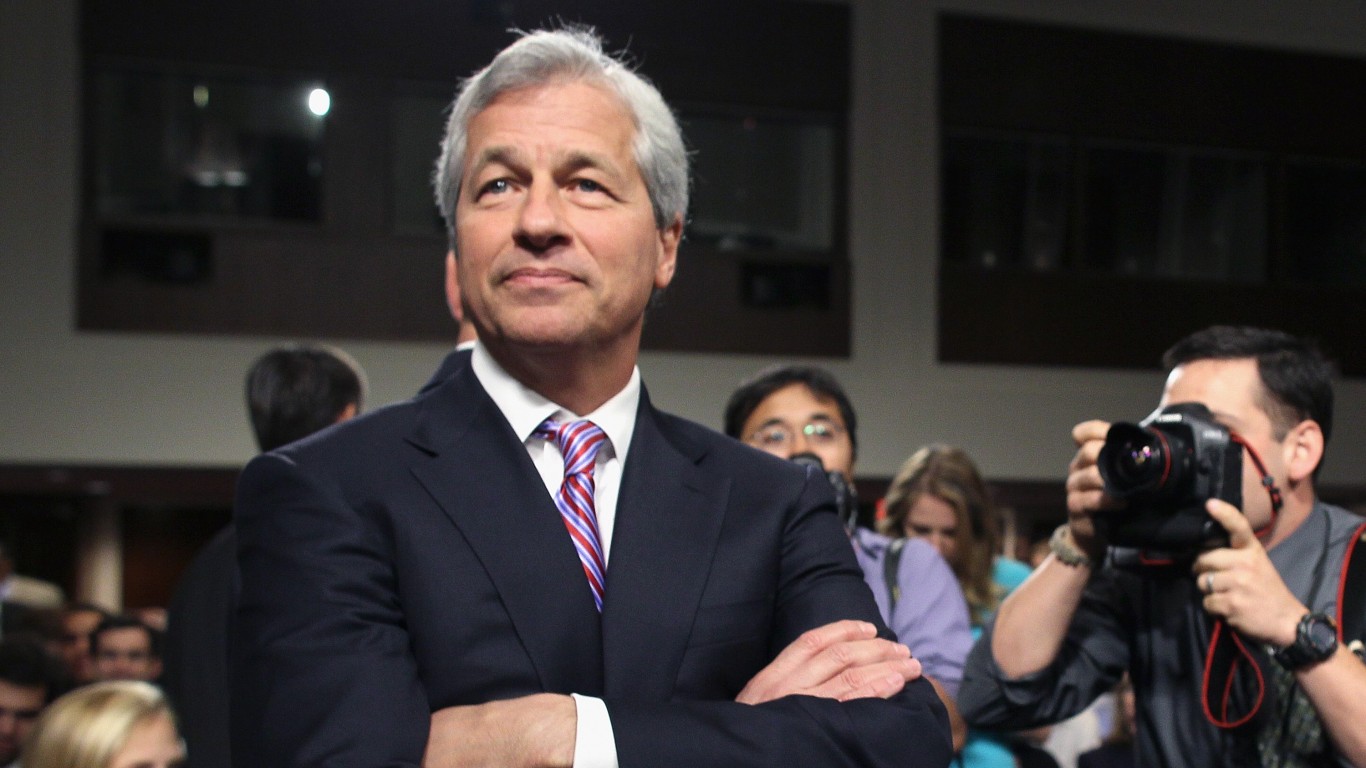
Jamie Dimon took the helm of JPMorgan at the end of 2005 and proceeded to steer the bank through crises that wiped out rivals while quietly compounding shareholder wealth at a pace that would surprise even longtime bulls.


Twenty Years of Building the Fortress
Jamie Dimon became CEO of JPMorgan Chase (NYSE:JPM | JPM Price Prediction) on December 31, 2005, and the two decades since have redefined American banking. He steered the firm through the 2008 crisis, absorbing Bear Stearns and Washington Mutual, then spent the next decade turning JPMorgan into the largest U.S. bank by assets, now holding $5.02 trillion in total assets.
The recent numbers make the case. Q2 2026 produced EPS of $7.70 against a $5.80 consensus, revenue of $57.35 billion, and a 23% ROTCE. Commercial & Investment Bank revenue jumped 27% to $24.85 billion, Equity Markets surged 86%, and Asset & Wealth Management now oversees $5.14 trillion in AUM. Dimon credited “years of consistent investment and thoughtful capital deployment.”

What $10,000 Became
Here is how a $10,000 stake in JPMorgan performed against the S&P 500 across standard windows and Dimon’s full tenure, on a split-adjusted price basis through July 15, 2026. (For broader context on top financial names, see our 7 Warren Buffett Stocks report.)
| JPMorgan | S&P 500 | |
| 1-Year Return | $12,336 (23.36%) | $12,132 (21.32%) |
| 5-Year Return | $25,890 (158.9%) | $17,499 (74.99%) |
| 10-Year Return | $70,302 (603.02%) | $34,972 (249.72%) |
| Dimon Era | $147,285 (1,372.85%) | $59,575 (495.75%) |
The Dimon-era gap is the headline: JPMorgan roughly tripled the index return on price alone, excluding two decades of dividends. Shareholders had to sit through 2008, the 2020 pandemic drawdown, and the 2023 regional banking scare to collect it. The five-year window looks especially strong because it captures the post-COVID recovery and the current capital markets boom.
The Dimon Report Card: A
Market share taken during crises, a diversified franchise that just posted $21.16 billion in quarterly net income, and disciplined capital return, including a fresh $50 billion buyback authorization effective July 1, 2026. For all this, we give Dimon an A. The London Whale still stings, but the compounding speaks.
What Investors Should Watch From Here
On the Q2 call, Dimon called the succession timetable “essentially the same,” framed as “several years” and ultimately the board’s decision. Marianne Lake has retired and co-presidents have been elevated. No named successor has been confirmed.
Investing $10,000 into JPMorgan today would provide exposure to a best-in-class U.S. bank at a reasonable 16x trailing earnings, complete with a $1.50 quarterly dividend and aggressive share buybacks. However, investors should avoid the stock if capital markets normalize sharply, credit quality deteriorates, or the post-Dimon leadership transition compresses the valuation multiple.


Overall, a cautiously constructive stance is warranted. While the stock has had a significant run, the franchise consistently delivers the earnings to justify it.
Contact [email protected] for any questions or corrections.
Trey has been an editor and author at 24/7 Wall St. for more than a decade, where he has published thousands of articles analyzing corporate earnings, dividend stocks, short interest, insider buying, private equity, and market trends. His comprehensive coverage spans the full spectrum of financial markets, from blue-chip stalwarts to emerging growth companies.
Beyond 24/7 Wall St., Trey has created and edited financial content for Benzinga and AOL's BloggingStocks, contributing additional hundreds of articles to the investment community. He previously oversaw the 24/7 Climate Insights site, managing editorial operations and content strategy, and currently oversees and creates content for My Investing News.
Trey's editorial expertise extends across multiple publishing environments. He served as production editor at Dearborn Financial Publishing and development editor at Kaplan, where he helped shape financial education materials. Earlier in his career, he worked as a writer-producer at SVE. His freelance editing portfolio includes work for prestigious clients such as Sage Publications, Rand McNally, the Institute for Supply Management, the American Library Association, Eggplant Literary Productions, and Spiegel.
Outside of financial journalism, Trey writes fiction and has been an active member of the writing community for years, overseeing a long-running critique group and moderating workshop sessions at regional conventions. He lives with his family in an old house in the Midwest.