Eli Lilly Buys Psychedelics Maker Atai Beckley for $2.8 Billion to Develop DMT-Like Depression Drug
Eli Lilly just wrote a $2.8 billion check on a psychedelic nasal spray that won't have pivotal trial data until 2029, and the reasoning behind that bet reveals where Big Pharma thinks depression treatment is heading.


CNBC pharma reporter Angelica Peebles broke down the biggest psychedelics deal in Big Pharma history on July 16, 2026. She framed Eli Lilly’s (NYSE: LLY | LLY Price Prediction) acquisition of Atai Beckley as a bet on rewiring the brain rather than merely dampening symptoms. “Lilly says that it is acquiring psychedelic drug developer Atai Beckley, and Lilly will pay $6.75 in cash, or $2.8 billion up front, and another $1 billion if certain development and regulatory milestones are met,” Peebles said on air.
The deal structure, $2.8 billion upfront with up to $1 billion in contingent value tied to development and regulatory milestones, keeps roughly a quarter of the headline value linked to clinical execution. That matters because Atai Beckley’s lead compound, a DMT-related nasal spray for treatment-resistant depression, only just entered Phase 3, with pivotal data expected in early 2029.
Why Lilly Is Paying Up for a 2029 Readout
Lilly is acquiring from a position of strength. The company reported Q1 2026 revenue of $19.80 billion, up 56% year over year, with non-GAAP EPS of $8.55. Mounjaro and Zepbound continued to drive growth, contributing $12.8 billion in combined quarterly revenue, and management raised full-year 2026 revenue guidance to $82 billion to $85 billion. CEO David Ricks highlighted four Q1 acquisitions — Orna Therapeutics, Centessa Pharmaceuticals, Kelonia Therapeutics, and Ajax Therapeutics — underscoring Lilly’s strategy of redeploying GLP-1 cash flows into pipeline expansion. The later AtaiBeckley deal extends that acquisition push into neuroscience.
Peebles zeroed in on the science. “Lilly talked about it in their press release, where they see the opportunity to make the drug more neuroplastic, potentially changing the brain and allowing for new neural pathways to develop.” That neuroplasticity thesis separates DMT-class compounds from SSRIs and gives Lilly a longer runway story while Phase 3 runs.
The Spravato Playbook at Johnson & Johnson
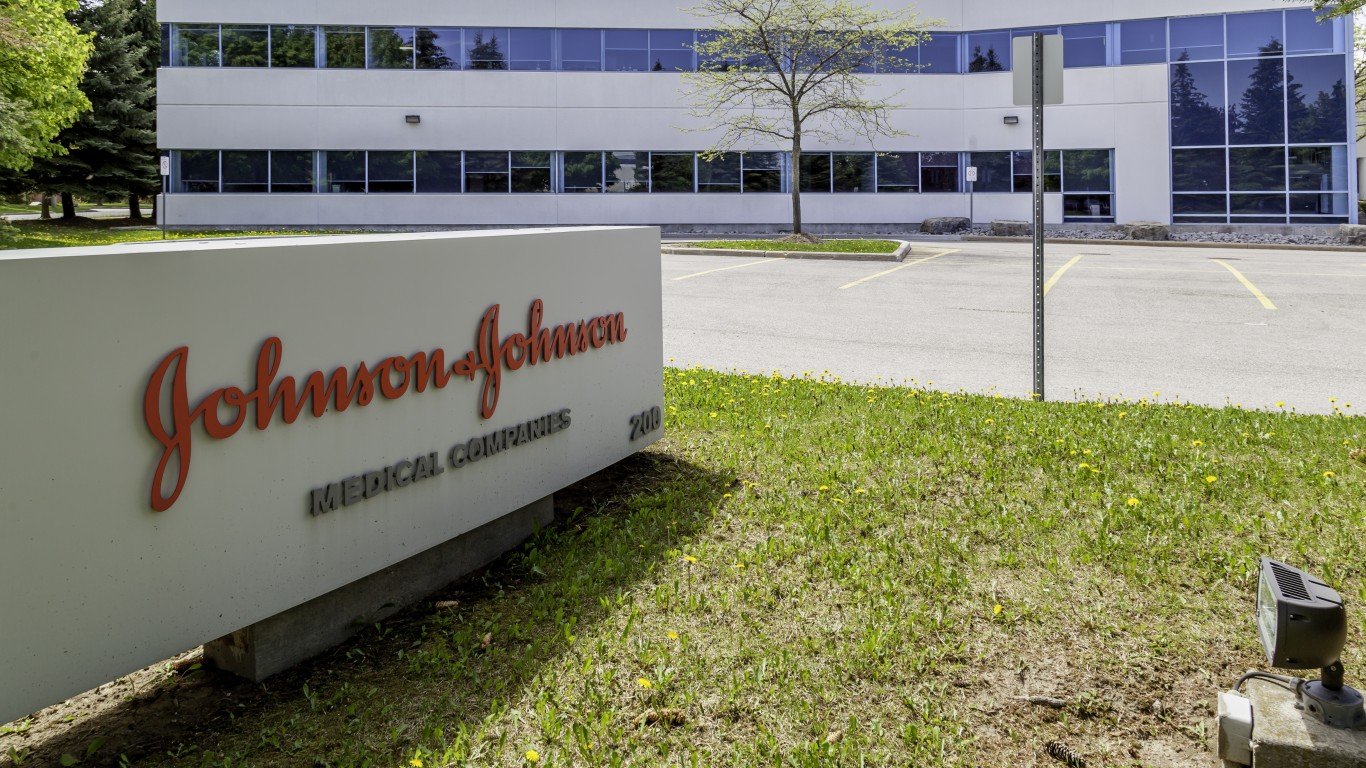
Johnson & Johnson (NYSE: JNJ) has already validated the clinic-administered depression-treatment model. Peebles noted that the Atai Beckley nasal spray is “a little bit like J&J’s drug SPRAVATO” because it is administered in a clinic with patients monitored afterward. J&J’s SPRAVATO franchise has become a commercial proof point for supervised psychedelic-adjacent depression therapies, with growth highlighted in the company’s Neuroscience portfolio. Its Innovative Medicine segment generated $15.43 billion in Q1 2026 revenue, up 11.2% year over year.
GH Research: The Small-Cap Read-Through
The clearest beneficiary is GH Research (NASDAQ: GHRS), which is developing GH001, an inhalable mebufotenin (5-MeO-DMT) product candidate for treatment-resistant depression (TRD). Shares jumped 13.04% on the announcement to $30.43, extending a year-to-date gain of 111.97%. The Phase 2b trial results, later published in JAMA Psychiatry, showed a placebo-adjusted MADRS reduction of 15.5 points at Day 8, with remission rates of 57.5% versus 0% for placebo. GH Research is targeting initiation of its global Phase 3/pivotal program in 2026.
For investors mapping the small-cap ripple effect of Big Pharma validation, our Small Stakes, Big Swings research walks through how to size positions in clinical-stage names carrying binary catalysts.
What to Watch
Peebles put a stake in the ground on timing: “Atai Beckley’s DMT-like drug just started Phase 3. And those results are expected in early 2029.” Between now and then, the milestones triggering Lilly’s $1 billion contingent payment will drive the narrative, alongside SPRAVATO’s growth at J&J and GH Research’s Phase 3 initiation. DEA scheduling, clinic infrastructure, and payer coverage remain shared hurdles for every psychedelic depression program.

Contact [email protected] for any questions or corrections.
Ian Cooper is a veteran market analyst and investment strategist with more than 20 years of experience covering stocks, commodities, and macro trends. Since 1999, he has helped investors identify market opportunities using a blend of technical analysis, fundamental research, and market sentiment.
He is the creator of the ADD News Flow Strategy, which focuses on trading market reactions to major news events and investor psychology. Cooper was also among the analysts who warned about the 2008 financial crisis and major financial institution collapses ahead of the broader market.
Before joining 247 Wall St., Cooper wrote extensively for InvestorPlace and other financial publications, covering market trends, trading strategies, and investment opportunities.