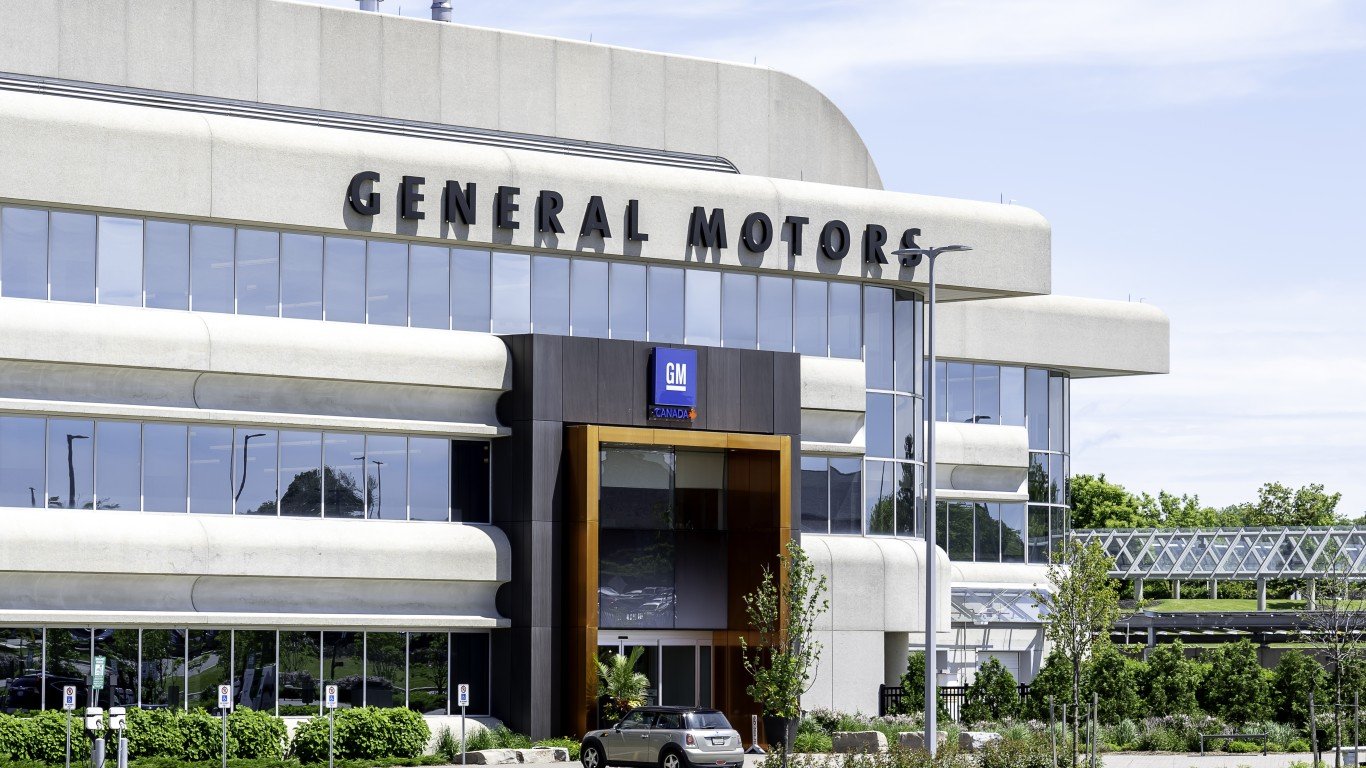
GM Just Posted Record First-Half Earnings, Recently Repurchased 35% of Its Shares, and Still Trades Below 6x Earnings
GM's CFO claims the automaker's first-half performance beats most of its full years on record, yet the stock still prices in almost nothing for what comes next. Here is why value investors are paying close attention.

General Motors (NYSE:GM | GM Price Prediction) delivered its fifth straight earnings beat on Tuesday, July 21, and CFO Paul Jacobson used a CNBC interview this morning to frame the results as validation of a multi-year discipline strategy rather than a one-off surprise.
Adjusted EPS came in at $3.57 against estimates of $3.20, while revenue of $48 billion topped the $47 billion consensus. Management raised full-year adjusted EPS guidance to $12 to $14 per share, up from $11.50 to $13.50, the second guidance lift this year.
Shares responded, trading up 5.24% intraday to $79.82 after the report. The stock is still down 1.94% year to date but has gained 49.86% over the trailing 12 months.
GM’s First-Half Earnings Beat 6 of Its Last 10 Full Years
CFO Jacobson pointed to the depth of the first-half performance. “Our first-half earnings per share is 25% higher than the first half at any time in our history. And actually more than six out of the last ten full years we’ve already recorded in the first six months,” he said on CNBC.
Lower Incentives Help GM Deliver Its Fifth Straight Beat
He credited operational discipline for the recent streak of earnings beats. “Our inventory discipline, our incentive discipline, which has been below the industry average for more than three years, has really led to these consistent results,” Jacobson said. GM incentives currently run at 4.7% of MSRP versus a 6.3% industry average, a spread that flows straight to margin. GM North America posted adjusted EBIT of $3.45 billion at an 8.6% margin, up 2.5 percentage points year over year, on 990,000 wholesale units.
Consumers Keep Buying GM Trucks Despite Recessionary Sentiment
On demand, Jacobson said, “Our consumer has been very resilient. We’ve got a very broad portfolio, probably the best portfolio we’ve ever had in our history. And we can meet customers at all price points.” Full-size SUVs and the truck-and-SUV mix drove the North American results.
This message runs counter to the recessionary sentiment that some macro signals are currently showing. University of Michigan consumer sentiment printed 44.8 in May 2026, a 12-month low and well into what the index defines as recessionary territory. Yet BEA data shows motor vehicle personal consumption held at $759.5 billion (SAAR) in May 2026, consistent with the buying behavior Jacobson described.
GM Expects Up to $3.5 Billion in Tariff Costs
GM is guiding to a $2.5-$3.5 billion full-year tariff impact. Jacobson framed the situation as manageable: “The tariff dynamic remains somewhat fluid… the new tariffs that were announced don’t affect autos under 232. We expect a minimal impact from that. But we’re optimistic that the administration can come to a resolution and get final resolution on USMCA or bilateral deals with Mexico and Canada.”
GM Has Retired 35% of Its Shares and Still Trades Below 6x Earnings
GM repurchased nearly $3 billion of stock in the first half of 2026 and has now retired over 35% of fully diluted shares since 2023. The board also declared a $0.18 quarterly dividend payable September 17, 2026.
CFO Jacobson clearly made the case for GM being a value play: the stock trades at less than six times 2026 anticipated earnings, while management targets margin expansion toward 8-10%. Adjusted automotive free cash flow of $5.03 billion in Q2, up 78.0% year over year, supports that framing.

What to Watch Next
GM’s fifth straight earnings beat reflects stronger margins, disciplined incentives, resilient truck and SUV demand, and aggressive share repurchases. With management raising guidance for the second time this year, GM appears positioned to grow earnings despite billions of dollars in expected tariff costs and ongoing EV restructuring charges. The next test is whether North American margins and pricing remain strong through the second half of 2026.
Contact [email protected] for any questions or corrections.
Thomas Richmond is a financial writer and content strategist with 5+ years of experience covering stocks and financial markets. He has published over 500 articles focused on individual stock analysis, helping investors better understand business fundamentals, stock valuations, and long-term opportunities.
Thomas previously served as a Content Lead at TIKR, a stock research platform, where he helped scale the company’s blog to hundreds of articles per month and contributed to a weekly newsletter reaching more than 100,000 investors.
Outside of work, Thomas enjoys weight lifting and soccer.