Amazon Workers on Food Stamps Nearly Tripled, While Company Spends $200 Billion on AI
A government watchdog report finds a familiar gap widening between what Amazon's workers take home and what its shareholders celebrate, and the company's boldest spending plan yet sits at the center of the tension.

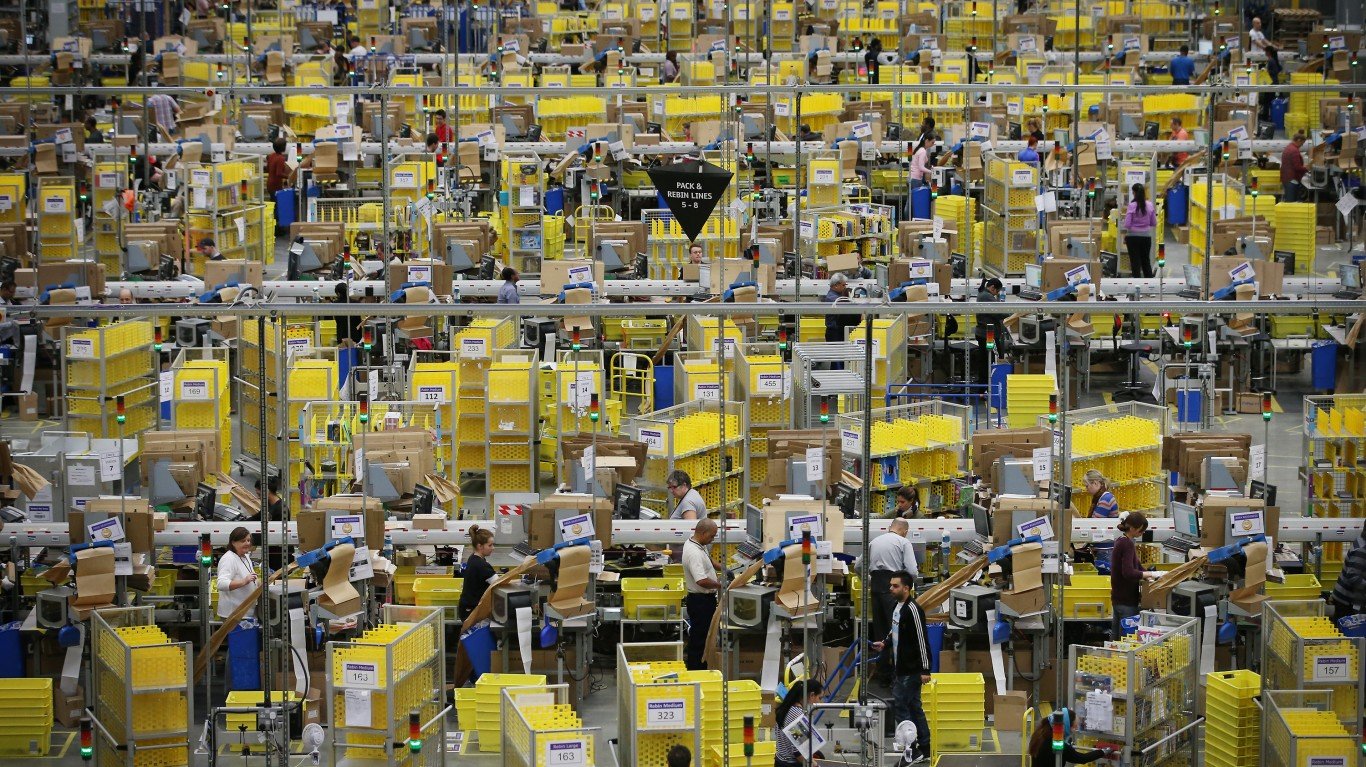
A new Government Accountability Office report commissioned by Sen. Bernie Sanders finds the number of Amazon (NASDAQ:AMZN | AMZN Price Prediction) workers relying on federal food and health assistance has nearly tripled since 2020, even as the company disclosed plans to spend $200 billion on artificial intelligence infrastructure in 2026.
The GAO reviewed enrollment data from 11 states representing roughly one-fifth of the U.S. population, covering February 2020 through September 2025. In those states, 12,346 Amazon workers were enrolled in the Supplemental Nutrition Assistance Program and 11,338 in Medicaid, figures the report says are nearly triple the counts in the prior GAO study.
Amazon ranked second among traditional employers of public-assistance recipients in the sample, behind Walmart, which had 16,055 workers on Medicaid, a 55% increase from the earlier report, and 15,515 on SNAP. Gig platforms including Uber, Lyft, DoorDash, Grubhub and Instacart collectively surpassed Walmart to become the single largest category of SNAP recipients, a reflection of how contract labor has reshaped the low-wage workforce.
A National Picture
Nationally, the GAO estimates 13.8 million working Americans are on Medicaid, up from 12 million in 2020, and 10.6 million on SNAP, up from 9 million. Wage data helps explain the persistence. The Bureau of Labor Statistics reports average hourly earnings for the total private sector reached $37.64 in June 2026, but real average hourly earnings have barely moved, sitting at $11.32 in June 2026 compared with $11.18 in June 2024. The BEA’s latest quarterly figures show transfer receipts have grown to $5,099.7 billion in the first quarter of 2026, with Medicaid outlays climbing to $1,060.2 billion.
The Corporate Side of the Ledger
Over roughly the same window covered by the GAO study, Amazon’s annual profit grew from $11.59 billion to $77.67 billion. Revenue reached $716.92 billion in fiscal 2025, with operating income of $79.98 billion.
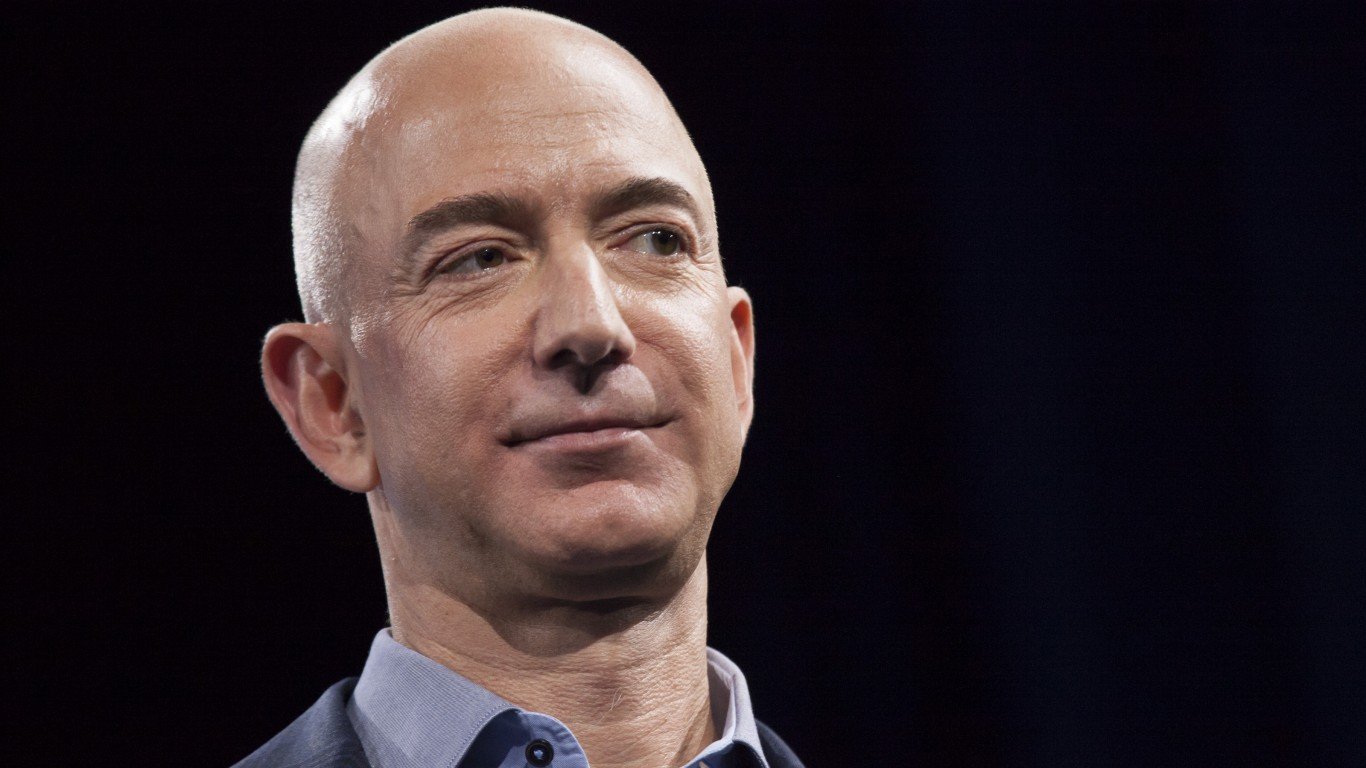
On the Q4 2025 earnings call on Feb. 5, 2026, CEO Andy Jassy told investors the company would spend about $200 billion in capital expenditures in 2026, a roughly 60% increase from about $125 billion in 2025, saying the outlays are “predominantly in AWS” to meet AI compute demand. Jassy characterized the spend as demand-driven: “We are monetizing capacity as fast as we can install it.”

The most recent quarter offers evidence the AI bet is landing. AWS generated $37.59 billion in revenue in Q1 2026, up 28% year over year, the segment’s fastest growth in 15 quarters. Capital expenditures in that single quarter hit $44.2 billion, and free cash flow fell sharply as the buildout accelerated. Prediction market participants on Polymarket assign a 0.89 probability that Amazon’s 2026 capex will exceed $200 billion.
What to Watch
The two datasets cover overlapping but nonidentical fiscal years, which limits any causal reading between the AI outlays and the growth in workers on public assistance. The GAO report establishes that the workforce dependency trend accelerated during years when Amazon’s earnings, and its capital ambitions, were expanding at their fastest pace in company history. The next signal comes on July 30, 2026, when Amazon reports Q2 results and updates its capex guidance for the balance of the year.
Contact [email protected] for any questions or corrections.
I've spent more than 15 years inside enterprise software, working alongside the finance, sales operations, and HR leaders who run the revenue engines at some of the largest tech companies in the country.
My day job is helping enterprise executives make smarter decisions about retention, compensation, and growth. These are the same operational levers that show up in every earnings report investors actually read. That perspective shapes my writing for 24/7 Wall St.
The headline numbers are easy. The interesting stuff is underneath: how companies make money, what executives are worried about, and what any of it means for the person checking their 401(k) on a Sunday afternoon. I write about personal finance and business as someone who has spent her career inside the rooms where these decisions get made.