I Won’t Stop Buying Meta Even With The High Capex Spend
Meta keeps raising its capital spending to eye-watering levels, and the bear case says margins should be collapsing by now. Here is why the opposite keeps happening and why that changes the math on owning the stock.

This post may contain links from our sponsors and affiliates, and Flywheel Publishing may receive compensation for actions taken through them.

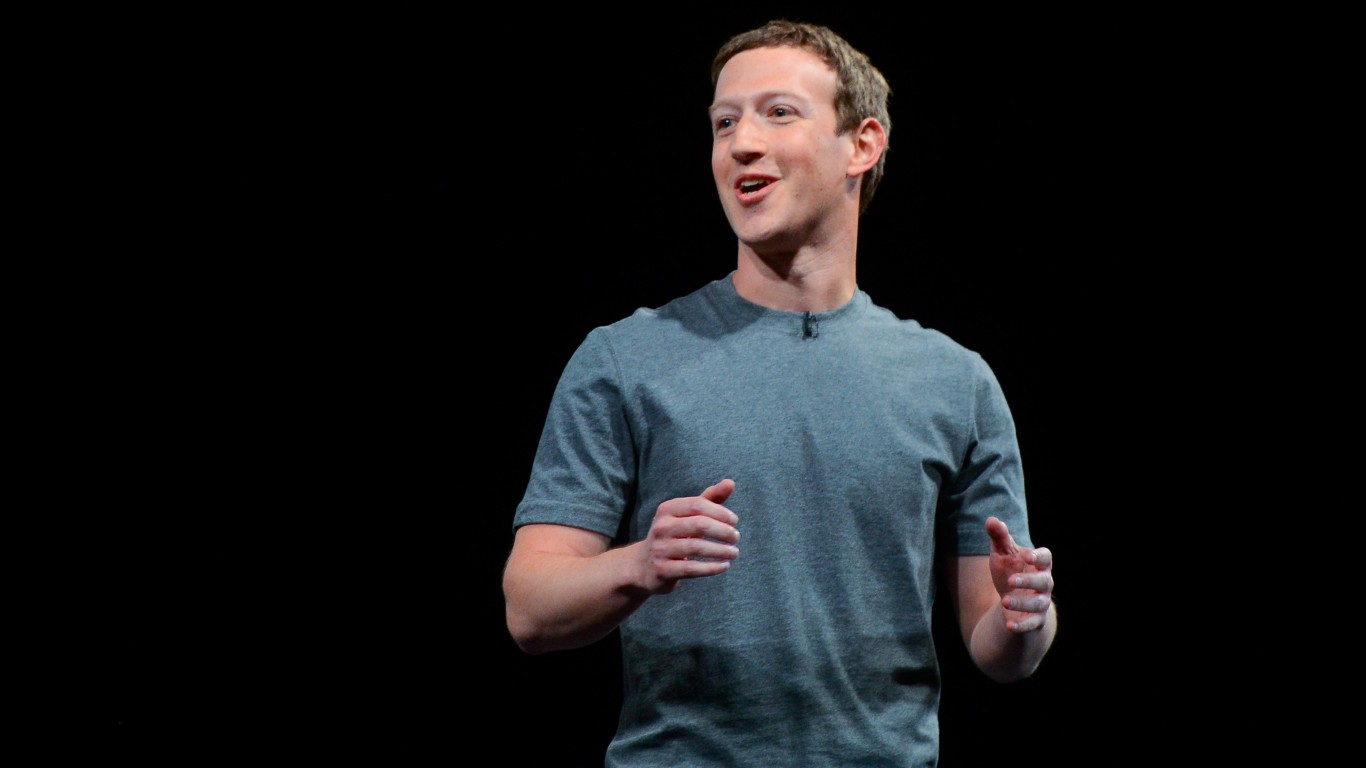
I keep building a position in Meta Platforms (NASDAQ:META | META Price Prediction), and every quarter the case for adding more gets stronger, not weaker. The bear thesis I heard for eighteen months, that AI capital spending would eat the margins alive, has now been tested against real numbers. The numbers won.
The Capex Panic Was Priced in Fear
Q1 2026 was the quarter the argument should have broken. Meta spent $18.997 billion on capex, up 46.8% year over year, and raised full-year guidance to $125 to $145 billion. And yet revenue grew 33.08% to $56.311 billion, operating income climbed 30.29%, and free cash flow stayed positive at $12.386 billion. Operating margin held at 41%. Those are the numbers of a company compounding through its investment cycle.
The reason the pie does not shrink is the whole game. Meta has kept everyday operating costs flat by cutting non-core corporate layers, freezing traditional infrastructure, and executing deep workforce reductions, funneling the freed capital into GPUs and data centers. Those hardware purchases are booked as capex, so the cash goes out immediately but hits the income statement gradually as depreciation over a 4-to-5-year useful life. By the time those charges arrive, AI-driven ad targeting has already delivered double-digit revenue growth that outpaces the creeping overhead. That is how you keep near-40% margins while spending like a utility.
Three Reasons the Compounding Case Holds
First, monetization is accelerating alongside the spend. Ad impressions rose 19% year over year in Q1 2026 and average price per ad rose 12%. Family daily active people reached 3.56 billion. The business keeps finding more inventory and charging more for it.
Second, the returns on capital are what you would expect from a fortress. ROIC sits at 20.69%, ROE at 30.24%, and net profit margin at 30.08%. Debt to equity is 0.39. Interest coverage is 71x. There is no financial fragility here.
Third, management is telling on themselves in a good way. Mark Zuckerberg said on the Q1 call, “Every sign that we are seeing in our own work and across the industry gives us confidence in this investment,” and pointed to more than one gigawatt of custom silicon developed with Broadcom plus AMD chips complementing the new NVIDIA systems. That is disciplined efficiency work.
Why Not Just Buy the Index?
The reflexive alternative for most readers is an index proxy like the Invesco QQQ Trust (NASDAQ:QQQ). It is a fine holding. It is also a way to own a much smaller slice of exactly this story. After Meta’s Q1 2025 report, the stock’s 30-day return of 16.54% ran well ahead of QQQ’s 9.47%. Concentration in the specific compounder that owns Instagram, WhatsApp, and the entire ad stack pays for itself when the thesis works.
The Risk I Actually Watch
Reality Labs lost $4.03 billion in Q1 2026 on $402 million of revenue. That segment is the scar on the story, and there are youth-related litigation trials scheduled in 2026 that may result in material losses. What keeps me buying anyway is that Family of Apps generated $55.909 billion in revenue in the same quarter. The core business can carry the moonshot for a long time.
Analysts covering the stock skew heavily bullish, with 49 Buy ratings, 8 Strong Buy, 6 Hold, and no Sell calls, against a consensus target of $822.69 versus a current $646.01. The thesis remains intact.
Contact [email protected] for any questions or corrections.
Alex Sirois is a financial writer with experience spanning both retail and institutional investing. He has written for InvestorPlace and held roles at BNY Mellon and Bernstein, giving him a perspective that bridges Main Street portfolios and Wall Street analysis.
Alex holds an MBA from George Washington University and has built his career across multiple industries, including e-commerce, education, and translation — a breadth of experience that informs how he breaks down complex financial topics for everyday investors. His writing is conversational, actionable, and grounded in long-term, buy-and-hold investing principles.
At 247 Wall St., Alex focuses on delivering analysis that is both accessible and useful, with a clear emphasis on helping readers make more informed decisions with their money.