Ford’s Recalls Are a Headache for Shareholders. Here’s Who Actually Cashes In.
Ford just issued recalls covering nearly a million vehicles, and while that spells trouble for its own shareholders, a handful of publicly traded dealer groups are quietly positioned to profit from every car that rolls into the service bay.

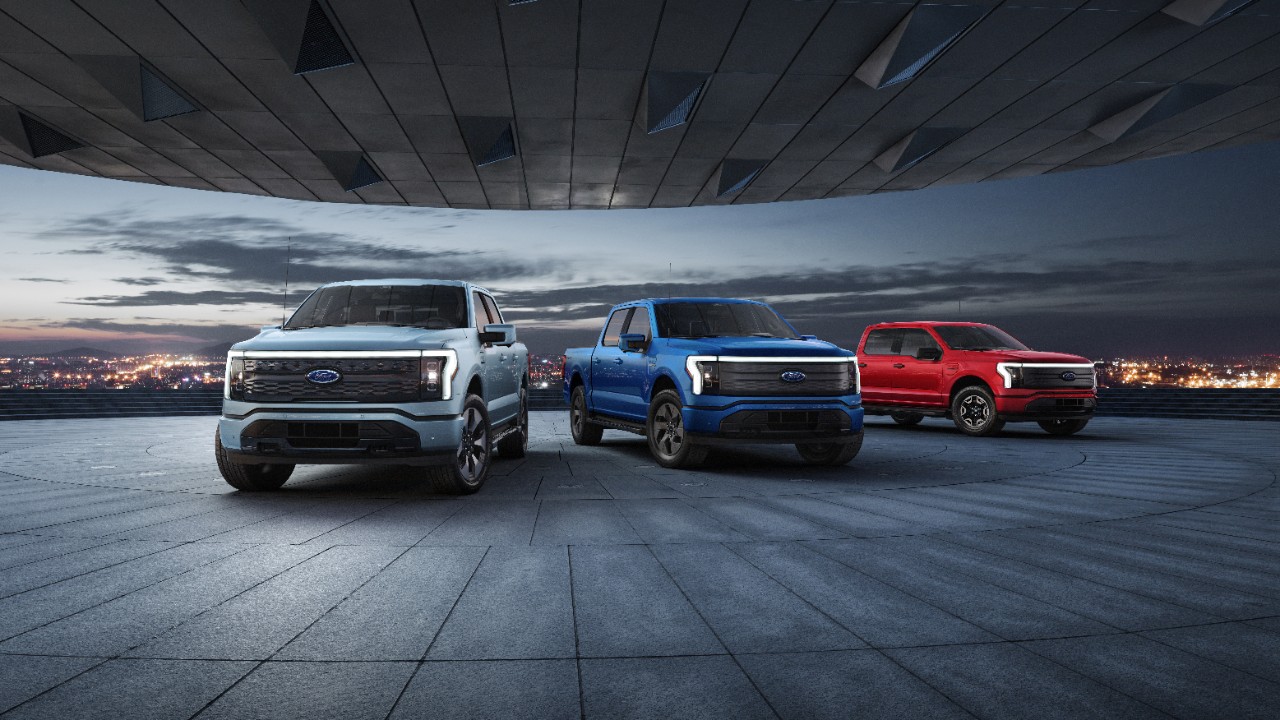
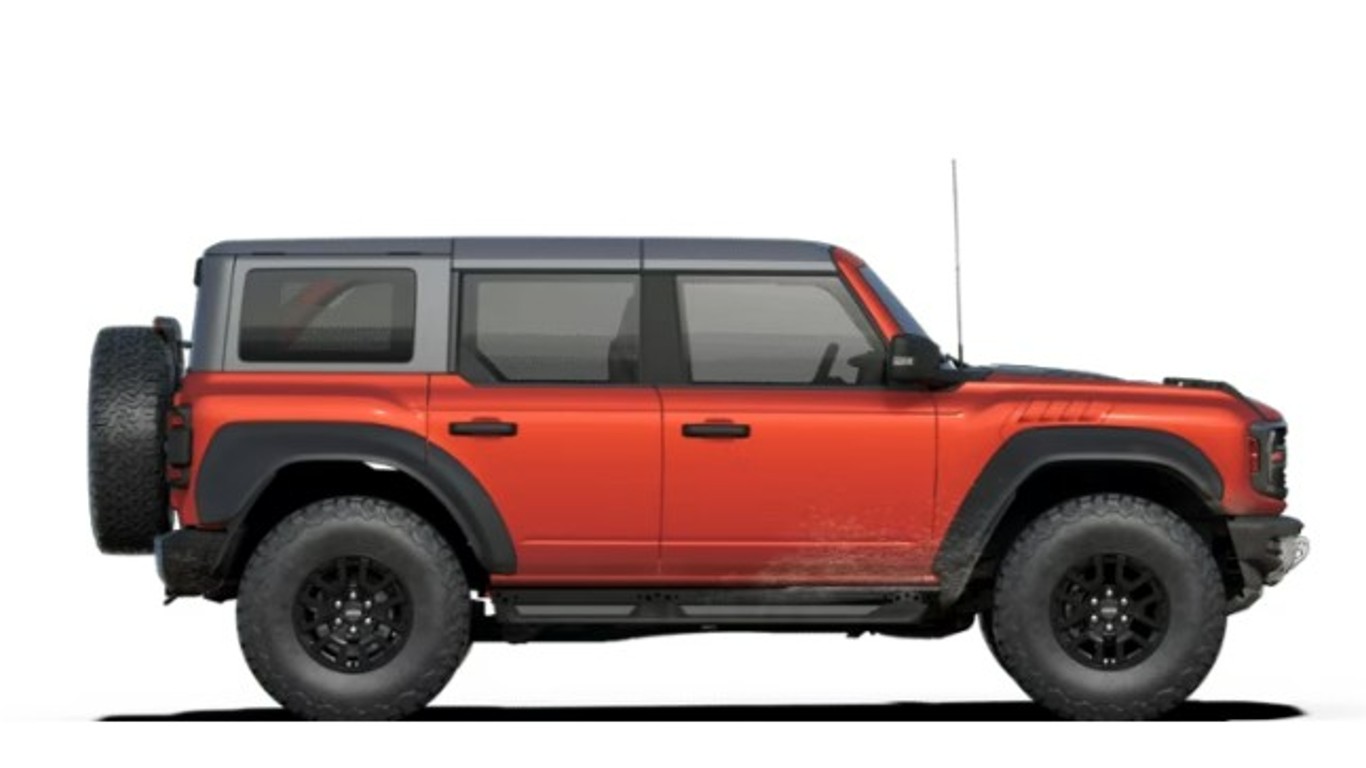
Vehicle recalls carry a material cost for automakers. Warranty accruals, remediation labor, and reputational drag all show up on the income statement. Ford (NYSE:F | F Price Prediction) reports second-quarter results after the close on Tuesday, July 28, 2026, and the news flow has been busy: a 565,691-vehicle Bronco and Bronco Raptor recall for engine-compartment wiring that could ignite, plus a 387,911-vehicle Explorer and Aviator seat defect recall. Several dealer groups sit downstream of that campaign. Here’s a look at four to see who actually stands to gain.
Why Recalls Are a Cost for Ford Shareholders
Ford management has been transparent that warranty and material costs are an ongoing P&L issue. CEO Jim Farley said on the Q1 2026 call, “We’re on track to deliver another over $1 billion in material and warranty cost improvements this year, and we will never stop.” The company delivered $1.5 billion in cost reductions in 2025 and is targeting another $1 billion in 2026. FY2025 ended with a GAAP net loss of $8.16 billion after $10.7 billion in EV impairments, and Q4 2025 EPS of $0.13 missed the $0.19 estimate. The prediction market currently prices an 80.5% chance Ford beats Q2 non-GAAP EPS, but recalls remain a genuine headwind.

Four Dealer Groups Positioned for the Service Bay
Ford reimburses recall repairs at warranty labor rates. The real prize for franchised dealers is the customer-pay work that a service-lane visit tends to generate. Here are the publicly traded proxies with Ford exposure or heavy aftersales mix:
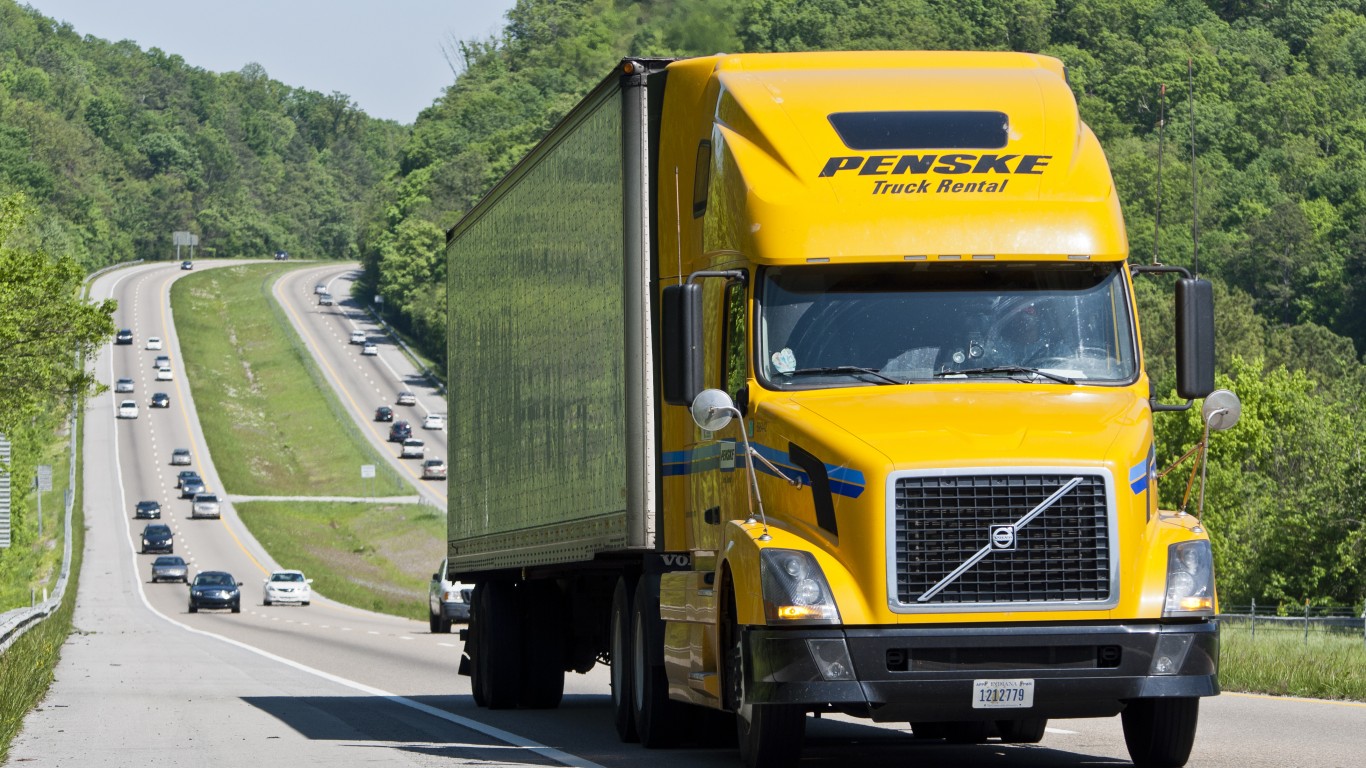
- Penske Automotive (NYSE:PAG): premium-heavy (BMW, Mercedes, Porsche, Audi, Lexus), light Ford exposure.
- Lithia Motors (NYSE:LAD): broadest domestic footprint, including Ford and GM franchises.
- Asbury Automotive (NYSE:ABG): mixed luxury and domestic including Ford, plus its Total Care Auto F&I arm.
- Group 1 Automotive (NYSE:GPI): meaningful Ford and Lincoln stores in a diversified U.S. and U.K. portfolio.
Comparing Aftersales Exposure
| Company | Latest Parts & Service Revenue | YoY Growth | Ford Exposure |
|---|---|---|---|
| Penske | $863.9M retail auto | +4.6% | Low |
| Lithia | $1.043B | +6.1% | High (broad domestic) |
| Asbury | $626.8M | +7.0% | Medium |
| Group 1 | $704.4M | +1.8% | High (Ford/Lincoln) |
Lithia stands out on absolute aftersales dollars and blends the widest Ford/domestic franchise mix. Group 1 carries meaningful Ford/Lincoln stores and achieved a record U.S. parts and service gross margin of 56.4%. Penske’s premium-brand focus means less direct Ford recall benefit, though its service business runs at a 59.0% same-store gross margin.
What Management Is Saying
Roger Penske: “I was particularly pleased with the sequential increase in new and used vehicle gross profit per unit in our retail automotive business and the continued strength of our service and parts business, which increased retail automotive same-store revenue by 5% and related gross profit by 6%.”
Lithia’s Bryan DeBoer: “Our team drove strong results across our platform and sequential growth in earnings, delivering higher revenues and improved GPU in used vehicles, meaningful growth in aftersales, and growing penetration in Driveway Finance.”
Group 1’s Daryl Kenningham: “In the U.S., we saw a key bright spot in aftersales, with parts and service gross margin reaching a new quarterly high. Parts and service continues to be a key differentiator for us.”
Asbury’s David Hult: “We are making great strides towards meeting our strategic objectives, including the rollout of Tekion across our stores.”
Who Actually Benefits Most
Based on brand mix and aftersales scale, Lithia looks best positioned to convert Ford recall traffic into paying service work. It combines the broadest domestic franchise footprint with more than $1 billion in quarterly aftersales revenue at a 58.9% gross margin. Group 1 is the closest peer, with heavy Ford and Lincoln exposure and record parts and service profitability. Asbury’s Ford-exposed stores contribute while its Tekion rollout builds. Penske’s mix is more premium, so its recall linkage is more indirect, but its service margins are among the best in the group.
The Bottom Line
Ford’s recall wave is a shareholder cost that pressures margins. The cleaner way to play the recall economy is through franchised dealers that convert service-bay traffic. Lithia and Group 1 have the most direct Ford exposure, with Asbury a solid third and Penske benefiting more from premium aftersales. Watch Ford’s July 28 report for updated warranty commentary.


Contact [email protected] for any questions or corrections.
Trey has been an editor and author at 24/7 Wall St. for more than a decade, where he has published thousands of articles analyzing corporate earnings, dividend stocks, short interest, insider buying, private equity, and market trends. His comprehensive coverage spans the full spectrum of financial markets, from blue-chip stalwarts to emerging growth companies.
Beyond 24/7 Wall St., Trey has created and edited financial content for Benzinga and AOL's BloggingStocks, contributing additional hundreds of articles to the investment community.
Trey's editorial expertise extends across multiple publishing environments. He served as production editor at Dearborn Financial Publishing and development editor at Kaplan, where he helped shape financial education materials. Earlier in his career, he worked as a writer-producer at SVE. His freelance editing portfolio includes work for prestigious clients such as Sage Publications, Rand McNally, the Institute for Supply Management, the American Library Association, Eggplant Literary Productions, and Spiegel.
Outside of financial journalism, Trey writes fiction and has been an active member of the writing community for years, moderating workshop sessions at regional conventions.