Nvidia’s Rumored $600 Billion OpenAI Deal Could Reignite Its Biggest AI Controversy
Nvidia may be quietly transforming from a chip supplier into the financier of AI's most ambitious infrastructure bets, and critics say that shift raises uncomfortable questions about whether surging GPU demand is as organic as it appears.

The artificial intelligence boom has reshaped more than the technology industry — it has changed how the biggest AI infrastructure projects get funded. Companies are no longer just competing to build the fastest models. They are racing to secure enough computing power to train them, forcing billions of dollars into new data centers and AI chips.
Nvidia (NASDAQ:NVDA | NVDA Price Prediction) has been the biggest beneficiary of that spending, but as the cost of AI infrastructure continues climbing, investors are beginning to pay closer attention to who is ultimately paying the bill. A new report suggests Nvidia may once again play a larger role than simply supplying GPUs.
Nvidia’s Role Appears to Be Expanding
According to The Wall Street Journal, Nvidia is in talks to support as much as $600 billion of OpenAI-related financing. The proposal could include $250 billion tied to OpenAI’s planned Ohio data center and another $350 billion supporting GPU purchases.
If true, the arrangement would represent a dramatic expansion of Nvidia’s relationship with its largest AI customers. OpenAI already depends on Nvidia’s GPUs to train and run models like ChatGPT. Increasingly, it may also depend on Nvidia to help finance the infrastructure required to buy those chips.
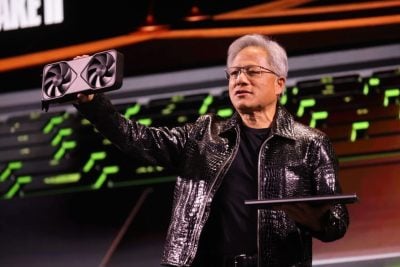
This isn’t the first time such reports have surfaced. Last year, reports suggested Nvidia was considering a financing package approaching $100 billion for OpenAI’s infrastructure ambitions. Those negotiations ultimately produced a much smaller investment than initially reported. Nvidia CEO Jensen Huang later indicated media reports overstated the scope of the discussions, explaining the conversations centered around a non-binding memorandum of understanding rather than Nvidia funding the entire project outright.
That history matters because none of the latest reports have been confirmed by Nvidia or OpenAI. Investors should remember that negotiations often evolve — or disappear entirely.
The Circular Financing Debate Returns
Critics have increasingly argued Nvidia is participating in “circular financing” arrangements, where it helps customers obtain financing that ultimately flows back to Nvidia through GPU purchases. The concern is straightforward: if Nvidia is helping finance demand for its own products, does that make AI demand appear stronger than it otherwise would?
The criticism isn’t new. Nvidia has invested directly in AI startups while partnering with lenders and infrastructure providers to expand AI capacity. Those investments remain tiny compared to Nvidia’s nearly $200 billion in annual revenue and hundreds of billions of dollars in cash generation, but a $600 billion financing package would inevitably attract renewed scrutiny if completed.
Granted, facilitating financing isn’t uncommon in capital-intensive industries. Aircraft manufacturers, industrial equipment makers, and energy companies have long helped customers secure funding. The difference is the sheer size of today’s AI infrastructure projects.
OpenAI’s Economics Remain the Bigger Question
The financing discussion also shines a spotlight on OpenAI itself. Earlier this year, reports indicated OpenAI had reached roughly $2 billion in monthly revenue, an extraordinary growth rate for any software company. Yet multiple reports have also suggested the company continues generating massive operating losses as it spends aggressively on AI infrastructure, talent, and model development.
That creates a delicate balancing act. OpenAI needs ever-larger computing clusters to stay competitive, while Nvidia needs customers capable of purchasing ever-larger quantities of GPUs.
Ironically, that mutual dependence is exactly what makes investors uneasy. If OpenAI requires outside financing to sustain its expansion, skeptics may once again question whether AI chip demand is entirely organic or increasingly supported by creative financing structures.
Key Takeaway
In short, investors should treat the reported $600 billion financing discussions with caution until Nvidia or OpenAI confirms the details. Similar reports last year ultimately proved far less sweeping than early headlines suggested.
Regardless, the report underscores a broader trend that matters far more than one rumored transaction: Nvidia is evolving from the world’s dominant AI chip supplier into a central player in financing the AI ecosystem itself. That strategy could deepen customer relationships and protect future GPU demand, but it also invites greater scrutiny over whether demand is being driven by end-market economics or increasingly by the availability of capital.
Ultimately, that distinction may become one of the most important questions surrounding Nvidia’s valuation over the next several years.
Contact [email protected] for any questions or corrections.
After two decades of patrolling the dark corners of suburbia as a police officer, Rich Duprey hung up his badge and gun to begin writing full time about stocks and investing. For the past 20 years, he’s been cruising the markets looking for companies to lock up as long-term holdings in a portfolio while writing extensively on the broad sectors of consumer goods, technology, and industrials. Because his experience isn’t from the typical financial analyst track, Rich is able to break down complex topics into understandable and useful action points for the average investor. His writings have appeared on The Motley Fool, InvestorPlace, Yahoo! Finance, Money Morning, and, of course, 24/7 Wall St. He has been featured in both U.S. and international publications, including MarketWatch, Financial Times, Forbes, Fast Company, and USA Today.