What Happened to Tech Stocks in 2000 That Many Investors Think Could Happen to Nvidia Today
Cisco was the indispensable infrastructure giant of its era, posting real revenue right up until its customers ran out of money and its stock collapsed 86%. Now credit markets are flashing a strikingly similar warning about Nvidia, and the reason…

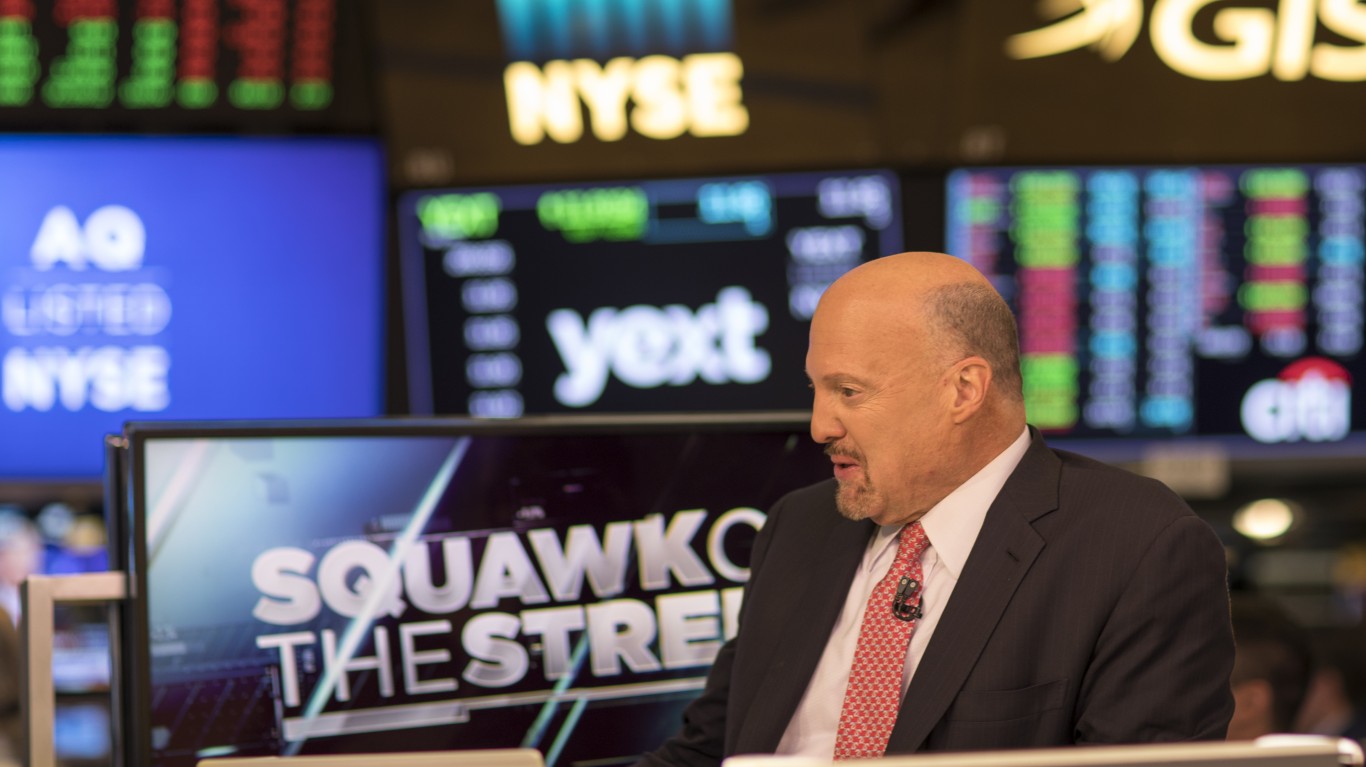
Although NVIDIA (NASDAQ:NVDA | NVDA Price Prediction) has been the single most important trade on Wall Street for three years running, the mood has soured as of late. The technology-packed Nasdaq Composite is up 11.38% year to date, yet NVDA shares just tumbled 4.92% in a single session to $196.66. But the reason has less to do with chips and more to do with checkbooks. Jim Cramer, who remains a bull on the fundamentals, argued this weekend that “if there were no financing involved Nvidia’s stock would be soaring” and that the market is reacting to “memories of 2000”. What’s particularly notable is how precisely the setup rhymes with the last time an infrastructure kingpin promised the moon.
The trigger is the reported $250 billion guarantee for OpenAI’s computing leases tied to a 10-gigawatt facility in southern Ohio, layered on top of a $500 billion initiative with SK Hynix’s parent. Credit markets responded first: NVIDIA’s credit default swap costs spiked by a record amount on the disclosures. Cramer’s point, echoed by the tape, is that “volume in Nvidia supports the decline.” Sophisticated capital is pricing in balance-sheet risk, not demand risk.
The Cisco Mirror
Here is the Long Memory the market is invoking. Cisco Systems (NASDAQ:CSCO) was the picks-and-shovels story of the internet. It briefly became the world’s most valuable company in March 2000 at roughly $555 billion in market cap on a forward P/E somewhere between 130 and 150 times earnings. Then the plumbing customers, the CLECs and dot-coms that had borrowed heavily to buy Cisco routers, ran out of financing. Orders vaporized. Cisco stock fell roughly 86% by October 2002, and 26 years later it still trades below its split-adjusted March 2000 peak. The Nasdaq itself did not reclaim its March 2000 high of 5,048 until April 2015, a 15-year round trip.
Cisco blew up because its customers could not pay, and because Cisco had propped up demand through vendor financing that turned into bad debt when the credit cycle rolled. That is the specific ghost the swaps market is pricing today.
Where the Parallel Bends
The differences are real, and they matter. NVIDIA just posted $81.615 billion in Q1 FY27 revenue, up 85.23% year over year, with net income of $58.321 billion and a non-GAAP gross margin of 75.0% according to the May 20, 2026 8-K filing. Data Center revenue vaulted 92% to $75.246 billion, with networking alone up 199%. Cisco’s growth was already decelerating into its March 2000 peak. NVDA’s is still accelerating.
Valuation is also less extreme. NVDA carries a trailing P/E of 32, a forward P/E of 24, and a PEG of 0.57. Cisco’s forward multiple at its 2000 peak was roughly four to five times that. And NVDA is doling out cash on a scale Cisco never approached: $48.554 billion in free cash flow in a single quarter, an $80 billion buyback authorization, and a dividend hiked from $0.01 to $0.25 per share.
What the Long Memory Actually Warns
The historical warning is that infrastructure providers to a technology revolution can post real numbers right up to the moment their customers’ capex plans crack. The bullwhip effect works in reverse too. Jensen Huang told analysts “our customers’ commitments are firm” and that the “buildout of AI factories, the largest infrastructure expansion in human history, is accelerating at extraordinary speed.” That is precisely the sort of demand-visibility language John Chambers used in 1999.
NVIDIA has now piled up $119.0 billion in total supply-related commitments. If OpenAI, SoftBank, or the sovereign AI buyers stumble on financing, that number becomes a liability, not an asset. On Reddit, a wallstreetbets post arguing “34% of the S&P is 10 stocks making the same bet” pulled 4,824 upvotes. The concentration parallel is not lost on retail.
The Survivor Ledger
Not every 2000-era name suffered Cisco’s fate. Microsoft (NASDAQ:MSFT) peaked near $60 in December 1999 and took roughly 16 years to reclaim that level, though it has since compounded to a $390.94 share price. Oracle (NYSE:ORCL) peaked around $46 in September 2000 and took about 14 years to recover, and just gave back 40.43% year to date as its own $638 billion RPO pile drew scrutiny. Intel (NASDAQ:INTC) peaked near $75 in August 2000, fell roughly 82% by 2002, and only recently clawed back. Cisco is the outlier that never made it home.
Long term, Wall Street still heads higher in the decades to come, and NVIDIA’s cash engine is orders of magnitude more real than anything Cisco produced. The Long Memory is a reminder that when the market starts pricing the financing instead of the fundamentals, the smart move is to keep an eye on customer balance sheets, not just on order books.
Contact [email protected] for any questions or corrections.
Joel South covers large-cap stocks, dividend investing, and major market trends, with a focus on earnings analysis, valuation, and turning complex data into actionable insights for investors.
He brings more than 15 years of experience as an investor and financial journalist, including 12 years at The Motley Fool, where he served as an investment analyst, Bureau Chief, and later led the Fool.com investing news desk. He has also co-hosted an investing podcast and appeared across TV and radio discussing market trends.