Bank of America Says Federal Reserve Chair Kevin Warsh Facing Consequential “Credibility Shock”

Bank of America is comparing the Federal Reserve to an emerging-market central bank, and the bond market appears to agree. What that means for rates, the dollar, and every Fed decision for the rest of 2026 is now an open…

Published August 6, 2026, 12:08pm ET · 2 min read

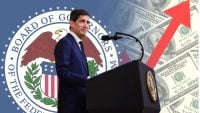
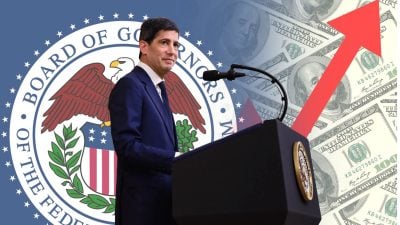
A composite image features a man in a dark suit speaking at a black podium with a microphone. Behind him is the blue circular seal of the Federal Reserve, featuring an eagle and text. The background also shows an overlay of U.S. one-hundred dollar bills and a large, bright red arrow pointing diagonally upwards from the lower left to the upper right.
A key figure addresses the public against a backdrop symbolizing the Federal Reserve's influence on economic trends and monetary policy decisions, depicted by the upward arrow and dollar bills. © 24/7 Wall St. / Shutterstock

Bank of America is warning that Federal Reserve Chair Kevin Warsh faces an emerging-market-style “credibility shock” following the FOMC’s latest split decision, according to a note highlighted by Bloomberg’s Joe Weisenthal. The committee voted 9-3 to hold policy steady, keeping the fed funds upper bound at 3.75%, where it has remained for nearly eight months since December 11, 2025. The three dissents rattled traders.

In the note, Bank of America wrote: “The market immediately priced it with a bear steepening, higher inflation breakevens, and higher risk premia. A steeper curve, lower equities, and a weaker dollar is the typical price action associated with credibility shocks faced by EM central banks.”

Market data support the framing. The 10-year Treasury yield reached 4.75% on July 31, 2026, its highest level in 12 months, before easing to 4.70% this week. The spread between 10- and two-year yields widened from a June low of 0.27 percentage points to 0.47 points on July 31, reinforcing the steepening signal. Core PCE, a closely watched measure of underlying inflation because it strips out volatile food and energy prices, sits in the 90.9th percentile of its 12-month range. That leaves the Fed with less room to lower rates and keeps upward pressure on longer-term yields front and center.

Markets in Wait-and-See Mode

Warsh is also considering lowering the number of scheduled FOMC meetings from the current eight per year, according to a New York Times report cited by Reuters. The existing calendar has been in place since 1981 and gives policymakers an opportunity to reset expectations roughly every six weeks. Fewer meetings would fit Warsh’s preference for less forward guidance and fewer public signals about the likely path of rates.

Shrinking the Fed’s commentary could discourage traders from treating every official remark as a policy signal, but longer gaps between meetings could make each decision more consequential. Investors would have fewer opportunities to hear policymakers explain how incoming inflation, employment and growth data are changing their outlook. That could increase volatility between meetings and place even greater weight on speeches, data releases and Treasury-market moves. In a credibility-sensitive environment, less communication may reduce noise, or leave markets filling the silence themselves.

What to Watch Next

Kalshi’s prediction markets are leaning toward additional easing before year-end, though the three-member dissenting bloc suggests the path is contested. Traders should watch three tells: continued bear steepening of the 10Y-2Y curve, a softer dollar, and rising inflation breakevens would reinforce the credibility-shock trade Bank of America described. A rebound in equities alongside a flatter curve would signal that Warsh is reasserting the Fed’s grip on the narrative. With the CBOE Volatility Index (VIX) at 15.50, markets appear far from fully pricing in tail risk, leaving room for a sharper move if the September FOMC produces another split decision.

Contact [email protected] for any questions or corrections.

Gerelyn Terzo

Gerelyn Terzo is the author of dividend investing handbook "Dividend Investing Strategies: How to Have Your Cake & Eat It Too." A veteran financial journalist, she covers agri-finance for outlets like Global AgInvesting and the broader stock market and personal finance for 24/7 Wall Street. She began at CNBC and later helped launch Fox Business in New York. Gerelyn currently resides in Woodland Park, Colorado and dabbles in nature photography as a hobby.
All articles →