Trump Says Kevin Warsh “Wants to Do the Right Thing.” But Could He Raise Rates This Week?
Kevin Warsh opens a two-day Fed meeting with inflation data that gives him cover to hike rates, a bond market signaling it expects cuts, and a president publicly telling him what to do. Something has to give Wednesday afternoon.

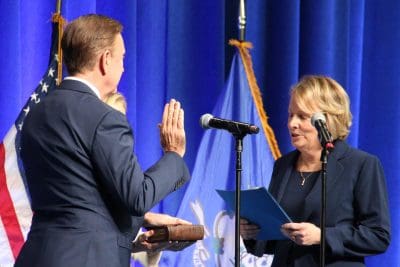
President Trump leaned on his Fed chair during a Michigan travel gaggle Monday. “I know what he wants to do,” Trump said of Kevin Warsh, adding that Warsh “wants to do the right thing” but faces a Fed board that might oppose him. “Rates should be lowered,” the president said.
Roughly 24 hours later, Warsh gavels open a two-day Federal Open Market Committee meeting where the base case, according to Bank of America, is that he holds rates steady, the opposite of what Trump wants and what the bond market has priced in for months. Two of his regional bank presidents, Logan and Hammack, may dissent in favor of a hike.
The Bind Warsh Is In
The federal funds target upper bound sits at 3.75%, where it has been since December 11, 2025, after a cumulative 75 basis points of cuts from last September’s peak. The data give Warsh cover to hold or lean hawkish. Core Personal Consumption Expenditures inflation is running in the 90th percentile of its 12-month range.
The headline Consumer Price Index for June came in at 332.6, up more than 10 points from a year earlier. Unemployment, at 4.2% in June, is tighter than last fall. Growth bounced back to 2.1% after a third-quarter 2025 scare.
This setup is where a central banker wanting credibility talks about hikes, not cuts. Bank of America notes a surprise increase would give Warsh “significant inflation-fighting credibility” at the moment he most needs it, as the White House publicly stress-tests his independence.
What the Market Is Pricing
Traders now view a hike as a live possibility, though still not the base case. Polymarket, as of Tuesday morning, showed roughly 24% odds of a rate hike at the July 29 meeting and roughly 76% odds of no change.
Cumulatively, the same market prices roughly a 68% chance the Fed raises rates by the September meeting, meaning at either July or September. The Treasury curve signals something is shifting. The 2-year yield sits at 4.31%, well above the funds rate, and the 30-year has climbed to 5.12%, up about 15 basis points since July’s start. The VIX has drifted from a July 10 low of 15.03 to 18.67 heading into the decision. The tone is watchful.
What a Hike Would Actually Do
If Warsh surprises, the mechanics for regular Americans are direct. Credit card annual percentage rates, already at 20.94% and in record territory, would drift higher on the next billing cycle. Mortgage rates, which track the 10-year Treasury (currently 4.65%), would likely push above 7% for the standard 30-year. Savers finally get something back: CD and money-market yields tied to the 2-year would follow higher.
For stocks, a hike into a labor market still adding jobs would function as a re-pricing event. Regional banks living on net interest margin, already split by analysts on whether Q2’s double-digit profit growth extends into a “higher-for-longer” second half, would face renewed deposit competition. Rate-sensitive names would take the first hit.
The signal to watch Wednesday afternoon is narrow: the vote count. A 10-2 hold with Logan and Hammack dissenting keeps September pricing intact. Anything else tells you whether Warsh answered the president or the data.
Contact [email protected] for any questions or corrections.
David Beren has been a Flywheel Publishing contributor since 2022. Writing for 24/7 Wall St. since 2023, David loves to write about topics of all shapes and sizes. As a technology expert, David focuses heavily on consumer electronics brands, automobiles, and general technology. He has previously written for LifeWire, formerly About.com. As a part-time freelance writer, David’s “day job” has been working on and leading social media for multiple Fortune 100 brands. David loves the flexibility of this field and its ability to reach customers exactly where they like to spend their time. Additionally, David previously published his own blog, TmoNews.com, which reached 3 million readers in its first year. In addition to freelance and social media work, David loves to spend time with his family and children and relive the glory days of video game consoles by playing any retro game console he can get his hands on.