Honeywell Aerospace Tumbles on Disappointing Debut Report, but Bull Case Remains Intact
Honeywell Aerospace cratered after its first earnings report as a standalone company, but the supply chain stumble that spooked investors may be covering up a much stronger story underneath.


Honeywell Aerospace (NASDAQ:HONA) had a rough debut as a standalone public company. Following its June 29, 2026, spin-off from Honeywell, the aerospace pure-play reported its first-quarter results on August 5, 2026, and the market reacted harshly. Shares fell 23.2% in the most recent session and are down 34.3% over the past month, closing at $156.47 on August 6, 2026.
Even so, the bull thesis on the newly independent aerospace franchise still holds up.
A First Quarter to Forget
Adjusted EPS came in at $1.87, down 32% from $2.75 a year earlier. GAAP diluted EPS of $0.78 was hit by $329 million in spin-off transaction costs ($1.04 per share) and roughly $200 million in interest and financial charges tied to the $15.8 billion debt load the company absorbed. Revenue grew 5% to $4.52 billion, but management cut full-year organic sales growth guidance to 4% to 5%, from 7% to 9%.
CEO Jim Currier owned the reset: “For the second half of 2026, we believe it is prudent to align our guidance to our supply chain’s demonstrated capabilities at the end of the second quarter.”
Cramer’s Bull Case, Unshaken
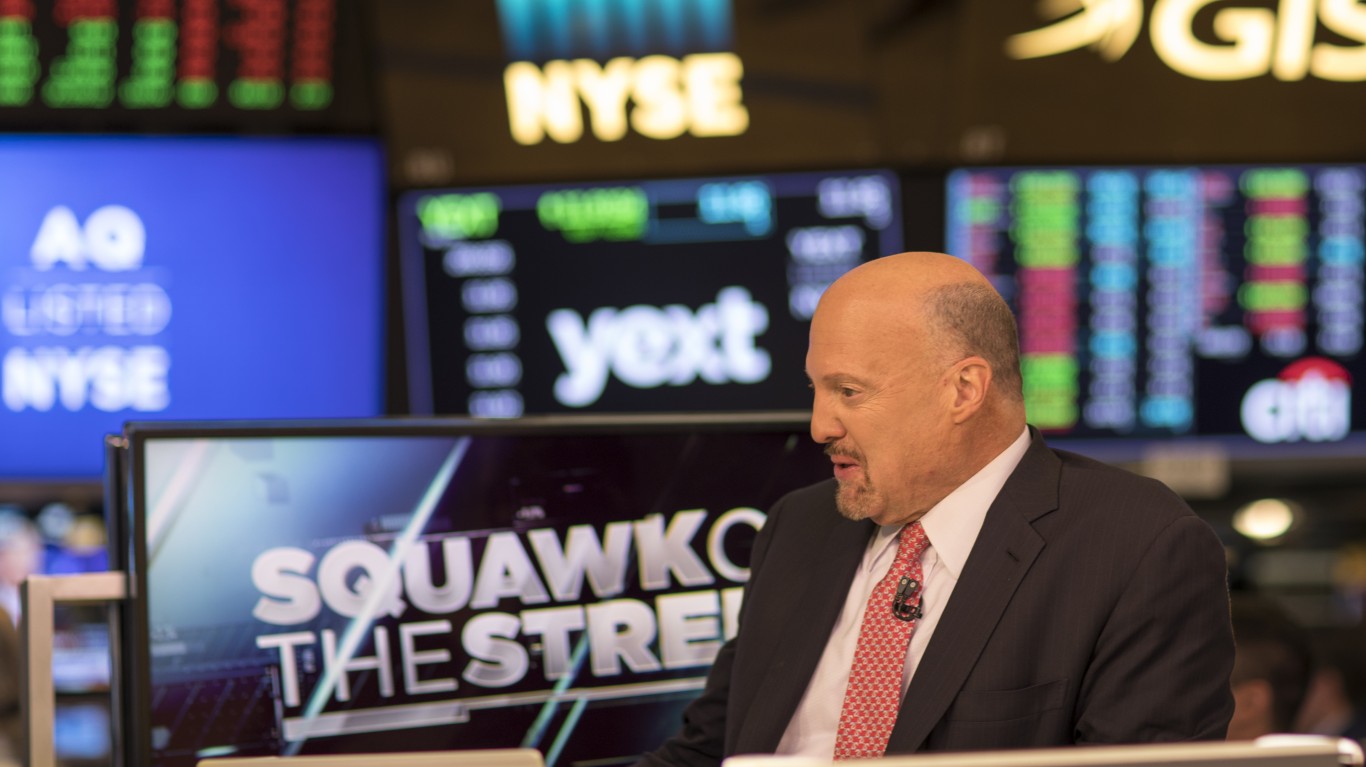
Jim Cramer has repeatedly championed the stock as the aerospace pure-play investors were missing. On June 30, he called it the “new aerospace play,” and on July 20 he told Mad Money viewers to buy it. On air, he said, “We don’t have enough pure plays in aerospace and we just got one put together.”
Three pillars anchor the thesis:
- Aftermarket moat. Commercial Aftermarket revenue was $2.026 billion, up 8%, powered by a huge installed base and higher business aviation flight hours.
- Defense tailwinds. Defense and Space contributed $1.817 billion, aligned with the FY 2027 Department of the Air Force budget of $391.1 billion, a 38% increase that lifts munitions, sustainment, and readiness spending.
- Fleet modernization. Backlog rose 9% to $18.15 billion, with $15 billion of new wins year-to-date, including IndiGo selecting Honeywell avionics and power systems for 810 Airbus A320neo family aircraft, the largest such win in company history, plus Aeromexico adopting SURF-A across 100+ Boeing 737NG/737MAX aircraft.
What to Watch
Wall Street still backs the story. The mean analyst target is $244.58, well above the current share price despite a consensus Hold rating. The forward P/E is 25. Currier said the team is “committed to delivering on the 2030 targets laid out at Investor Day in June.” Execution on supplier qualifications and the debt paydown are the near-term keys. For long-term investors, the moat behind the miss is worth keeping an eye on.
Contact [email protected] for any questions or corrections.
Trey has been an editor and author at 24/7 Wall St. for more than a decade, where he has published thousands of articles analyzing corporate earnings, dividend stocks, short interest, insider buying, private equity, and market trends. His comprehensive coverage spans the full spectrum of financial markets, from blue-chip stalwarts to emerging growth companies.
Beyond 24/7 Wall St., Trey has created and edited financial content for Benzinga and AOL's BloggingStocks, contributing additional hundreds of articles to the investment community.
Trey's editorial expertise extends across multiple publishing environments. He served as production editor at Dearborn Financial Publishing and development editor at Kaplan, where he helped shape financial education materials. Earlier in his career, he worked as a writer-producer at SVE. His freelance editing portfolio includes work for prestigious clients such as Sage Publications, Rand McNally, the Institute for Supply Management, the American Library Association, Eggplant Literary Productions, and Spiegel.
Outside of financial journalism, Trey writes fiction and has been an active member of the writing community for years, moderating workshop sessions at regional conventions.