Honeywell Aerospace CEO: Supply-Base Investment Is Top Priority After Spinoff
The newly independent Honeywell Aerospace (NASDAQ:HONA) began trading today following its separation from parent Honeywell (NASDAQ:HON | HON Price Prediction). CEO Jim Currier appeared on CNBC today to lay out a deliberately narrow set of capital-allocation priorities for the new…


The newly independent Honeywell Aerospace (NASDAQ:HONA) began trading today following its separation from parent Honeywell (NASDAQ:HON | HON Price Prediction). CEO Jim Currier appeared on CNBC today to lay out a deliberately narrow set of capital-allocation priorities for the new publicly traded company, with the plan for cash flow to unlock capacity in the supply base before going anywhere else.
Why Supply-Base Investment Comes First
Currier described Honeywell Aerospace as “a single, large-scale premier provider of the most critical mission systems” on aircraft, with content embedded across over 250 commercial and defense platforms. That installed base is what frames the supply-chain argument. Currier said the number-one capital-allocation priority is investing in the supply base to “unlock capacity,” placing it ahead of M&A or other strategic moves on day one as a standalone company.
The company’s fierce backlog drives the urgency. CEO Currier cited over $19 billion in backlog growing 20% year on year at record levels, and converting that order book into revenue depends on suppliers being able to produce parts, sub-assemblies, and avionics at rate.
Across the broader aerospace industrial base, supplier bottlenecks have constrained build rates at airframers and engine OEMs, so directing capital into supplier tooling, qualification, and inventory is a coherent first move for a company sitting on a record book.
The Benefits of Being a Pure-Play Company
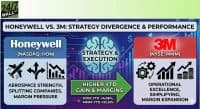
Currier framed the spinoff itself as a strategic unlock. He argued that pure-play status is a “tremendous advantage,” allowing for focused capital allocation rather than a conglomerate’s disparate strategies. Parent Honeywell, now an automation-focused business under the $HON ticker, no longer competes internally for aerospace dollars against process controls, building technologies, or performance materials.
Reinforcing that focus, Currier described a “develop once and deploy everywhere” approach that spans both commercial and defense end markets. For investors, that dual-use mantra helps to spread R&D amortization across more platforms, and it broadens the universe of credible M&A targets the company might add once supply-base spending matures.
Defense Mix and International Exposure
Currier said international defense represents about 30% of its defense segment. That is a meaningful figure given the trajectory of allied defense budgets and the U.S. Department of War’s own push to accelerate munitions production and expand resilience of the defense industrial base through programs like the Munitions Acceleration Council. Honeywell Aerospace content sits in mission systems, propulsion auxiliaries, and avionics rather than munitions, but the broader policy environment of multi-year procurement and capacity build-out is supportive for embedded suppliers across the platform stack.
What Investors Should Watch
Honeywell Aerospace’s investment story will largely depend on execution over the next several quarters. Investors will be watching to see whether increased spending on the company’s supply base helps convert its record backlog into revenue while maintaining healthy book-to-bill trends. Another key question is whether management sticks to its stated strategy of prioritizing supply-chain investment before pursuing acquisitions. Finally, continued growth in international defense spending could become an important tailwind given the company’s global exposure. These are the priorities Currier laid out on day one as an independent company, but the pace of execution and any challenges related to the separation, stranded costs, or supplier readiness will determine how quickly that backlog translates into earnings.
Contact [email protected] for any questions or corrections.
Thomas Richmond is a financial writer and content strategist with 5+ years of experience covering stocks and financial markets. He has published over 500 articles focused on individual stock analysis, helping investors better understand business fundamentals, stock valuations, and long-term opportunities.
Thomas previously served as a Content Lead at TIKR, a stock research platform, where he helped scale the company’s blog to hundreds of articles per month and contributed to a weekly newsletter reaching more than 100,000 investors.
Outside of work, Thomas enjoys weight lifting and soccer.