Amazon’s New Texas Data Center On Track To Be Biggest Polluter In America
Amazon is financing a massive gas plant in West Texas that regulators say could dwarf every other power station in America, and the company's own climate pledges are now caught directly in its path.

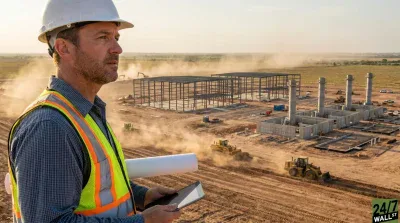
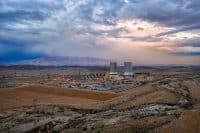
In rural West Texas, land-clearing crews are preparing a site for what could become the single largest source of carbon dioxide emissions among American power plants. Its only customer is an adjacent artificial intelligence data center financed by Amazon (NASDAQ:AMZN | AMZN Price Prediction). If run at its full legal ceiling, the gas plant would emit roughly double the CO2 of today’s dirtiest U.S. power station.
The Numbers Behind the Permit
The plant, developed by Pacifico Energy with Amazon financing, has been permitted by the Texas Commission on Environmental Quality to emit up to 33 million tons of CO2 per year. That figure is a legal ceiling, not a confirmed operating total, and generators routinely run below their permitted caps. Satellite imagery from late July 2026 shows active land-clearing, and three separate construction permits for data center buildings were filed in Texas in early August 2026, with first power targeted for Q1 2027.
The design is enormous: 35 natural gas turbines and up to 7.65 gigawatts of generating capacity, feeding a single Amazon Web Services campus. The reporting originated with a New York Times investigation published August 8, 2026, subsequently summarized by TechCrunch’s Anthony Ha the same day.
Doubling the Current Record
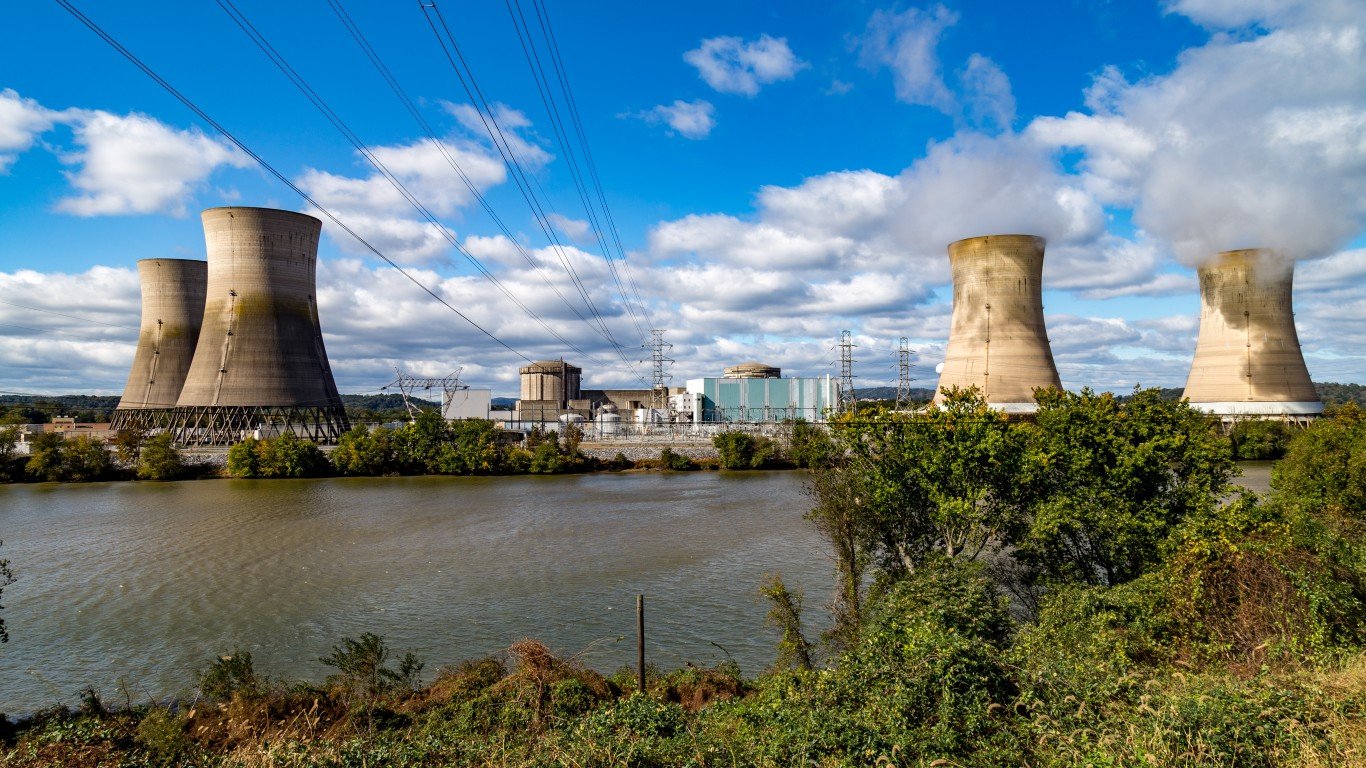
The current dirtiest U.S. power station is the James H. Miller Jr. coal-fired plant in Quinton, Alabama, at roughly 16 million tons of CO2 per year. Amazon’s Pecos County project, if run at its permitted ceiling, would emit about twice that. The plant would be disconnected from the Texas public grid operated by ERCOT, at least initially, which is the basis for Amazon’s argument that ratepayers won’t foot the bill.
An Amazon spokesperson told the Times that the data center will “be powered by new on-site generation that won’t raise electricity costs for Texas families”. That framing sidesteps the atmospheric math: CO2 does not respect grid boundaries.
The Pledge Amazon Made in 2019
Amazon disclosed this year that its company-wide carbon emissions rose 16% last year, moving in the wrong direction relative to its Climate Pledge to zero out emissions by 2040. Asked about the tension, the spokesperson offered two lines: “The world looks different now than when we co-founded the climate pledge” and “Our commitment hasn’t changed.”
CEO Andy Jassy has guided investors to expect roughly $200 billion in capital expenditures across 2026, much of it for AI infrastructure. AWS grew 37% year over year in the second quarter, its fastest pace in 18 quarters. Compute demand is the constraint, and gas turbines are what can be built fastest at gigawatt scale.
An Industry Pattern, and a Political One
Amazon has plenty of company. AI operators across the sector are backing private gas plants to bypass grid queues that stretch years. Political tolerance is fraying: New York State halted construction of all new data centers in July 2026 over cost and grid concerns, and Texas Governor Greg Abbott on August 8, 2026 directed the Public Utility Commission and ERCOT to audit data center projects connecting to the state grid.
The signal to watch is concrete: whether the Pecos plant’s turbines are fired on schedule in the first quarter of 2027, and whether Amazon issues an updated Climate Pledge disclosure that reconciles a 7.65 gigawatt gas facility with a 2040 zero-carbon target. One of those documents is going to have to give.
Contact [email protected] for any questions or corrections.
AJ spent 10 years writing about financial markets at The Motley Fool. His coverage centers on technology stocks and the broader macroeconomic trends, from interest rates to geopolitics, that shape where markets are headed next. AJ is drawn to the stories where big-picture economics and individual companies collide.