Growth Is Flat in 2026. Vanguard’s Deep-Value Fund Is Up 22%, and Almost Nobody Owns It
While IWF investors have spent 2026 watching the Magnificent 7 sputter, one overlooked Vanguard fund running the opposite playbook has quietly outpaced nearly every major ETF on the market this year.

This post may contain links from our sponsors and affiliates, and Flywheel Publishing may receive compensation for actions taken through them.

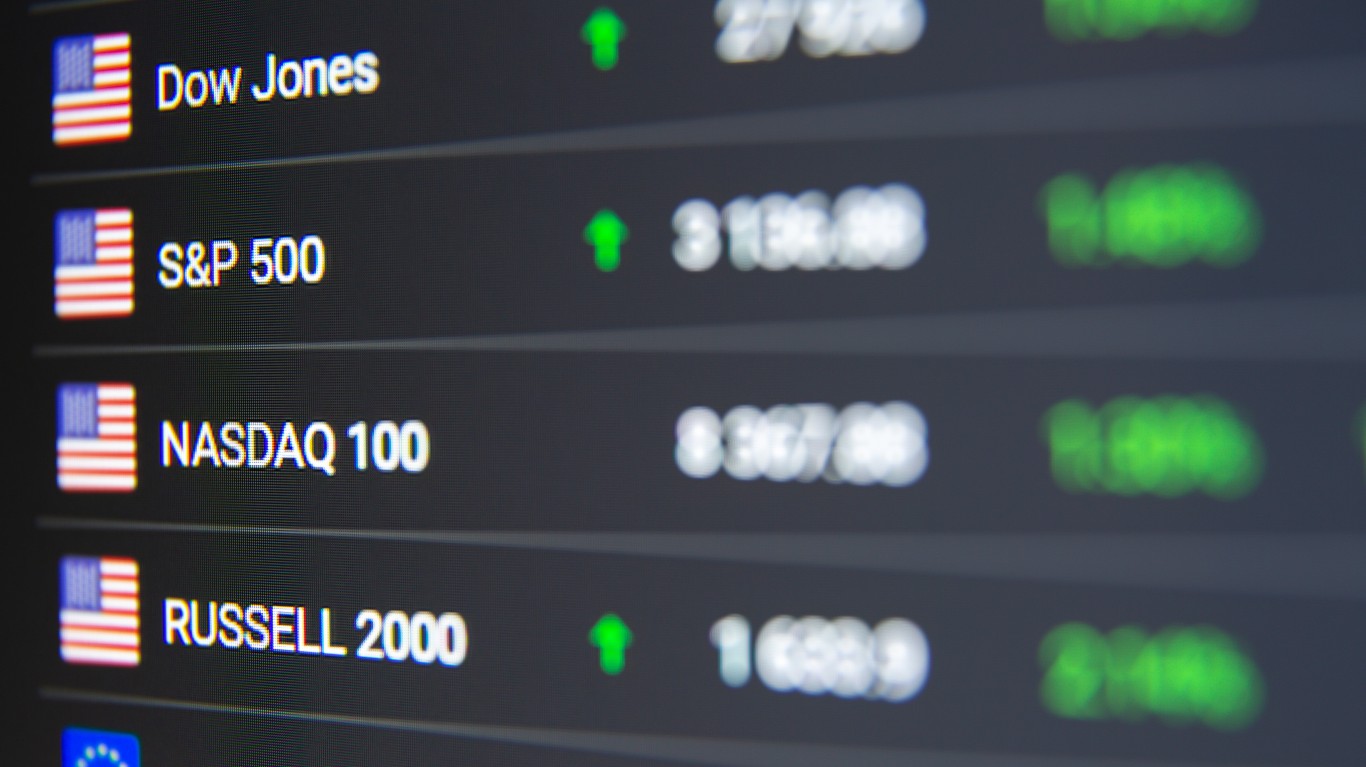
The iShares Russell 1000 Growth ETF (NYSEARCA:IWF) has been the default large-cap growth vehicle for a generation of investors. In 2026, the Russell 1000 Growth index has stalled at -0.8% year-to-date, while the broader S&P 500 has managed only 13.39%.
Investors who own IWF for its growth tilt are treading water. A much smaller Vanguard fund running the opposite playbook has quietly delivered the performance IWF was supposed to provide this year.
What IWF Is Supposed to Do
The trouble in 2026 is that leadership has narrowed and paused. QQQ, the closest cousin to IWF’s exposure, is up 17.7% YTD, but that gain is concentrated in names outside IWF’s heaviest weights. J.P. Morgan’s 2026 outlook notes that 2026 Magnificent 7 earnings estimates have been revised up 3.4%, while S&P 493 estimates have been cut 1.2%, yet price performance has diverged from that setup. Growth’s earnings still lead, while price action this year has lagged.
The Alternative: Vanguard U.S. Value Factor ETF
The Vanguard U.S. Value Factor ETF (CBOE:VFVA) is an actively managed single-factor fund that ranks U.S. stocks on price-to-book, price-to-earnings, and other classic value measures. It goes beyond a standard value index, holding names across the market-cap spectrum. Where the Vanguard Value ETF (NYSEARCA:VTV) leans on large-cap value staples, VFVA reaches into mid-caps, small-caps, and cyclicals that most large-cap value funds screen out.
Performance this year reflects that reach. VFVA is up 22% YTD through August 7, versus VTV at 18.69% and the Schwab U.S. Dividend Equity ETF (NYSEARCA:SCHD) at 25.62%. Over one year, VFVA has returned 38.4%, ahead of the S&P 500’s 22.3%. The gap versus IWF is wider given IWF’s flat year.
Cost, Size, and Oversight
The Tradeoffs
Deep-value factor funds accept tracking error against the S&P 500 as a design feature. VFVA holds 500-plus positions weighted by factor score rather than market cap, so its sector mix tilts hard toward energy, financials, health care, and traditional industrials. In periods when mega-cap growth reasserts leadership, VFVA lags, sometimes by wide margins. Its smaller AUM means slightly wider bid-ask spreads than the largest ETFs, though liquidity has been sufficient for retail-sized orders.
How the Swap Looks in Practice
In a tax-advantaged account, rotating some or all of an IWF position into VFVA is a same-day trade with no tax friction. In a taxable account, embedded gains in IWF from prior years make a full swap expensive. A partial rotation, or directing new contributions to VFVA rather than IWF, preserves the factor tilt without triggering unnecessary capital gains. Pairing VFVA with a growth or broad-market core is a common approach for investors who want value exposure without abandoning growth entirely.
Weighing the Decision
Contact [email protected] for any questions or corrections.
David Beren has been a Flywheel Publishing contributor since 2022. Writing for 24/7 Wall St. since 2023, David loves to write about topics of all shapes and sizes. As a technology expert, David focuses heavily on consumer electronics brands, automobiles, and general technology. He has previously written for LifeWire, formerly About.com. As a part-time freelance writer, David’s “day job” has been working on and leading social media for multiple Fortune 100 brands. David loves the flexibility of this field and its ability to reach customers exactly where they like to spend their time. Additionally, David previously published his own blog, TmoNews.com, which reached 3 million readers in its first year. In addition to freelance and social media work, David loves to spend time with his family and children and relive the glory days of video game consoles by playing any retro game console he can get his hands on.