“It Has Really Hurt My Long-Term Performance”: Jim Cramer Admits His Own Charity Is Losing Money By Using Wrong Dividend Strategy
Jim Cramer just admitted that a rule governing his own charitable trust has quietly cost him years of compounding gains, and the structural flaw he cannot escape turns out to be something most retail investors face every time they collect…


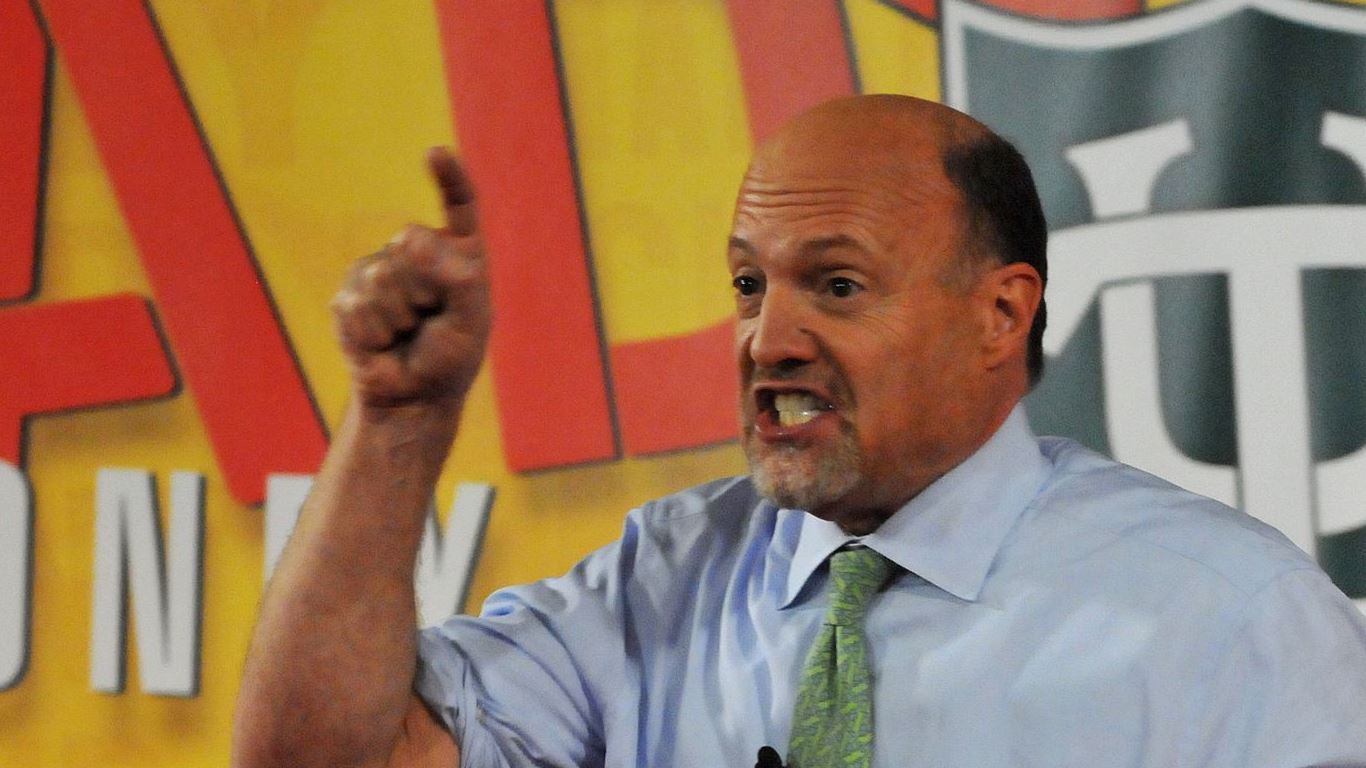
Jim Cramer offered one of the more candid moments of his recent broadcast schedule on Monday, telling a caller that his own charitable trust has paid a price for a rule it cannot escape: it must distribute dividends rather than reinvest them. The Mad Money host used the admission to underline his long-standing view that automatic dividend reinvestment is one of the most powerful forces available to individual investors.
The exchange, aired on CNBC’s Mad Money on August 10, 2026, came from a caller named Philip in Michigan, who identified himself as a listener since 2006 and a current CNBC Investing Club member. “One of my coworkers turned me on to the show, and you’ve made me all sorts of mad money,” Philip said, before asking whether he should use his brokerage’s automatic DRIP program or take dividends as cash and manually redeploy them. “I know that you refer to dividend reinvestment as the 8th wonder of the world, and I’m totally there with you,” he added.
Cramer’s Answer, and the Admission
Cramer came down firmly on the side of automatic reinvestment. “I am a huge dividend reinvestment plan person,” he said, adding, “That’s, that’s, and a matter of fact, I wish there weren’t an alternative.”
Then came the newsworthy twist. “For my charitable trust I have to send the dividends out and it has really hurt my long term performance,” Cramer said. “You can’t, you’ve got to reinvest them. That’s where some big money can be made.”
The trust’s payout requirement is a structural feature of the vehicle, which is required to distribute its income. Cramer’s argument is that ordinary investors who can reinvest should recognize the edge they hold over a portfolio that must pay dividends out the door. Readers who want to see how the trust operates can review the disclosures Cramer publishes through the CNBC Investing Club, which succeeded his older Action Alerts PLUS charitable portfolio.
Why Compounding Sits at the Center of the Argument
The mechanics behind Cramer’s frustration are straightforward. When a dividend is reinvested, each new share generates its own future dividends, and those dividends in turn buy still more shares. The effect is modest in any single quarter and substantial across decades. Cramer has hammered on this idea for years. In a much older Mad Money segment aimed at a 19-year-old just starting to save, he offered the same guidance: “Compound. You get that dividend. Keep reinvesting.”
He closed Monday’s caller exchange with a broader framing: “One of the biggest things I learned from getting interested in the stock market early is that it is a long-term contest. The earlier you get in, the more you can potentially win over the long haul.”
The Bigger Portfolio Picture
Elsewhere on the same episode, Cramer laid out a portfolio construction view that pairs well with the DRIP discussion. “I think people should always be investing for growth and some for dividend and then some for bonds. There may not be a retirement age when it comes to stocks,” he told a retirement-age viewer.
He also warned that dividend investing is not a set-and-forget exercise, using Foot Locker (NYSE:FL) as a cautionary example. “We got involved with Foot Locker and their cash flow declined and what looked like a good dividend stock became a non-dividend stock,” he said. Fundamentals matter, and a payout can vanish when cash flow deteriorates. Investors who want to verify a company’s payout history and coverage can pull filings directly from the SEC’s EDGAR system.
What Investors Should Take Away
The practical lesson from Cramer’s admission is narrow and useful. If a brokerage account offers automatic reinvestment, turning it on lets the math of compounding work quietly in the background. Investors who prefer to pool their dividends and deploy them into a single conviction name can still do that, but Cramer’s view is that leaving cash on the sidelines between payouts leaks return over decades. His charitable trust cannot make that choice. Most retail investors can.
Contact [email protected] for any questions or corrections.
AJ spent 10 years writing about financial markets at The Motley Fool. His coverage centers on technology stocks and the broader macroeconomic trends, from interest rates to geopolitics, that shape where markets are headed next. AJ is drawn to the stories where big-picture economics and individual companies collide.