




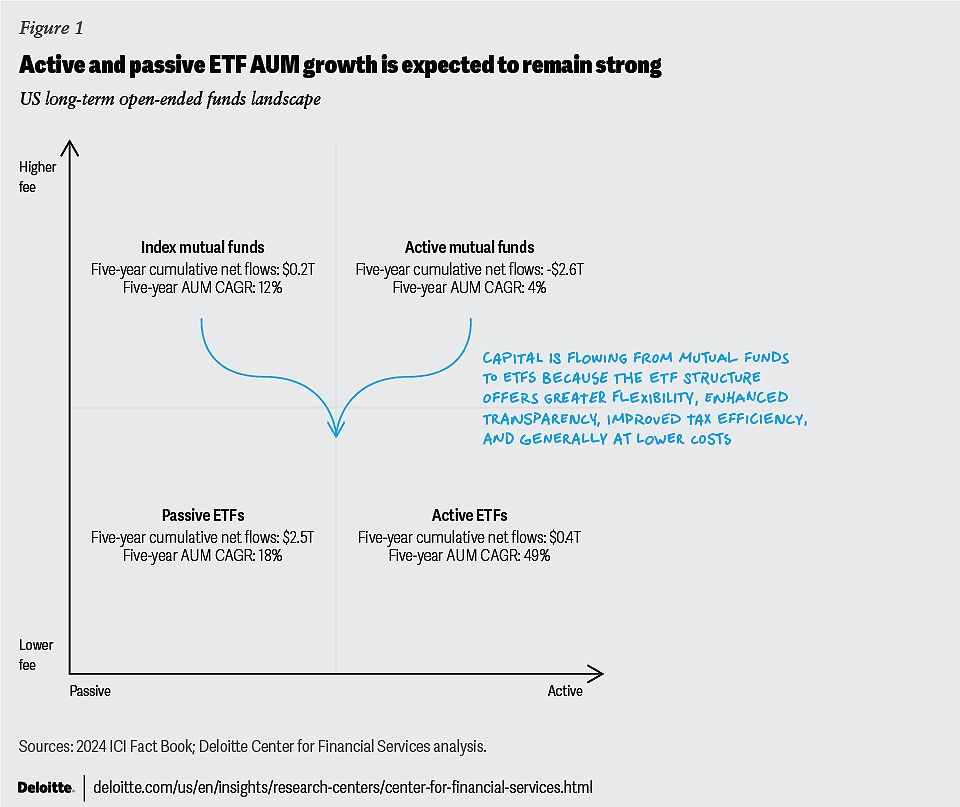
The Growth Fund of America manages $360.9 billion in net assets as of May 31, 2026, which is roughly the GDP of a mid-sized country parked inside a single actively managed mutual fund. That is a strange headline in an era when index funds were supposed to have won the argument. Yet Growth Fund of America (NASDAQ:AGTHX) keeps holding its assets, keeps writing checks to private AI companies, and over the last three years has quietly done something its skeptics said active managers no longer could.
Run by Capital Group under the American Funds brand, AGTHX is a large-cap growth fund with 332 positions spread across US mega-caps, international semiconductors, private tech, and a slug of cash. The A share class is the flagship retail vehicle and the one most 401(k) participants know. Capital Group does not disclose the expense ratio in the snapshot data reviewed here, so investors should confirm the current figure and any sales charge directly on the fund’s prospectus before buying.
The Portfolio Reads Like an Index With Opinions
The top of the book is unmistakably megacap tech. NVIDIA at 6.08%, Broadcom at 5.08%, Microsoft at 4.14%, Meta Platforms at 4.07%, and Amazon at 3.90% anchor the fund. Alphabet’s two share classes combine for roughly 6%. Eli Lilly at 2.91% and Tesla at 2.50% round out the megacap layer.
What separates AGTHX from the S&P 500 is the tail. The fund owns direct-listed Taiwan Semiconductor shares worth $8.85 billion (2.45% of assets), SK Hynix at 1.19%, and Samsung. It also holds private stakes indexers cannot touch: roughly $4.98 billion in Anthropic (1.30%), $1.23 billion in OpenAI (0.34%), plus Databricks, Stripe, Waymo, PsiQuantum, and Anduril. There is $8.18 billion in the Capital Group Central Cash Fund (2.27%), functioning as dry powder.
The Multi-Manager Structure Is the Whole Point
Capital Group runs AGTHX under its Capital System, splitting the portfolio among multiple portfolio managers and an analyst research sleeve, each responsible for their own book. It is why the fund can look like a growth index at the top and a venture fund at the bottom simultaneously. The trade-off is diffusion: with 332 positions and internal diversification, AGTHX will never look wildly different from a benchmark for long. It is a battleship, not a torpedo.
Three Years That Actually Worked
From August 14, 2023 through August 12, 2026, AGTHX’s adjusted price returned 86.5%. Over the same window, the S&P 500 tracker SPY returned 72.39% on an unadjusted basis. Over ten years, AGTHX returned 325.6% versus SPY’s 253.61%. Those numbers use different price conventions (AGTHX adjusted for distributions, SPY unadjusted), so they are directional rather than a clean apples-to-apples horse race, and past periods do not describe the future.
The near term has been less kind. Year to date through August 12, 2026, AGTHX is up 10.2%, while SPY is up 13.28%. One-year AGTHX gain: 15.58%; SPY: 20.2%. The concentrated growth tilt cuts both ways.
The Load Is the Catch
AGTHX is the A share class, which historically carries a front-end sales charge for retail buyers outside of qualified retirement plans and fee-based advisory accounts. American Funds A shares typically impose a front-end load of up to 5.75% on equity funds, with breakpoints at higher purchase amounts. On a $100,000 purchase, that can mean thousands of dollars off the top before a single share of NVIDIA is bought on your behalf. Investors accessing AGTHX inside a 401(k) or through a fee-based advisor usually avoid that charge; direct retail buyers at a brokerage may not. Capital Group also offers F, C, and R share classes with different fee structures, and confirming which class you actually own matters more than the fund’s ten-year chart.
Who Should Look, Who Should Skip
AGTHX suits long-horizon investors who already have access to it inside a 401(k) or an advisory account, want active exposure to private AI names alongside megacap tech, and are comfortable with a portfolio that will hug a growth benchmark most of the time. Investors buying at retail without breakpoint discounts, or those who simply want the cheapest possible large-cap growth exposure, have better options.
Related Funds Worth a Look
- American Funds Growth Fund of America F-2 (NASDAQ:GAFFX): the load-waived, lower-expense sibling for fee-based advisory clients who want the same portfolio without the sales charge.
- Vanguard Growth Index Fund Admiral (NASDAQ:VIGAX): the passive counterweight covering large-cap growth at a fraction of the cost, with no private stakes.
- Fidelity Contrafund (NASDAQ:FCNTX): the closest active peer at scale, a concentrated growth vehicle run by a single lead manager rather than a committee.
- Invesco QQQ Trust (NASDAQ:QQQ): a Nasdaq-100 ETF that isolates the megacap tech tilt AGTHX leans on, at index-fund pricing.
Contact [email protected] for any questions or corrections.












 Top Gaining Stocks
 Top Losing Stocks