Forget SCHD. The Active Fund Wall Street’s Biggest Manager Runs Has Beaten It Since February 2022
SCHD has been the default dividend ETF for millions of investors, but a rival fund from one of Wall Street's largest active managers has quietly built a gap that is becoming difficult to ignore.


The Schwab U.S. Dividend Equity ETF (NYSEARCA:SCHD) is the default dividend holding for a reason. It tracks the Dow Jones U.S. Dividend 100 Index, charges an ultra-low 0.06% expense ratio, and holds $71.6 billion in assets. SCHD investors pay next to nothing to own a screened basket of quality dividend payers with a 3.22% yield. That trade has worked for years. Since February 2022, though, an actively managed ETF from Capital Group has quietly delivered more than double SCHD’s total return, and the mechanism behind the gap is worth understanding before the next rebalance.
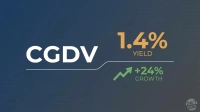
The alternative is the Capital Group Dividend Value ETF (NYSEARCA:CGDV), launched February 22, 2022, by the firm behind American Funds, one of the largest active managers in the world. It is a dividend-oriented fund, but the resemblance to SCHD ends at the label.
Why SCHD Works, and Where It Has Lagged
The screen also excludes most of the mega-cap technology names that drove market returns since early 2022. From CGDV’s inception through July 13, 2026, SCHD returned 46.02% on a total-return basis. Over roughly the same window, CGDV returned 113.11%. That is a spread of about 67 percentage points on a $10,000 starting position, or roughly $6,700 in forgone gains for the SCHD holder.
What CGDV Does Differently
The cost gap is real but modest. CGDV charges 0.33% versus SCHD’s 0.06%, a difference of 27 basis points. On a $50,000 position, that is about $135 a year. Given the return spread since 2022, the active fee has paid for itself many times over. For context, most active large-cap funds charge 0.60% to 1.00%, so CGDV sits at the low end of active pricing.
The Tradeoff You Are Actually Making
The swap is not free. CGDV’s trailing 12-month distributions total $0.5861 per share at a $49.06 price, implying a yield of near 1.2%. SCHD’s 3.22% yield is roughly triple that. An investor drawing income today from SCHD would feel the cut immediately. The article’s case rests on total return, not cash yield, and readers who need the check each quarter should weigh that carefully. If you rely on portfolio income, the income-first alternative to the 4% rule report is worth a look before switching.
Concentration is the other tradeoff. CGDV’s top five holdings are in the mega-cap tech complex, which means the fund’s forward returns are more closely tied to that group’s earnings than SCHD’s are. If leadership rotates back toward energy, staples, and pharma, SCHD’s screen would likely reassert itself.
How to Think About the Swap
In a tax-advantaged account, moving between the two carries no capital gains cost. In a taxable account, the four-year run has likely built embedded gains in SCHD; selling triggers them. A partial reallocation, or directing new contributions to CGDV while leaving the SCHD lot untouched, sidesteps that. Either fund distributes quarterly, so the timing of dividends does not change materially.
For an investor whose goal is total return with a dividend tilt, CGDV’s record since 2022 is the harder number to argue with. For an investor seeking current income, SCHD’s yield still does the job. The decision is which of those two goals actually describes the position.
What to Watch From Here
The load-bearing claim in this comparison is that active management, at Capital Group’s scale and price, continues to compound an edge as the market broadens. If the return spread narrows over the next two years, or if CGDV’s fee drifts higher on its next prospectus, the calculus changes. Until then, the SCHD-versus-CGDV question is less about which fund is better and more about which one matches the job you hired it to do.
Contact [email protected] for any questions or corrections.
David Beren has been a Flywheel Publishing contributor since 2022. Writing for 24/7 Wall St. since 2023, David loves to write about topics of all shapes and sizes. As a technology expert, David focuses heavily on consumer electronics brands, automobiles, and general technology. He has previously written for LifeWire, formerly About.com. As a part-time freelance writer, David’s “day job” has been working on and leading social media for multiple Fortune 100 brands. David loves the flexibility of this field and its ability to reach customers exactly where they like to spend their time. Additionally, David previously published his own blog, TmoNews.com, which reached 3 million readers in its first year. In addition to freelance and social media work, David loves to spend time with his family and children and relive the glory days of video game consoles by playing any retro game console he can get his hands on.