A Top Analyst Says SanDisk Could Buy Back $100 Billion in Stock. If He Is Right, Memory Investors Are Badly Underpricing SNDK Stock
Memory has always been the worst business in semiconductors, so when a top analyst says one company can hand back its entire market cap in buybacks, skepticism is the natural response. But the math and the contracts behind this claim…


Memory has historically been the worst business in the semiconductor industry. Brutal cycles, no pricing power, capacity built at exactly the wrong moment. So when Melius Research’s head of technology tells CNBC that a memory company can hand back roughly its entire pre-2026 market cap in buybacks over three years, the reflex is skepticism. The claim deserves better than a reflex.
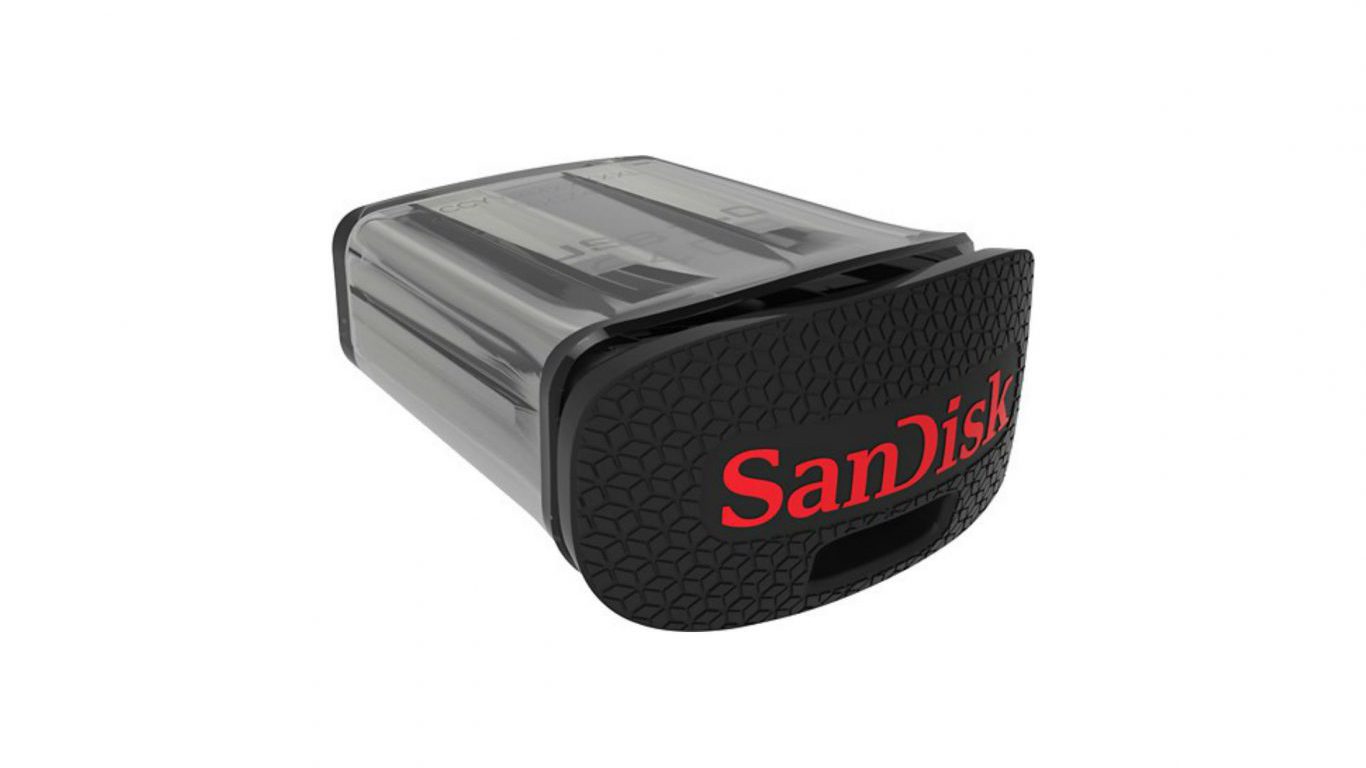
On CNBC this morning, Ben Reitzes said SanDisk (NASDAQ:SNDK | SNDK Price Prediction) could buy back roughly $100 billion of its own stock over the next three years, and lifted his price target to $3,600 after the company’s analyst day. He values the shares at about 11 times earnings on his forward numbers. SanDisk currently trades around $1,613.45 with a market cap near $238 billion and a trailing P/E of roughly 21x. The stock has gained 492% year to date, so the gap between the current price and Reitzes’ target implies the market is only partway to pricing in what he sees.
The Argument That Memory Stopped Being A Commodity
Reitzes’ thesis centers on customer behavior more than on SanDisk’s technology. “The largest customers are actually going back to folks like SanDisk and Micron saying, you know what, let’s sign up for these contracts. It’s really game on. We need this. We cannot be caught short,” he said, naming Google and Microsoft as examples. His view is that AI has rewritten the game: “Memory sort of got reinvented with the whole AI. The more memory you use, the better AI gets.” He also credits CEO David Goeckeler personally, saying, “We think that Dave is doing a great job of really making that business model more predictable.”
That predictability has a specific name inside SanDisk. On the Q4 call, management disclosed that 8 diverse data center and edge customers have now signed New Business Model agreements, with total expected minimum revenue of $93.9 billion at floor pricing and a weighted-average duration of over 4 years. Goeckeler said customers “are giving us demand signals for all the way out to the end of the decade.” Buyers voluntarily giving up price optionality in exchange for guaranteed supply is not commodity behavior.
What The $100 Billion Actually Requires
The math is credible. SanDisk generated $11.43 billion in net income in fiscal 2026 with a negligible debt-to-equity ratio and no term loan B. The board authorized an additional $14 billion in repurchases, bringing the remaining authorization to $15.5 billion, and the company already retired 2.8 million shares for $4.5 billion in a single quarter.
Goeckeler was direct on the call: “We believe that at this point in time…the best way to do it is to return cash to investors via share buybacks.” Q1 FY2027 guidance calls for revenue of $10.30B–$10.80B and non-GAAP EPS of $44.00–$46.00. Extrapolate that quarterly cash generation over 12 quarters, and the Reitzes’ number stops being absurd.
You can see the pace SanDisk has already sustained in the Q4 press release filed with the SEC and in the 437% year-over-year growth in datacenter revenue, which is driving mix higher.
The Counter Argument
Every memory cycle in history has produced a “this time the cycle is dead” thesis, and every one has eventually been wrong. Contracts get renegotiated when spot prices collapse; reputational cost is a real deterrent but not an infinite one.
SanDisk has been a standalone public company only since its February 21, 2025 separation from Western Digital, so there is no long independent track record to stress-test. Current sell-side consensus sits at a target of $2,053.50 with 18 Buy, 4 Hold, and 1 Sell ratings. That is bullish, but well short of $3,600.
The Takeaway
Reitzes is directionally correct on the mechanism. NBMs with $16.5 billion in financial guarantees behind them are qualitatively different from spot NAND, and the free cash flow is real. For the full $100 billion to be achievable, three things must hold: hyperscaler contracts must survive at least one down-cycle without material renegotiation, capital intensity must stay near the approximately 6% for full-year FY2027 Goeckeler guided to, and pricing on non-contracted bits cannot collapse.
If any two of those hold, the buyback is still enormous, just smaller than $100 billion. The durability of the contracts matters more than peak-cycle EPS when valuing the stock. The commodity discount is what is going away. Whether that discount stays gone will determine how much of Reitzes’ target the market ultimately validates.
Contact [email protected] for any questions or corrections.
Omor Ibne Ehsan is a writer at 24/7 Wall St. He is a self-taught investor with a focus on growth, cyclical, and dividend equities that have strong fundamentals, value, and long-term potential. He also has an interest in high-risk, high-reward investments such as penny stocks.