Why Is Rivian Worth As Much As Stellantis? It Isn’t
A struggling EV startup with one brand and massive losses somehow carries a higher market cap than a global automaker selling millions of vehicles across a dozen household names. The math looks broken, but the reason behind it reveals something…


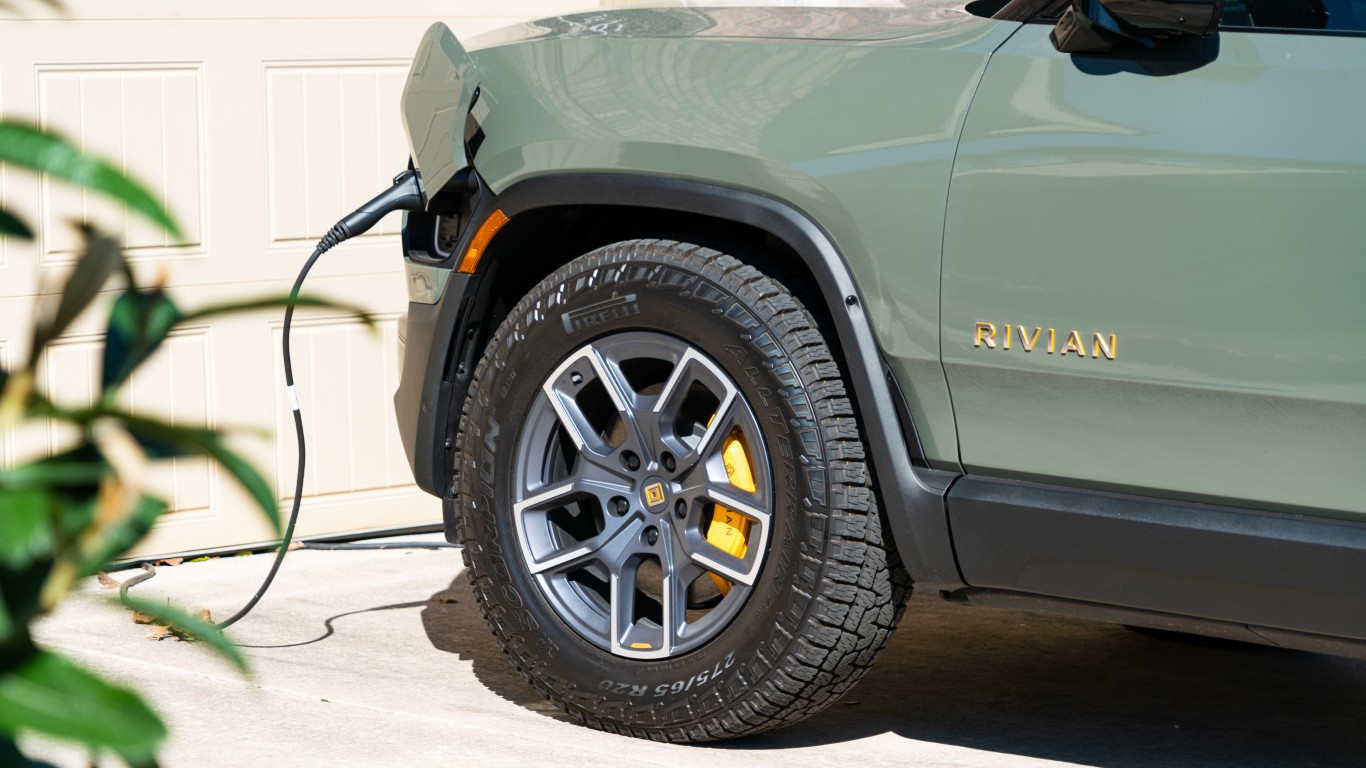
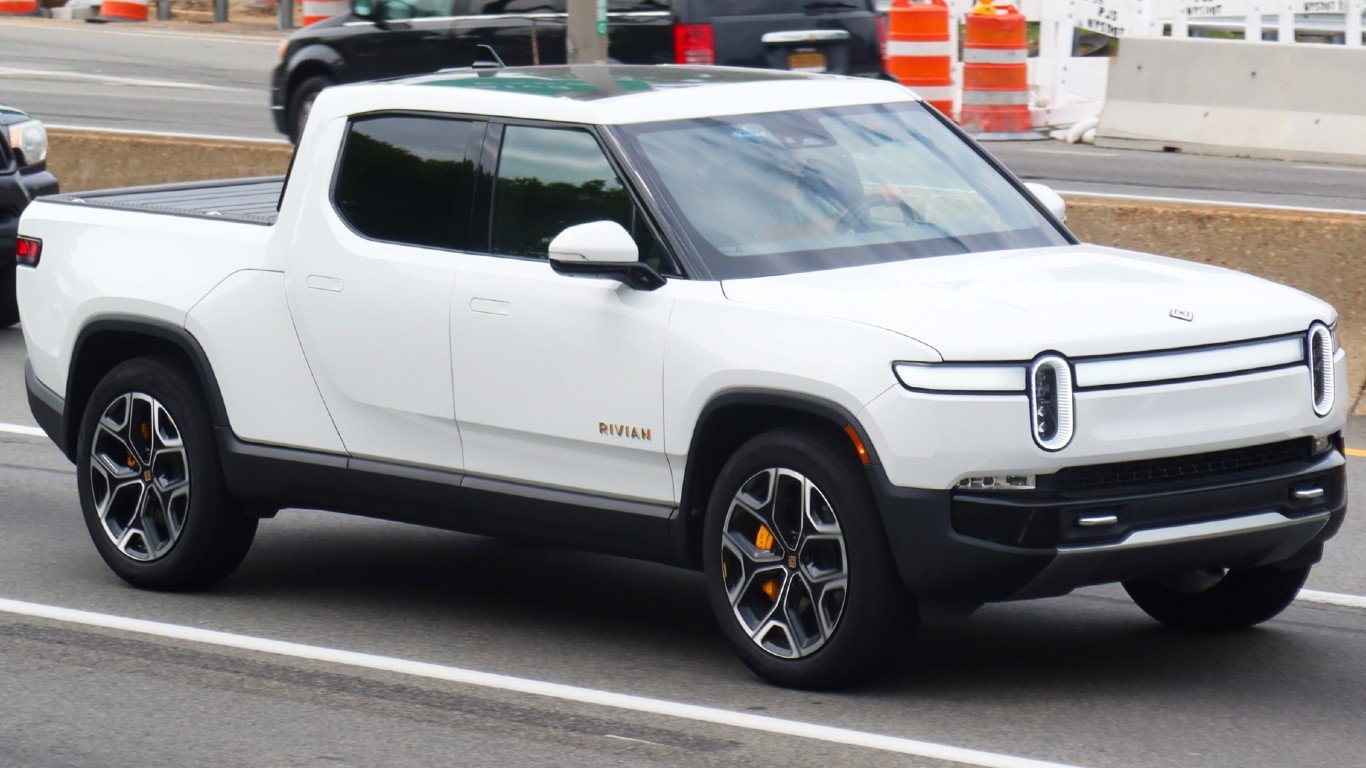
Troubled EV company Rivian (NASDAQ: RIVN | RIVN Price Prediction) has a $23 billion market cap. Global car giant Stellantis (NYSE: STLA) has a $20 billion market cap. This seems impossible. It shouldn’t be. The EV revolution has ended in the US. Stellantis has troubled brands, but not that troubled.
Rivian expects to sell 65,000 to 70,000 vehicles this year. Some of that will come from its new R2, which will have a price point under $50,000. Currently, Rivian models can cost as much as $100,000. Stellantis sold about 5.4 million last year. That is expected to drop slightly in 2026.
Stellantis had about $50 billion in revenue in the second quarter. On that, it made a very small $335 million. It was very, very modest proof that a turnaround plan has begun. Revenue was spread across Jeep, Chrysler, RAM, Fiat, Opel, Peugeot, and several niche brands.
Rivian had revenue of $1.1 billion in the second quarter, on which it lost $833 million. It has one brand.
Why the gulf?
Presumably, because a huge car company that has almost entirely gas-powered vehicles has its best years well behind it. An EV company will take off quickly.
Look at another car company. Tesla (NASDAQ: TSLA) has a market cap of $1.1 trillion; Ford’s (NYSE: F) is $55 billion. The same logic applies here to EVs versus gas-powered car futures.
The gap between gas-powered car sales and EVs worldwide remains substantial. The notable exception is China. EV sales have started to gain ground in the EU, but gas-powered cars still have a huge market-share advantage.
And the US is the worst large EV market in the world, where these vehicles represent about 5% of new car sales so far this year.
Either Stellantis is worth too little, or Rivian is worth too much.
Contact [email protected] for any questions or corrections.
Douglas A. McIntyre is the co-founder, chief executive officer and editor in chief of 24/7 Wall St. and 24/7 Tempo. He has held these jobs since 2006.
McIntyre has written thousands of articles for 24/7 Wall St. He is an expert on corporate finance, the automotive industry, media companies and international finance. He has edited articles on national demographics, sports, personal income and travel.
His work has been quoted or mentioned in The New York Times, The Wall Street Journal, Los Angeles Times, The Washington Post, NBC News, Time, The New Yorker, HuffPost USA Today, Business Insider, Yahoo, AOL, MarketWatch, The Atlantic, Bloomberg, New York Post, Chicago Tribune, Forbes, The Guardian and many other major publications. McIntyre has been a guest on CNBC, the BBC and television and radio stations across the country.
A magna cum laude graduate of Harvard College, McIntyre also was president of The Harvard Advocate. Founded in 1866, the Advocate is the oldest college publication in the United States.
TheStreet.com, Comps.com and Edgar Online are some of the public companies for which McIntyre served on the board of directors. He was a Vicinity Corporation board member when the company was sold to Microsoft in 2002. He served on the audit committees of some of these companies.
McIntyre has been the CEO of FutureSource, a provider of trading terminals and news to commodities and futures traders. He was president of Switchboard, the online phone directory company. He served as chairman and CEO of On2 Technologies, the video compression company that provided video compression software for Adobe’s Flash. Google bought On2 in 2009.