SpaceX is Planning to Spend Up to $500 Billion on Data Centers. Here’s Why Elon Musk is Pushing All-In
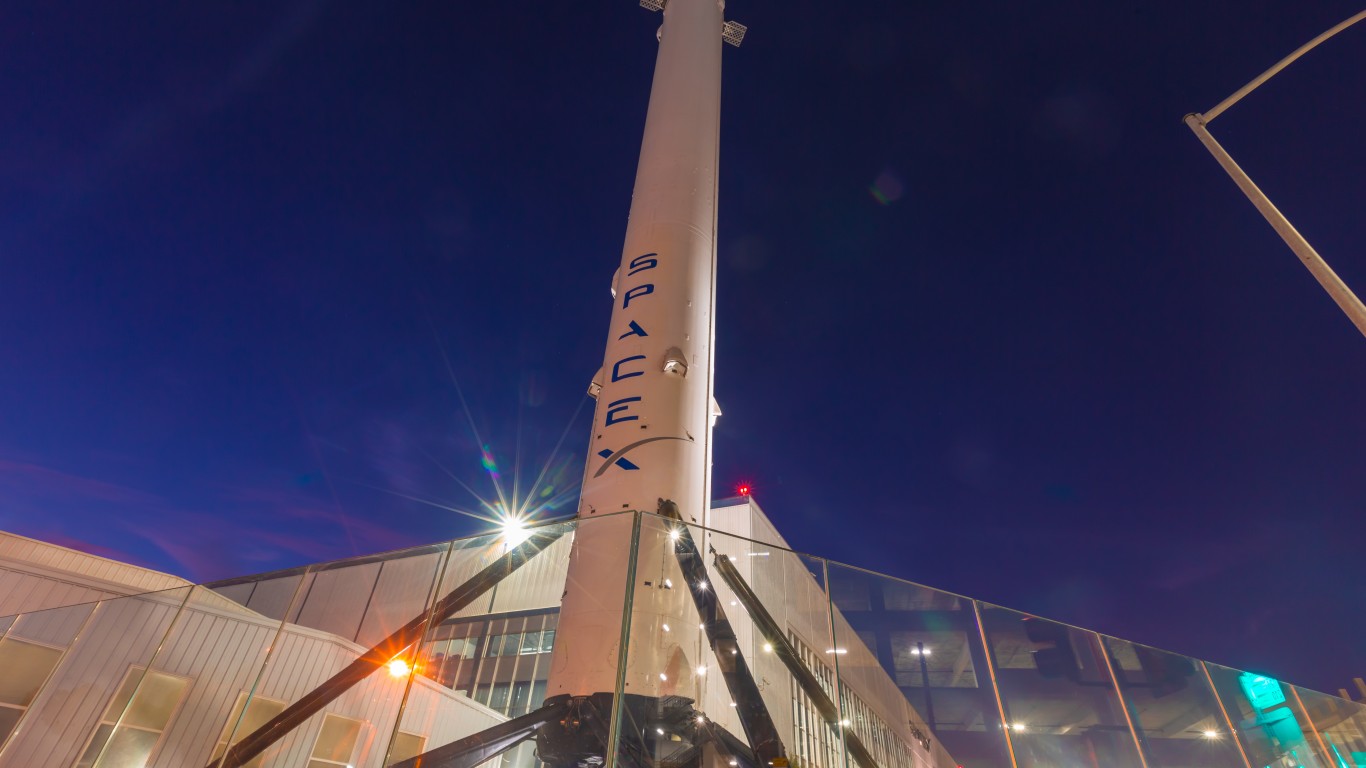
SpaceX is moving fast enough to potentially spend half a trillion dollars on data centers in a single year, and the inference economics driving that decision reveal something surprising about where the entire AI arms race could break down.

The scale of AI infrastructure spending has moved from staggering to almost incomprehensible. In this segment of the AI Investor Podcast, hosts Austin Smith and Eric Bleeker unpack what they called potentially their most important episode of the year: the economics behind SpaceX‘s (Nasdaq: SPCX) plan to expand from 1.4 gigawatts of AI compute capacity to 6 to 10 gigawatts, and what a headline-grabbing figure of up to $500 billion in data center spending means for the broader arms race. We cover the inference economics driving hyperscaler behavior and why Microsoft (NASDAQ:MSFT | MSFT Price Prediction), Alphabet (NASDAQ:GOOGL), and Taiwan Semiconductor (NYSE:TSM) will all have pivotal decisions to make in 2027.
Listen to the Full Episode
Below is the full episode from the AI Investor Podcast, where Austin Smith and Eric Bleeker walk through the SpaceX thesis, the bull case, and the bullwhip risk investors need to weigh right now.
If you’re unable to view this video, you can copy and past the following URL into your browser: https://www.youtube.com/watch?v=98dk_2os6sg
The SpaceX Compute Buildout: A 6 to 10 Gigawatt Ambition
Bleeker opened the most recent episode with numbers from research firm Semi Analysis. Per the company’s recent research, OpenAI and Anthropic are seeing roughly $100 billion annually per gigawatt of inferencing compute on GB300 clusters, an 8.3x payoff. Those inference economics are the reason every hyperscaler with a balance sheet is racing to lock in power, chips, and land.
SpaceX has already stepped into the ring. On May 6, SpaceX struck a deal with Anthropic to rent out part of its Colossus infrastructure. Anthropic is going to pay them $1.25 billion per month, and for that fee they’re getting close to about 300 megawatts of compute capacity. Semi Analysis places the deal at about $31 billion annually per gigawatt of compute. Then on June 5, SpaceX announced another deal, this one to rent out about 110,000 GPUs to Google, stretching from 2026 to mid-2029, at $920 million per month.
Bleeker pointed out that SpaceX’s deal with Google yields $48 billion annually per gigawatt of compute, a 4x payoff over 5 years. That is a lower multiple than what OpenAI and Anthropic are pulling on their own compute, yet still rich enough to reshape SpaceX’s revenue profile. Its these economics that are leading SpaceX to push to build at such a frantic rate. Semi Analysis believes the company is positioned to spend $300 billion to $500 billion in 2027 alone.
The Bull Case: An Arms Race With No Off Switch
Austin Smith articulated the central tension of the episode in a single sentence. “The demand for superintelligence is unlimited, therefore we need to build, build, build. The other side is that all of the economics and the high ROI we’re seeing from people being able to rent this capacity is still in the bottleneck phase, and a bullwhip will happen eventually.”
Bleeker’s point was that Microsoft, Google, Amazon, Anthropic, and OpenAI all have unique individual incentives pushing them to build as aggressively as possible, creating a self-reinforcing arms race. Microsoft’s fiscal Q4 disclosures back that up. Azure revenue surpassed $100 billion, up 41% for the full fiscal year, and management added 31 new data centers this quarter across five continents, with 88 total added in fiscal year 2026. Commercial RPO grew 84% to $678 billion, and calendar-year 2026 capex is expected to land around $175 billion.
On the Google side, Q2 2026 capex reached $44.92 billion, funded in part by roughly $70 billion in combined equity and debt raised to fuel AI expansion. Microsoft has a unique position where it can serve OpenAI models, creating an incentive for the company to undergo a massive expansion beginning late next year that will likely be beyond Wall Street’s expectations. Meanwhile, Google’s models have fallen behind other rivals and now cofounder Sergey Brin is pushing the company to go all-in on getting back in the race. To do so, the company will need even more compute as its fallen behind in part because its data center capacity is increasingly going toward Google Cloud rather than being used internally.
Why the Inference Economics Look So Good, For Now
The reason capex is going vertical is that current inference margins are extraordinary. Bleeker cited two data points : Anthropic’s Opus 4.8 carries an 85% gross margin, and Deepseek’s leaked investor call revealed a 10-month GPU payback period. When you can pay back a GPU cluster in under a year at those margins, the incentive to build as quickly as possible is enormous.
That is also why the coming IPO calendar matters. SpaceX, OpenAI, and Anthropic are all targeting IPOs across a 6 to 9 month window (with SpaceX already having IPO’d and Anthropic targeting one in the next 60 days), potentially combining for around $6 trillion in market value. Public-market capital would accelerate the buildout further, and every dollar raised effectively becomes an order at TSMC and a request for gigawatts of power.
The Supply Side: Taiwan Semiconductor Is the Choke Point
The Q2 2026 TSMC call made the constraint explicit. Chairman and CEO Dr. C.C. Wei said “I believe from this day on all the way to probably 2029, 2030, the demand is very strong… I believe we are witnessing a kind of a new industry called AI technology.” Asked about the shortage, he added, “The gap is so big. So we are working very hard to narrow the gap.”
TSMC raised full-year 2026 revenue guidance to slightly above 40% year-over-year in U.S. dollar terms, hiked capex to $60 to $64 billion, and announced an additional $100 billion USD Arizona investment, bringing total Arizona commitments to $265 billion. Advanced nodes at 7nm and below accounted for 77% of wafer revenue, with 2nm debuting at 3%. Shares of TSM are up 41% year to date on that demand backdrop.
Yet, Taiwan Semiconductor may also be the bottleneck the industry needs. Its limited capacity of advanced nodes could limit the buildout from overbuilding and causing a steep correction across AI infrastructure stocks.
The Bullwhip Risk: What to Watch
Smith and Bleeker closed on the risks rather than a victory lap. Three items topped the list from the notes: spot pricing per unit of compute, Taiwan Semiconductor capacity constraints, and whether supply eventually outpaces demand.
If spot compute prices roll over, if TSMC’s capacity gap stays wide enough to strand the next wave of dollars, or if hyperscaler build plans finally overshoot demand, the current 8.3x payoff math evaporates. That is the bullwhip Smith was warning about, and the reason the hosts want investors watching the arms race with both eyes open.
Subscribe to the AI Investor Podcast
If you enjoyed this segment, subscribe to The AI Investor Podcast for weekly breakdowns of the stocks, suppliers, and infrastructure names powering the AI buildout. New episodes are available on YouTube, Apple Podcasts, Spotify, and all major podcast providers. Recent episodes are linked below. We’ve recommended more than 50 stocks (for free!) on the podcast, and our average recommendation is up 147%. Don’t miss out on the biggest news in the investing world and new stock recommendations each week!.
Contact [email protected] for any questions or corrections.
Eric Bleeker, CFA has been investing for more than 20 years. He began his career working at Microsoft before joining Motley Fool, one of the largest publishers of financial research. In his 15 years at Motley Fool Eric served as the General Manager for Fool.com and led coverage in the Technology & Telecom sector. In addition, he was a featured columnist and has hosted dozens of investing seminars attended by more than a million total investors. Eric has more than 1,000 financial bylines to his name and has been featured in The Wall Street Journal, CNBC, Fox Business, and many other leading publications. He is currently focused on artificial intelligence investing and is a CFA Charterholoder.