




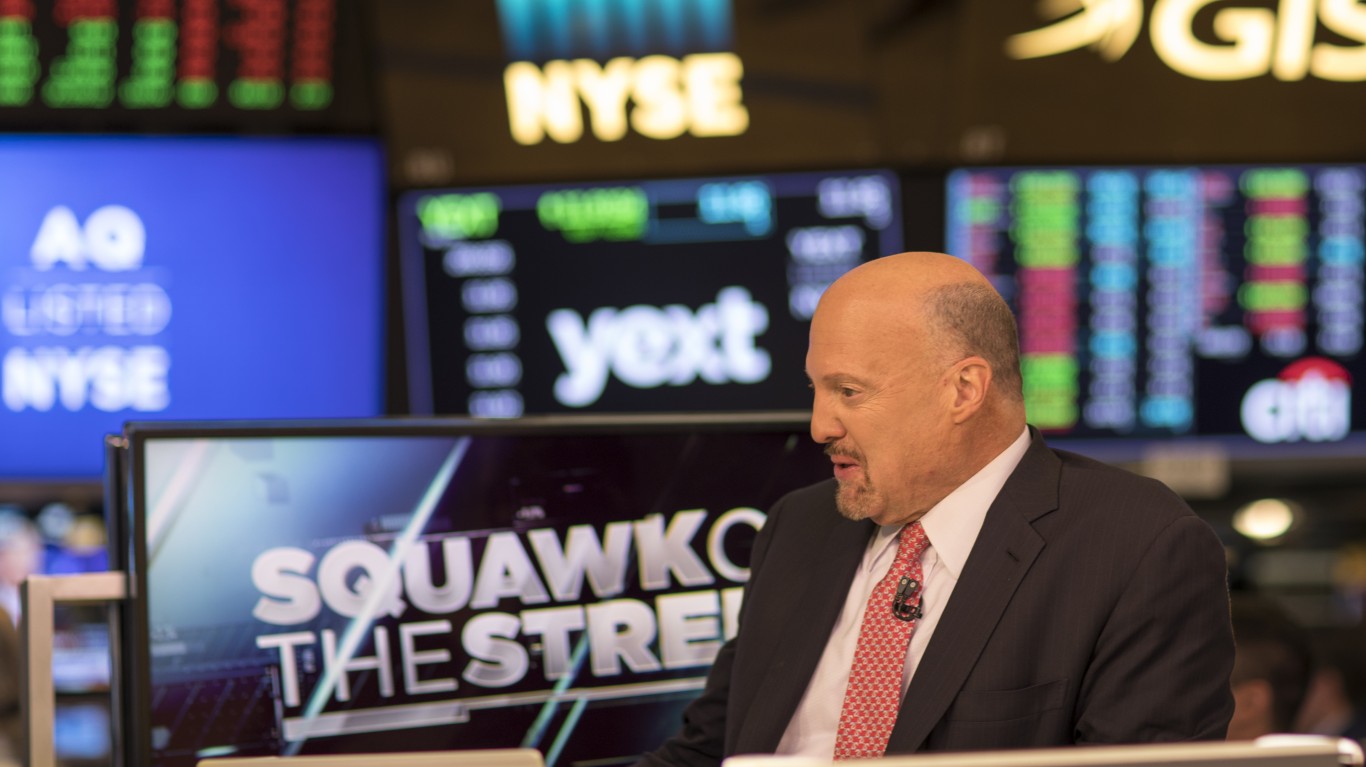
Jim Cramer used a recent CNBC Stop Trading segment to push back against what he sees as reflexive analyst enthusiasm for a narrow group of fintech names. His complaint was direct: “One of the more irritating parts of this market is the insistence of loving fintech. The analysts just love fintech, and the three that they love are SoFi, Klarna and now PayPal.”
His prescription was equally blunt. “We understand PayPal may be a takeover candidate. Klarna is really doing great so far. It’s going to come back. Just stop analysts stop recommending these. Let them go to where they are on the downside. And then you can recommend them.”
The frustration centers on crowded trades. When the same analysts publish the same view on the same tickers simultaneously, the recommendation itself becomes part of the price, leaving no room for upgrades later. His alternative was the boring stuff: “Just go buy Wells Fargo and JPMorgan, go buy JPMorgan over Klarna, over PayPal.” That claim about market structure is worth testing against the numbers.
The Crowded Trade Problem
PayPal (NASDAQ:PYPL | PYPL Price Prediction) carries a Hold consensus, with 32 of 43 covering analysts rating it Hold, compared to 8 Buy and 3 Sell ratings. The analyst target sits at $59.68, essentially on top of the current price of $60.43. PayPal’s Q2 2026 earnings release filed with the SEC shows the beat did little to move the setup.
SoFi Technologies (NASDAQ:SOFI) shows the same pattern. The stock trades at $17.66 with an analyst target of $19.92, and even after a strong Q2 print, it is down 32.54% year to date. Insiders have been net sellers across 82 recent transactions.
Klarna Group (NYSE:KLAR) delivered its second consecutive beat and still fell hard. Revenue grew 26.6% year over year to $1.042 billion, transaction margin dollars grew 42% to $446 million, and the company posted net income of $9 million against a loss a year earlier. The stock fell 22.81% on the day and is down 47.91% year to date.
Klarna cut full-year revenue guidance to $4.08 to $4.16 billion from a prior above $4.34 billion, citing FX and softer German retail, and the reaction confirms Cramer’s structural point about how a crowded, over-loved trade behaves when guidance trims.
Why the Big Banks Look Different
The preference for JPMorgan and Wells Fargo is a value-and-risk call. JPMorgan Chase (NYSE:JPM) is up 14.32% year to date and generated $16.9 billion in net income at a 23% ROTCE in Q2. Jamie Dimon’s franchise also authorized a $50 billion buyback alongside earnings.
Wells Fargo (NYSE:WFC) returned $4 billion to shareholders through repurchases in Q1 and trades at $87.40. Both offer scale, dividends, and diversified revenue the fintech names cannot match today.
The counterargument is that big banks are a different bet on the same consumer. Wells already saw its net interest margin compress to 2.47% from 2.67%, and a softer consumer eventually pushes up bank credit costs. Cramer’s preference reads more like a risk-management call than a pure growth thesis.
The value case is straightforward. PayPal trades at a P/E of 12, which is not demanding, although its non-GAAP operating margin contracted 248 basis points to 17.4% in Q2. Banks earning mid-20s returns on tangible equity look more compelling on a risk-adjusted basis.
The Affirm Exception and the BNPL Nuance
Cramer carved out Affirm Holdings (NASDAQ:AFRM) from his criticism, arguing the stock should trade at $100 because he trusts Max Levchin and the growth story. Affirm currently trades at $73.56 against an analyst target of $91.20.
The fundamentals support the distinction. Affirm posted GMV growth of 35% to $11.6 billion in FQ3 2026, its tenth consecutive quarter above 30% growth, and generated GAAP net income of $102.9 million. The company has strung together consistent GAAP operating profits.
Cramer added a subtler point about the category. “Buy now, pay later just does very, very well in this situation.” The argument is that BNPL benefits when consumers trade down from revolving credit cards, a defensible read of the current cycle.
The counter is that a weaker consumer also increases credit losses on those same loan books, and Affirm’s 30-plus-day delinquencies ticked up 29 basis points year over year to 2.8%. His crowded-trade mechanics argument is stronger than his broader macro thesis, although both deserve careful weighing before acting on any recommendation.
Contact [email protected] for any questions or corrections.













 Top Gaining Stocks
 Top Losing Stocks