




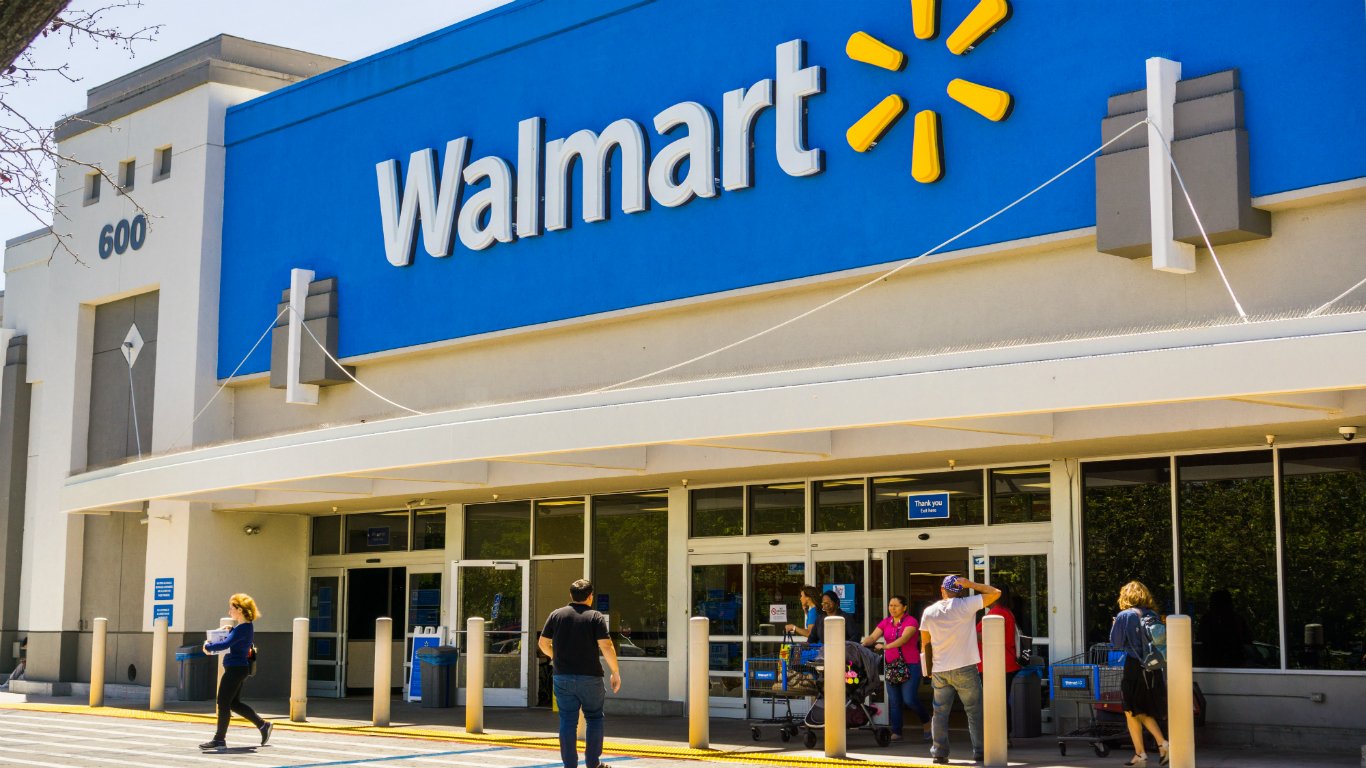
Walmart (NYSE:WMT | WMT Price Prediction) screens as a low-deliberation candidate for a retirement portfolio heading into the Aug. 20 pre-market earnings release, and the setup is not close. Prediction-market traders are pricing a 75.5% probability of an earnings beat, the operating engine is compounding, and the capital-return machine is at its most aggressive posture in years. This is the kind of business retirees are supposed to own, and the catalyst window is 24 hours away.
The Catalyst Is Already Loaded
Management guided Q2 FY27 to adjusted EPS of 72 cents to 74 cents on 4% to 5% constant-currency sales growth. Q1 FY27 already ran hot, with revenue of $175.68 billion (+6.1% YoY), global eCommerce up 26%, advertising up 37%, and membership fee revenue up 17%. The macro backdrop cooperates: BEA data shows June 2026 food spending at $1.573 trillion versus $1.527 trillion a year earlier, exactly the volume tailwind Walmart converts into share gains.

The Income and Buyback Story
Walmart raised the annual dividend to 99 cents per share from 94 cents and authorized a new $30 billion repurchase program with $28.2 billion remaining. In Q1 alone, the company retired 16.6 million shares for $2.1 billion at an average $125.51. Analysts carry a $137.97 price target against a current quote of $115.33, alongside 28 Buy ratings and nine Strong Buy ratings against a single Sell rating.

The Head-to-Head Isn’t Close
Target (NYSE:TGT) is the obvious alternative, and the comparison favors Walmart decisively. Target has posted three consecutive quarters of year-over-year sales declines while Walmart printed Walmart U.S. comp sales up 4.1% ex-fuel with traffic up 3%. Costco (NASDAQ:COST) is the other name investors reach for, but it trades at a materially richer multiple than WMT’s 40 P/E while Walmart’s dividend yield of 0.82% exceeds Costco’s base yield and is paired with a fresher buyback authorization. Walmart’s 37% advertising growth is a margin lever Costco simply does not have at scale.

Dismissing the One Risk
The bear case points to Q1 FY27 free cash flow of -$1.9 billion on CapEx of $6.68 billion (+34% YoY). That CapEx is funding automation and same-day delivery, the exact spend that produced FY26 free cash flow of $14.92B (+17.88%) and store-fulfilled delivery growth of 45%. It is investment, and it is already paying.
Walmart’s setup into the Aug. 20 earnings release looks compelling for long-term holders.
Contact [email protected] for any questions or corrections.










 Top Gaining Stocks
 Top Losing Stocks