





Hydrogen and fuel cell names are selling off together Thursday afternoon, and the damage is spreading unevenly across the group. Size and float appear to be the sorting mechanism today. That distinction matters more than the headline direction.
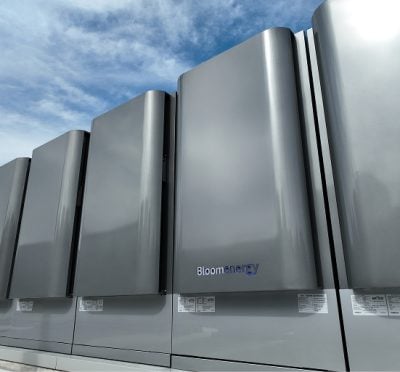
FuelCell Energy (NASDAQ:FCEL) shares are down 8% to $18.72 in midday trading. Meanwhile, Bloom Energy (NYSE:BE) stock is down 3% to $199.68, and Plug Power (NASDAQ:PLUG) shares are sliding 3% to $2.18.
Broader hydrogen exposure is holding up better. The Global X Hydrogen ETF (NASDAQ:HYDR) is slipping 2% to $42.78, a much shallower move than FuelCell Energy stock’s drop. This basket holds all three names, and its milder decline shows the pressure landing hardest on the smallest single stocks.
Bond Yields Are the Trigger
No company-specific news is driving any of these three stocks lower Thursday. There’s no fresh guidance, no filing, no analyst action, and no announced project change tied to FuelCell Energy, Bloom Energy, or Plug Power today. When a theme moves without a headline, the story usually lives in the tape rather than in the companies themselves.
A rates story has been building for weeks. Yields on the 10-year Treasury closed at 4.71% on Tuesday, sitting near the top of a one-year range and well above the 3.97% low touched in February. Long-dated yields at these levels pressure companies whose earnings sit years out, and hydrogen and fuel cell names screen as classic long-duration equity exposure.
With no fresh catalyst, the selling looks like risk-off rotation and profit-taking after strong runs. On defensive tape turns, the highest-beta corners of the market are usually first to give ground. Fuel cell equities sit squarely in that bucket, alongside other pre-profit clean-energy themes that trade on multi-year expectations.
Broader hydrogen positioning has drifted lower over recent sessions as yields press higher. Growth names with the longest earnings horizons feel that gravity first. Hydrogen and fuel cell equities check that box as clearly as any group in the market right now.
Where the Damage Diverges
Today’s decline is running independently of year-to-date performance. FuelCell Energy stock is up 178% year to date through Wednesday’s close, while Bloom Energy stock is up 138%. Both have been massive winners this year, yet FuelCell Energy is falling more than twice as hard Thursday.
The separator is scale. Bloom Energy stock carries a market capitalization of $59.09 billion, and Bloom Energy stock is down 3% today. By contrast, FuelCell Energy stock carries a market cap of $1.49 billion, and FCEL shares are down 8%.
Plug Power stock sits between them at a $3 billion market cap, with Plug Power stock also down 3% and up 14% year to date, well behind its two peers on the year. On a risk-off session, the smallest and least liquid name tends to absorb the heaviest selling regardless of its underlying story. That’s why the Global X Hydrogen ETF, which holds all three names, is down only 2%: its international and mid-cap positions dilute the pressure landing on FCEL shares.
Liquidity dynamics reinforce the same point. A $59 billion company can absorb heavy daily turnover without a sharp price impact, while a $1.49 billion name can move on far smaller flow. Risk-off sessions push the same dollar exit from a hydrogen basket harder into FuelCell Energy shares simply because fewer buyers wait on the other side.
What to Watch Now
Traders may want to keep an eye on whether FuelCell Energy shares stabilize as the session closes and whether the ETF holds above its recent range. Late-session character typically signals whether this is one-day churn or the start of a deeper pullback in the theme. A weak close in the smallest name often invites follow-through selling the next morning.
Position sizing matters more than usual with this group. The smallest name in a theme tends to move most in both directions, which cuts against treating FuelCell Energy, Bloom Energy, and Plug Power as interchangeable exposure to the same hydrogen trade. Sizing each holding to its own volatility, rather than to the shared story, reduces the odds that one bad session in the smallest position drives the entire basket’s returns.
Market watchers can stay tuned for signs the 10-year yield eases into the afternoon session, which would remove some of the pressure across long-duration equities. Stabilizing rates tend to be the fastest source of relief for names like these when there is no company news to work with. Absent that, the theme’s smallest and most volatile name will keep dictating the group’s daily direction.
Contact [email protected] for any questions or corrections.







 Top Gaining Stocks
 Top Losing Stocks