OpenAI Is Burning $12.3 Billion a Quarter and the Rival It Created Just Passed It
Anthropic was built by people who left OpenAI, and now it has quietly flipped a metric that makes OpenAI's massive spending look less like a moat and more like a gamble with consequences for every chipmaker in the supply chain.

This post may contain links from our sponsors and affiliates, and Flywheel Publishing may receive compensation for actions taken through them.

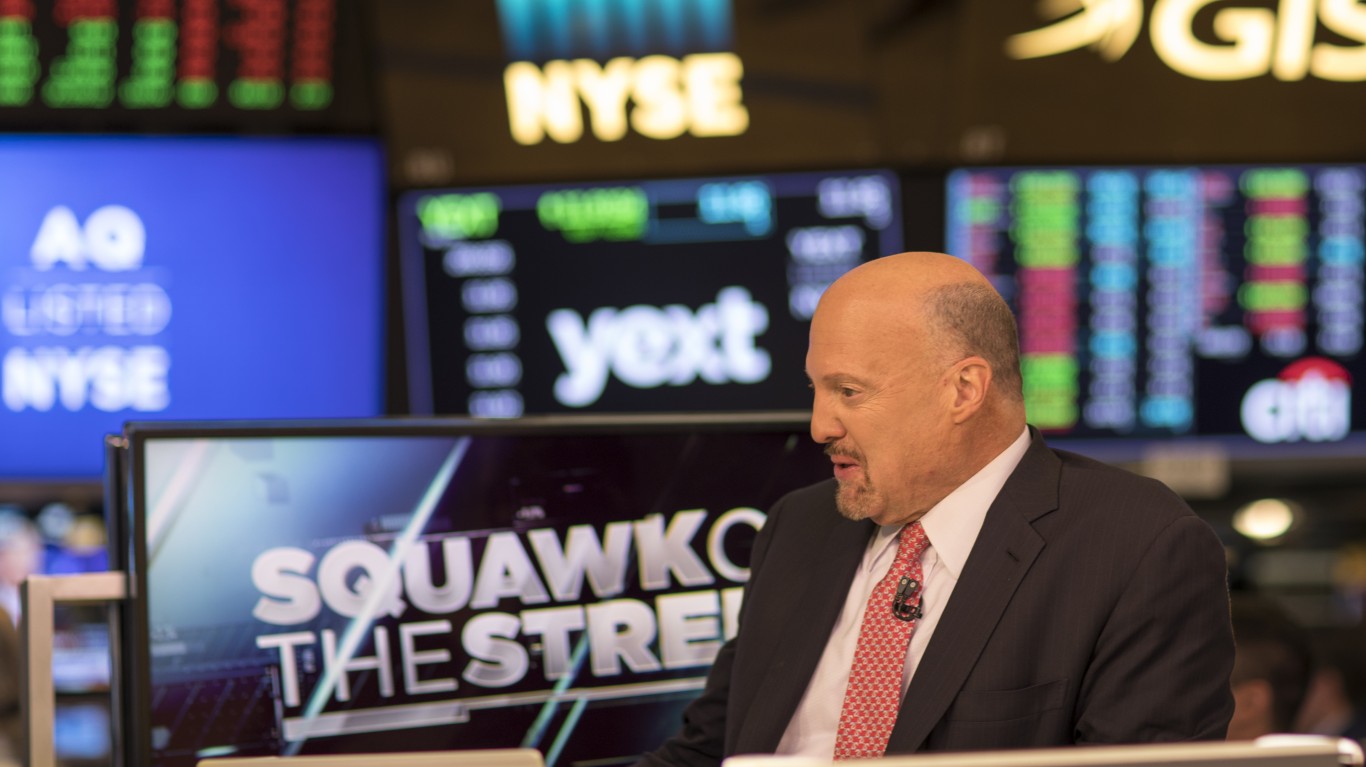
CNBC’s Kate Rooney walked viewers through OpenAI’s second-quarter numbers this week, citing Wall Street Journal reporting on a company that does not file with the SEC and is not audited publicly. The picture is striking: losses at OpenAI widened while Anthropic, a company made by former OpenAI employees, quietly overtook it on the metrics that matter ahead of a public offering.
Rooney said, “OpenAI reportedly [is] seeing deeper losses in the second quarter, at least while sales grew sequentially. That double digit growth was outshined by rival Anthropic, which is also poised to go public.”
Since neither company trades publicly, ordinary investors cannot buy the winner or short the loser. What they can do is read the divergence as a signal about where AI infrastructure spending is heading, because that spending shows up on the income statements of the semiconductor companies that supply the underlying hardware.
A $12.3 Billion Loss and a Quiet Inversion
The operating loss grew to $12.3 billion in the quarter, up from $9 billion the prior quarter, including stock-based compensation. Revenue came in just under $7 billion, up 18% sequentially, with July growth accelerating to 20% and enterprise growing 32%.
Anthropic reached profitability on an EBITDA basis while pulling in $11.5 billion in quarterly revenue. Its valuation recently reached $65 billion, compared with roughly $40 billion for OpenAI, an inversion from where the two once stood.
Rooney said, “The profit profile looks so different for these companies. When you compare Anthropic, which at least on an EBITDA basis is profitable, to OpenAI, which has seen deeper and deeper losses, it calls into question some of the spending.”
These are private companies. Nothing here is an audited public filing, and investors should treat every figure as reported rather than confirmed.
Is the Spending a Choice or a Structural Problem?
OpenAI CFO Sarah Friar has argued publicly that compute is the moat. More data centers mean more capacity, which translates into revenue, which funds the next round of buildout.
Rooney summarized the case: “OpenAI’s moat, as they’ve described it, is that they’re spending more on data centers, they want more compute, and that translates directly to revenue, which CFO Sarah Friar has laid out.”
That argument has force, although Anthropic’s results are the first serious evidence that scale may not be a prerequisite to winning. If a competitor with a fraction of the infrastructure footprint can reach EBITDA profitability at that revenue base, the moat theory begins to look speculative.
The comparison deserves care. EBITDA excludes depreciation and stock-based compensation, which dominate a compute-heavy business, so calling one company profitable and the other a loss-maker is not an apples-to-apples comparison. Still, the trend matters, and public-market investors reward narrowing losses more than they punish absolute size.
What Public Investors Should Actually Take Away
The AI capital cycle is being financed by companies that mostly do not trade. That cycle lands on the income statements of a small group of suppliers, most visibly NVIDIA (NASDAQ:NVDA | NVDA Price Prediction) and Broadcom (NASDAQ:AVGO), although the buildout reaches well beyond the chipmakers into power, cooling, and networking (we profiled seven of those suppliers in a free report you can grab here).
NVIDIA’s most recent quarter showed data center revenue of $75 billion, up 92% year over year, with management naming both labs as customers scaling on Grace Blackwell and Vera Rubin systems. Jensen Huang told analysts NVIDIA’s coverage of Anthropic “has been largely zero until just recently. And so we’re gaining share tremendously fast in inference.”

Broadcom disclosed a contractual commitment to deploy 1.3 gigawatts for OpenAI in 2027 as part of a 10-gigawatt agreement through 2029, and access to over 1 gigawatt of TPU-based compute for Anthropic in 2026. AI semiconductor bookings exceeded $30 billion in the quarter against $10.8 billion shipped, according to CEO Hock Tan.

Rooney flagged one risk investors should not dismiss: “If you do start to see more pushback, which it seems like there’s been this inflection this week, there’s been more of a grassroots effort to push back on data centers, this really could be a bottleneck for both of these companies. OpenAI [is] much more exposed here.”
If OpenAI’s losses are a strategic choice, suppliers continue to book revenue because orders keep arriving. If they are a structural problem, the entire supply chain eventually absorbs the impact, and the first companies to feel it are those whose backlogs assume the current pace will continue. NVIDIA trades at $217.56, and Broadcom at $362.48, and both prices embed an assumption about which of those futures wins.
Contact [email protected] for any questions or corrections.
Omor Ibne Ehsan is a writer at 24/7 Wall St. He is a self-taught investor with a focus on growth, cyclical, and dividend equities that have strong fundamentals, value, and long-term potential. He also has an interest in high-risk, high-reward investments such as penny stocks.