Prescription Drugs — Not Broke Consumers — Caused Walmart’s Big Sales Whiff
Walmart beat revenue estimates and raised its full-year outlook, yet its stock still fell as investors zeroed in on one ugly number. The real reason behind that miss has nothing to do with shoppers tightening their belts.

Walmart (NYSE:WMT | WMT Price Prediction) delivered the kind of quarter that should have been an easy win. Revenue rose 5.9% to $187.9 billion, topping Wall Street’s $186.8 billion estimate, and management raised its full-year sales and profit outlook. Yet the stock fell after investors focused on a troubling figure: U.S. comparable sales grew just 2.6%, a rare miss for a retailer that has consistently delivered stronger growth.
The obvious explanation is that consumers are running out of money. Walmart is where shoppers go when budgets tighten, so weaker sales could suggest even value-conscious households are feeling squeezed.
But Target (NYSE:TGT) complicates that argument. Its comparable sales increased 3.8% during the same period, roughly 1.5 times Walmart’s pace, despite Target having greater exposure to discretionary spending.
If inflation were broadly crushing household budgets, Target should have struggled more than Walmart. Instead, something much more Walmart-specific is weighing on its reported sales.
The Real Culprit: Cheaper Prescription Drugs
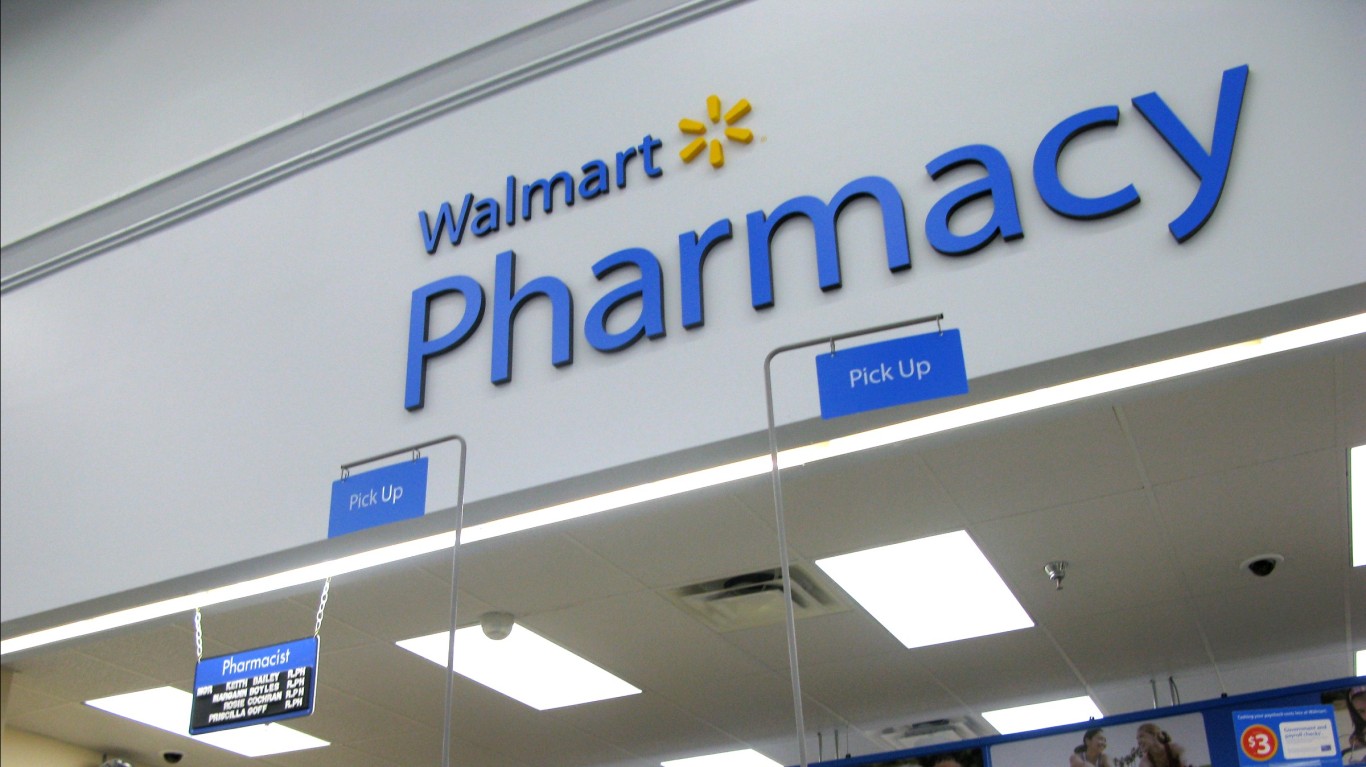
That something is Walmart’s pharmacy business. Falling prescription drug prices, driven partly by Medicare’s drug-pricing rules and other federal policies, reduced Walmart’s U.S. comparable sales growth by an estimated 80 to 90 basis points. Excluding that impact, comparable sales would have been closer to 3.4% — much nearer to expectations.
The mechanics are simple. Walmart can fill more prescriptions while generating less revenue if the price of each prescription falls. The company specifically pointed to GLP-1 weight-loss and diabetes drugs, noting that prescription volumes continued to rise even as lower prices more than offset the additional volume.
In other words, more customers are walking out of the pharmacy with their medication, but the register is reading a lower total because each script now costs less. That’s not a sign of financial distress; it’s closer to the opposite — customers not being forced to skip or ration medication.
And Walmart isn’t alone. The U.S. is experiencing significant prescription-drug price deflation, meaning retailers with large pharmacy businesses can see reported sales pressured even when underlying demand remains healthy.
Target doesn’t face the same issue because it sold its pharmacy business to CVS Health (NYSE:CVS) for $1.9 billion in 2015. The effects of lower prescription prices therefore show up at CVS rather than Target.
Inflation Still Matters
That doesn’t mean inflation isn’t affecting Walmart. It’s simply having conflicting effects.
On the positive side, elevated prices are encouraging middle- and higher-income shoppers to trade down, helping Walmart gain market share. Grocery sales also remained strong because food is a necessity, while shoppers seeking lower prices are increasingly turning to Walmart’s private-label products.
But there are warning signs. U.S. transaction growth slowed to 1.5% from 3% a quarter earlier, suggesting lower-income consumers are making fewer trips or spending less per visit. Discretionary categories such as electronics, apparel, and toys also remain relatively soft as households prioritize necessities.
Meanwhile, higher fuel and freight costs are adding pressure. Walmart has largely absorbed those costs rather than passing them along to customers, protecting its value proposition but putting pressure on margins.
Key Takeaway
Walmart’s quarter doesn’t support the simple conclusion that American consumers are running out of money. Inflation is creating a more complicated picture: It’s pushing higher-income shoppers toward Walmart while simultaneously limiting spending among lower-income households.
More importantly, the biggest factor behind Walmart’s disappointing comparable-sales number wasn’t necessarily weak consumer demand. It was the decline in prescription prices.
That’s a headwind for reported revenue, but investors shouldn’t confuse it with deteriorating underlying demand. Walmart is selling more prescriptions at lower prices — a very different problem from customers walking away from the checkout counter.
Contact [email protected] for any questions or corrections.
After two decades of patrolling the dark corners of suburbia as a police officer, Rich Duprey hung up his badge and gun to begin writing full time about stocks and investing. For the past 20 years, he’s been cruising the markets looking for companies to lock up as long-term holdings in a portfolio while writing extensively on the broad sectors of consumer goods, technology, and industrials. Because his experience isn’t from the typical financial analyst track, Rich is able to break down complex topics into understandable and useful action points for the average investor. His writings have appeared on The Motley Fool, InvestorPlace, Yahoo! Finance, Money Morning, and, of course, 24/7 Wall St. He has been featured in both U.S. and international publications, including MarketWatch, Financial Times, Forbes, Fast Company, and USA Today.