Memorial Day Cookout Costs Are Crushing Wallets: Beef Up 14%, Steak Up 16%, Hot Dogs Up 11%
CNBC consumer reporter Brandon Gomez delivered the bad news to anyone hosting a backyard cookout this weekend: “Ground beef for burgers at record highs, up more than 14%. Steak also surging as well over 16%, hot dogs up nearly 11%.”…

This post may contain links from our sponsors and affiliates, and Flywheel Publishing may receive compensation for actions taken through them.

CNBC consumer reporter Brandon Gomez delivered the bad news to anyone hosting a backyard cookout this weekend: “Ground beef for burgers at record highs, up more than 14%. Steak also surging as well over 16%, hot dogs up nearly 11%.” He went further, noting that “even the extras are more expensive cakes, cookies, nonalcoholic beverages all rising about 5% year over year.”
If you budgeted $150 for a Memorial Day cookout that worked last year, you are short. Short by enough to either downsize the menu, eat the difference on your credit card, or skip dessert. This is targeted price pain on the exact basket families buy three or four times a summer, far worse than headline inflation suggests.
Headline CPI Is Lying to Your Grocery Budget
Gomez is completely right, and the standard talking point that “inflation has cooled” is dead wrong for anyone buying meat. The April 2026 Consumer Price Index landed at exactly 333.020, up from 320.795 back in April 2025. While that overall headline shift feels like a low single-digit move on paper, things change at the grocery store. Beef at 14%, steak at 16%, and hot dogs at 11% are running wild multiples of that official baseline.
Take a standard summer cookout for eight people: 3 pounds of ground beef, 2 pounds of steak, a pack of hot dogs, buns, a sheet cake, chips, and a 12-pack of soda. If that exact bundle cost you $90 last Memorial Day, the meat alone, roughly $55 of the total, now runs closer to $63. The secondary sides and sweets cost from $35 to about $37. That means the same spread now costs roughly $100. Multiply that by three summer holidays, and you have easily added $30 to a tight discretionary food budget.
This matters way more than the percentages suggest because of crumbling consumer sentiment. The University of Michigan index dropped to 49.8 in April, setting up May’s brutal drop to an all-time low of 44.8. Both readings sit far below the 60 threshold that historically signals a looming recession. Gomez’s framing fits the data perfectly: “The cost of hosting is continuing to climb at a time when Americans are feeling financially stretched, and that is pressuring grocers.”
Why Retailers Are Fighting Over Your Cart
The grocers know it. Walmart (NYSE:WMT | WMT Price Prediction) reported U.S. comp sales up 4% ex-fuel in Q1 FY27 and called out share gains “particularly pronounced among upper-income households.” Wealthier shoppers are trading down to Walmart because beef at 16% above last year stings even six-figure earners. CEO Doug McMillon was blunt on the call: “Food inflation is very much on our mind… our customers have felt that, and they don’t want any more food inflation.”
Kroger (NYSE:KR) is responding under new CEO Greg Foran, the former Walmart U.S. chief brought in to fix pricing. Foran told CNBC: “We’re actually right in the middle of doing that at the moment, so we’re concerned about the cost of living. It makes a big difference when you get your pricing right.” Kroger is planning to close roughly 60 underperforming stores over 18 months to fund price investment. Walmart shares closed Friday near $120 after dropping about 7% over the past month on cautious guidance. Kroger trades around $67, and has dropped around 2% in the past 30 days.
The Variable That Decides Whether You Feel This
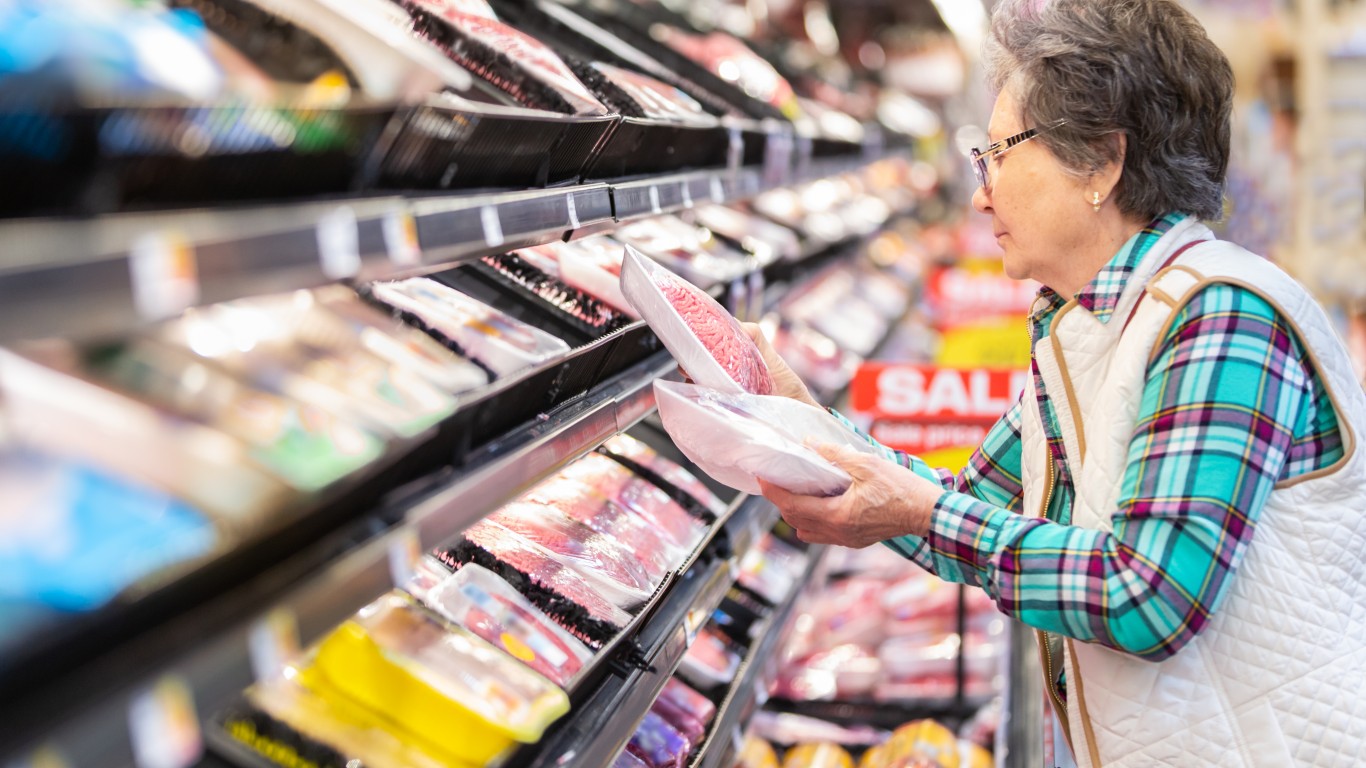
The single biggest factor that changes the math is meat as a share of your food budget. A household that builds its meals around chicken, beans, and pasta sees roughly headline CPI in its cart. A household that buys ground beef weekly and grills steak twice a month absorbs double-digit increases on its biggest line item. Gomez totally nailed the demographic split: “The gap is widening between high income and lower income shoppers.” Lower-income households spend a much larger share on food, so a 14% beef increase hits their total budget infinitely harder.
What To Do Before Monday
So, where should you start?
- Reprice your week’s food menu by category, which likely means pulling last year’s receipt or estimate. Tag each item with this year’s cost: meat up 11% to 16%, baked goods and beverages up roughly 5%, produce closer to headline CPI.
- Substitute within the protein category. Chicken thighs and pork shoulder have not seen the same surge as beef. Swapping one tray of burgers for marinated chicken cuts your meat spend without cutting the guest count.
- Compare loyalty app prices the morning of. Walmart and Kroger are both running active price cuts to defend share. The same hot dog brand can swing by a dollar between stores in the same week.
- Track price per ounce, not package price. Shrinkflation is very real this cycle; smaller bag, same sticker.
The good news is that your cookout can still happen, it’s just going to cost about 10% more this year, which means your budget has to grow by that amount or your menu has to shrink.
Contact [email protected] for any questions or corrections.
David Beren has been a Flywheel Publishing contributor since 2022. Writing for 24/7 Wall St. since 2023, David loves to write about topics of all shapes and sizes. As a technology expert, David focuses heavily on consumer electronics brands, automobiles, and general technology. He has previously written for LifeWire, formerly About.com. As a part-time freelance writer, David’s “day job” has been working on and leading social media for multiple Fortune 100 brands. David loves the flexibility of this field and its ability to reach customers exactly where they like to spend their time. Additionally, David previously published his own blog, TmoNews.com, which reached 3 million readers in its first year. In addition to freelance and social media work, David loves to spend time with his family and children and relive the glory days of video game consoles by playing any retro game console he can get his hands on.