The $1 Trillion Stock Wall Street Says Could Grow Earnings 107% a Year
SK Hynix followed the same post-IPO crash pattern as SpaceX and Cerebras, but what happened to its fundamentals during that stumble sets it apart from every other stock in the trillion-dollar club.

This post may contain links from our sponsors and affiliates, and Flywheel Publishing may receive compensation for actions taken through them.

Mega IPOs have developed a predictable rhythm in 2026. A company debuts to euphoric demand, rockets well above its offer price within days, then gives much of that gain back once the lockup chatter and valuation math kick in.
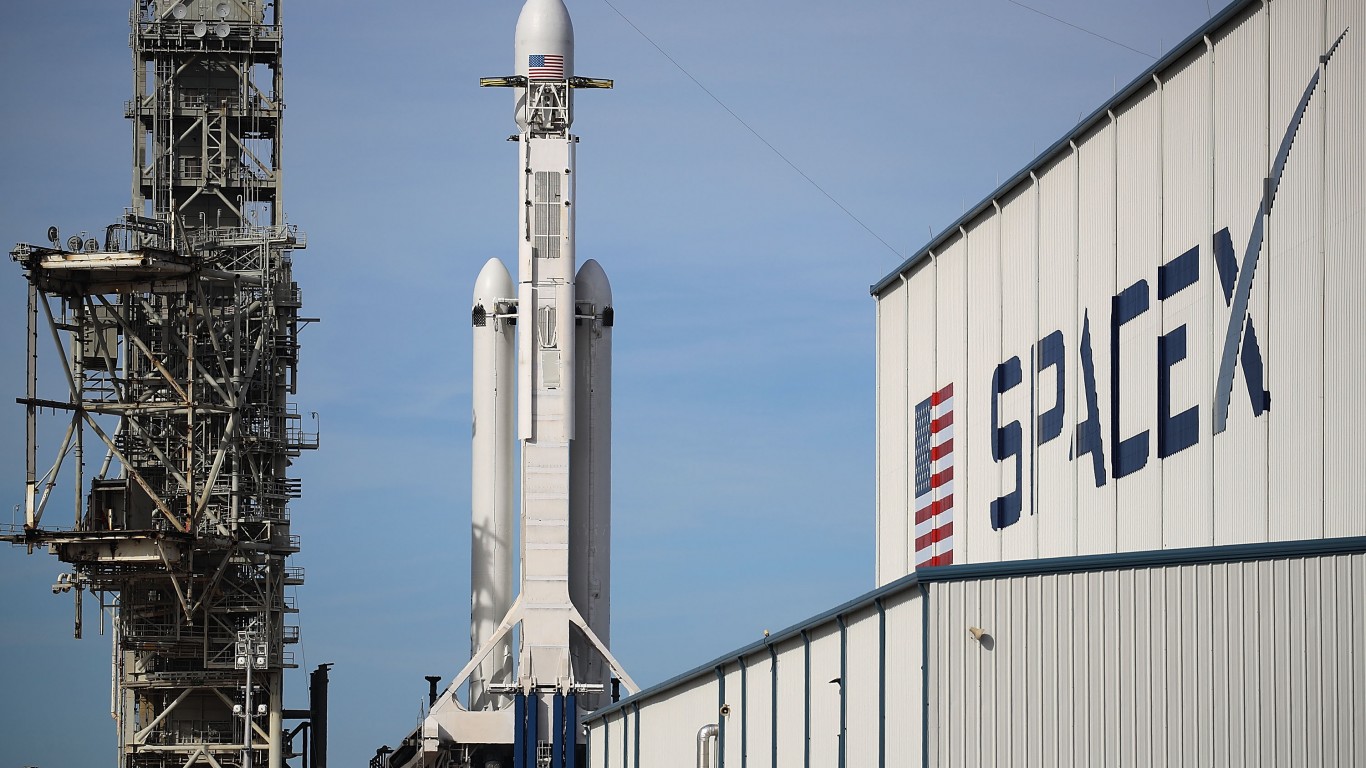
SpaceX (NASDAQ:SPCX | SPCX Price Prediction) followed that script in June, opening at a premium before sliding toward its IPO price. Cerebras (NASDAQ:CBRS) did something similar. So when SK Hynix (NASDAQ:SKHY) went public on Nasdaq on July 10, priced at $149 and opening at $170, the pattern looked familiar even before the ink dried.
What happened next — and what’s happened since — tells investors something specific about where this stock sits today.
A Familiar Post-IPO Stumble
SK Hynix’s ADRs climbed as high as roughly $195 intraday in the days following its debut, then reversed hard, falling below $125 as questions resurfaced about whether the AI memory boom was simply the latest chapter in a notoriously cyclical business. Memory chips have crashed before — badly, and often. The stock has since recovered to around $162, comfortably above its $149 offer price but below its opening price and well off its peak.
That round trip matters because it’s forced a real debate rather than a hype cycle. A growing number of analysts, including those at Bank of America, argue AI hasn’t eliminated memory’s boom-bust nature, but it has extended this particular upswing considerably. SK Hynix posted a 76% operating margin last quarter, with revenue up roughly 41% year over year. That’s not a company riding a fading wave.
The Cheapest Ticket Into the Trillion-Dollar Club
SK Hynix crossed the $1 trillion market cap threshold in May on the Korean exchange, joining Samsung as just the second Korean company to do so. It’s now one of roughly 14 stocks worldwide in that club, with several more — Berkshire Hathaway (NYSE:BRK-A)(NYSE:BRK-B), JPMorgan Chase (NYSE:JPM), and Walmart (NYSE:WMT) — knocking on the door.
Here’s what separates SK Hynix from the rest of that group: price. At $162, its stock is cheaper than every other trillion-dollar stock except SpaceX at $138. Yet, its forward P/E ratio sits under 4x, versus 6.5x for Micron Technology (NASDAQ:MU) and roughly 26x for Taiwan Semiconductor Manufacturing (NYSE:TSM).
Its PEG ratio is just 0.05 — a figure that low usually signals the market hasn’t caught up to the earnings growth already showing up in the numbers.
| Metric | SK Hynix | Micron | TSM |
| Forward P/E | 4x | 6.5x | 26x |
| Price-to-Book | 4.6x | 10.5x | 9.5x |
| Price-to-FCF | 11.9x | 40.4x | 53.5x |
| Operating margin | 68% | 66% | 56% |
| Market cap | $1.18 trillion | $1.06 trillion | $2.14 trillion |
Granted, a “Korea discount” and limited U.S. accessibility partly explain the gap. But a 76% operating margin trading at a third of TSM’s multiple isn’t a discount — it’s a mispricing smart investors can still act on. And Wall Street forecasts EPS will grow at a compounded 107% rate over the next five years. Only Micron at 173% is higher amongst the trillion-dollar members
A Lockup That Isn’t Really a Lockup
Valuation is only half the story for any freshly listed stock — the other half is how much more supply is waiting in the wings. SpaceX has roughly 911 million insider shares ready to unlock by October, an overhang that could weigh on its stock. The first unlocking earlier this month seemingly produced the opposite effect, but it is a real potential concern.
SK Hynix’s October lockup expiration is different in kind, not just degree. Its $26.5 billion U.S. listing consisted entirely of newly issued shares — 17.79 million common shares packaged into 177.9 million ADRs — not stock sold by existing insiders. That’s just 2.5% of total shares outstanding, versus roughly 730 million shares trading in Seoul. No employee or SK Square stake was sold in this offering, so there’s no wall of insider selling waiting to hit the tape.
Ironically, the company just made that risk smaller still. SK Hynix announced a $28.6 billion buyback-and-cancellation program — destroying about 3.3% of shares outstanding, roughly offsetting the entire U.S. share count issued in July.
Key Takeaway
In short, SK Hynix followed the 2026 mega-IPO playbook — surge, stumble, partial recovery — but the fundamentals underneath didn’t follow the script. At a 4x forward P/E, a 0.05 PEG ratio, and margins outpacing every trillion-dollar peer, this is the cheapest stock in an increasingly exclusive club.
For investors comfortable with memory’s cyclical history, SK Hynix looks like a long-term holding worth building a position in now.
Contact [email protected] for any questions or corrections.
After two decades of patrolling the dark corners of suburbia as a police officer, Rich Duprey hung up his badge and gun to begin writing full time about stocks and investing. For the past 20 years, he’s been cruising the markets looking for companies to lock up as long-term holdings in a portfolio while writing extensively on the broad sectors of consumer goods, technology, and industrials. Because his experience isn’t from the typical financial analyst track, Rich is able to break down complex topics into understandable and useful action points for the average investor. His writings have appeared on The Motley Fool, InvestorPlace, Yahoo! Finance, Money Morning, and, of course, 24/7 Wall St. He has been featured in both U.S. and international publications, including MarketWatch, Financial Times, Forbes, Fast Company, and USA Today.