Why Micron and SK Hynix Sit in the Most Valuable Spot in the Entire Compute Stack
AI's insatiable appetite for memory has crowned two companies as gatekeepers of the entire compute stack, but a retirement portfolio and a growth portfolio should not own the same one.


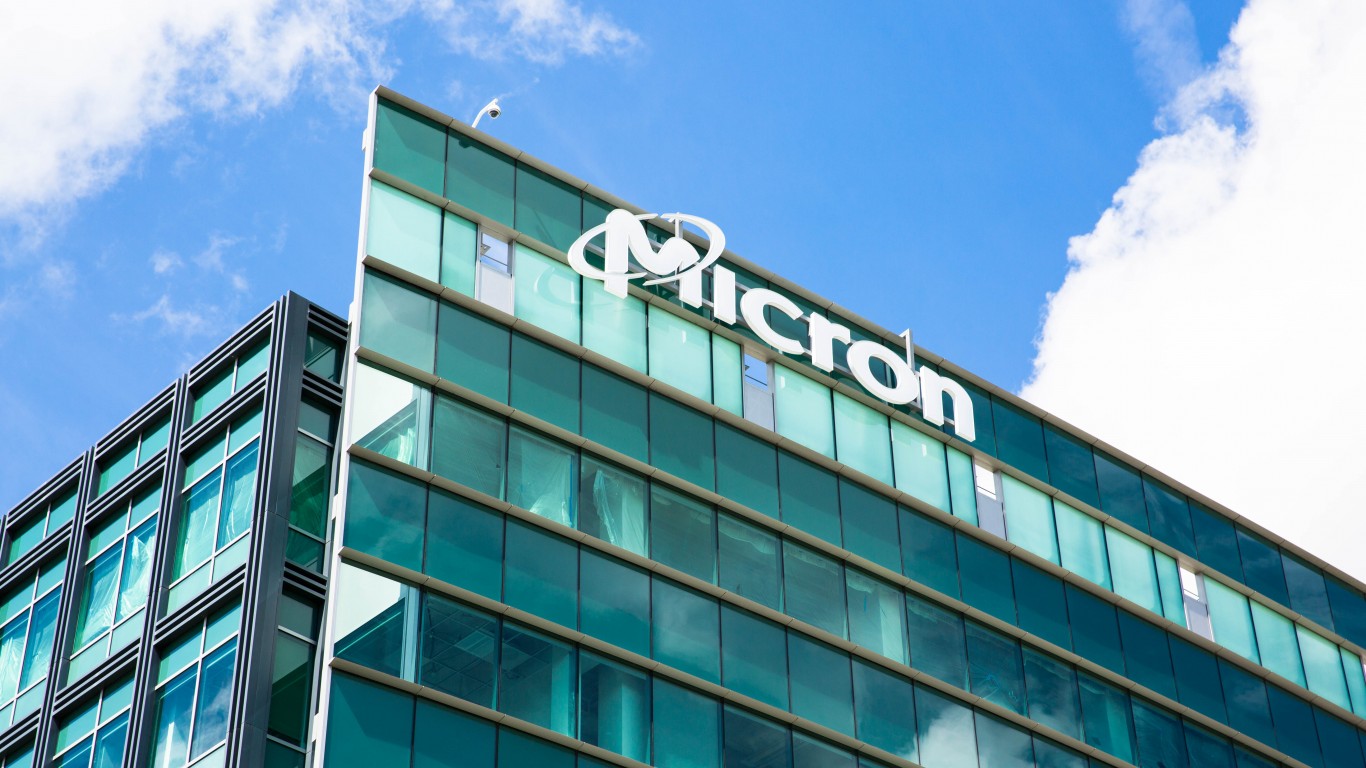
For a retirement-focused investor deciding between the two memory giants powering the AI buildout, the question is direct: Micron Technology (NASDAQ:MU | MU Price Prediction) or SK hynix (NASDAQ:SKHY)? Which belongs in the portfolio right now? Both sit at the same structural chokepoint, where 2D DRAM scaling is hitting physical limits, and AI is driving high-bandwidth memory demand past what the oligopoly can supply. Consumer DRAM spot prices have surged nearly 700% over the past year, and the shortage is now spilling into smartphones and PCs. The valuation, growth, and risk profiles of these two, however, are anything but identical.
Valuation: SK hynix Trades at a Fraction of Micron’s Multiple
Micron has been repriced violently. Shares closed at $1,016.59 on September 4, 2026, up 719.77% over one year and 256.41% year-to-date, pushing market cap to roughly $1.148 trillion. SK hynix carries a similar market cap at about $1.256 trillion, but the multiple tells a very different story: a trailing P/E of 11 and a forward P/E of 5 against an analyst target of $247.31 versus a current price of $177. SK hynix also generated a quarterly earnings growth of 12.72% with an EPS of $16.73. Winner: SKHY, by a wide margin.

Growth Trajectory: Micron’s Contracted Revenue Is Unmatched
Micron’s sequential curve is one of the sharpest ever seen in memory: Q1 26 revenue $13.64B, Q2 26 $23.86B, Q3 26 $41.46B, and Q4 26 guided to $50B. Fiscal Q3 posted gross margin of 84.9% and non-GAAP EPS of $25.11, with Q4 EPS guided to $31 per share, plus or minus a dollar. More important for a long-horizon investor: management has signed 16 Strategic Customer Agreements structured as take-or-pay contracts, with cumulative minimum-price revenue of roughly $100 billion and $22 billion in deposits and financial commitments. CEO Sanjay Mehrotra said “We see tightness persisting beyond 2027.” SK hynix’s Q2 2026 preliminary revenue rose 256.8% year over year to KRW 79.32 trillion, but it missed the KRW 84.12T consensus and offered no forward guidance. Winner: MU.

Volatility, Risk, and Capital Return
Micron has already priced in most of the upcycle. A stock that has advanced 1,312.66% over five years carries meaningful drawdown risk if HBM4 yields slip or if capex plans stretch beyond the $27 billion fiscal 2026 program. Its dividend is a token $0.15 per quarter. SK hynix carries a higher beta of 2.389 and KRW currency exposure through the ADS, but on August 19, 2026, it announced acceleration of a 40 trillion won share repurchase and cancellation program and a shareholder return target of over 50% of free cash flow. That, plus a dividend yield of 1.34%, is a materially better income and buyback story. Winner: SKHY.

Verdict: SK hynix for Retirement Portfolios, Micron for Growth Hunters
For a retirement-focused investor, SK hynix screens as the more defensive of the two. A forward P/E of 5, an aggressive buyback, and a dividend policy tied to free cash flow deliver the margin of safety and income that a portfolio drawing down over decades actually needs. Micron is the superior operating story, with contracted revenue visibility no peer can match, but its share price has already captured the tightness Mehrotra described. Investors seeking maximum torque to the HBM cycle may find MU the closer fit. Investors prioritizing a defensible multiple with cash returning to shareholders may find SKHY the closer fit.
Contact [email protected] for any questions or corrections.
After two decades of patrolling the dark corners of suburbia as a police officer, Rich Duprey hung up his badge and gun to begin writing full time about stocks and investing. For the past 20 years, he’s been cruising the markets looking for companies to lock up as long-term holdings in a portfolio while writing extensively on the broad sectors of consumer goods, technology, and industrials. Because his experience isn’t from the typical financial analyst track, Rich is able to break down complex topics into understandable and useful action points for the average investor. His writings have appeared on The Motley Fool, InvestorPlace, Yahoo! Finance, Money Morning, and, of course, 24/7 Wall St. He has been featured in both U.S. and international publications, including MarketWatch, Financial Times, Forbes, Fast Company, and USA Today.