Which Heavy Machinery Stock Is Dominating in 2026: Caterpillar, Deere, or PACCAR?
One heavy machinery giant is beating Wall Street while its entire industry collapses around it, and another is riding three booming end markets at once. The 2026 scoreboard reveals how differently construction, agriculture, and freight cycles reward patient investors.

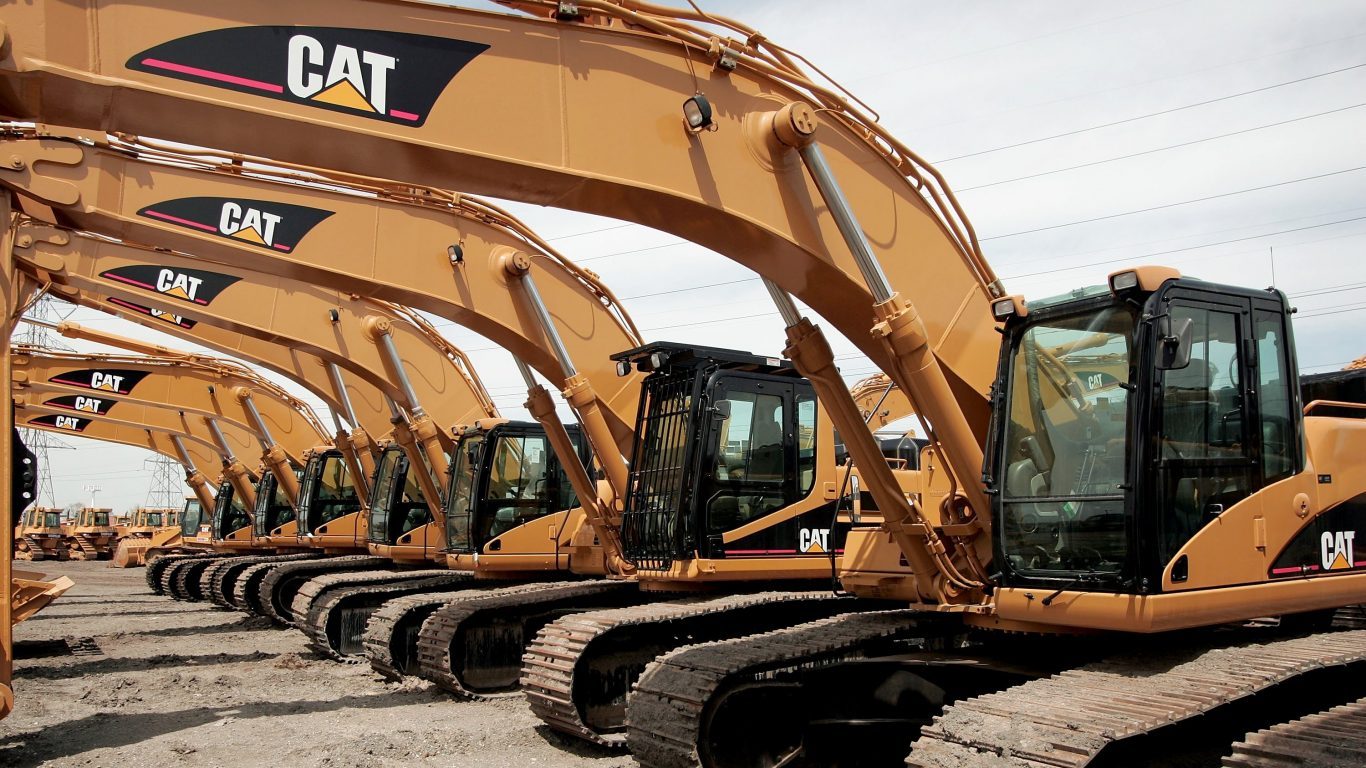
The 2026 leaderboard in heavy machinery lines up almost exactly with the health of each company’s end market. That fit explains the spread between these three names better than any single catalyst.
Caterpillar (NYSE:CAT | CAT Price Prediction) stock is up 40% year to date (YTD), trading at $804. Deere (NYSE:DE) stock is up 33% YTD at $618.68. Meanwhile, PACCAR (NASDAQ:PCAR) stock is up 18% YTD at $128.68.
Market caps mirror that order of scale. Caterpillar stock carries a market cap of $368.66 billion, Deere is worth $166.15 billion, and PACCAR is valued at $67.75 billion.
Caterpillar Leads on End-Market Breadth
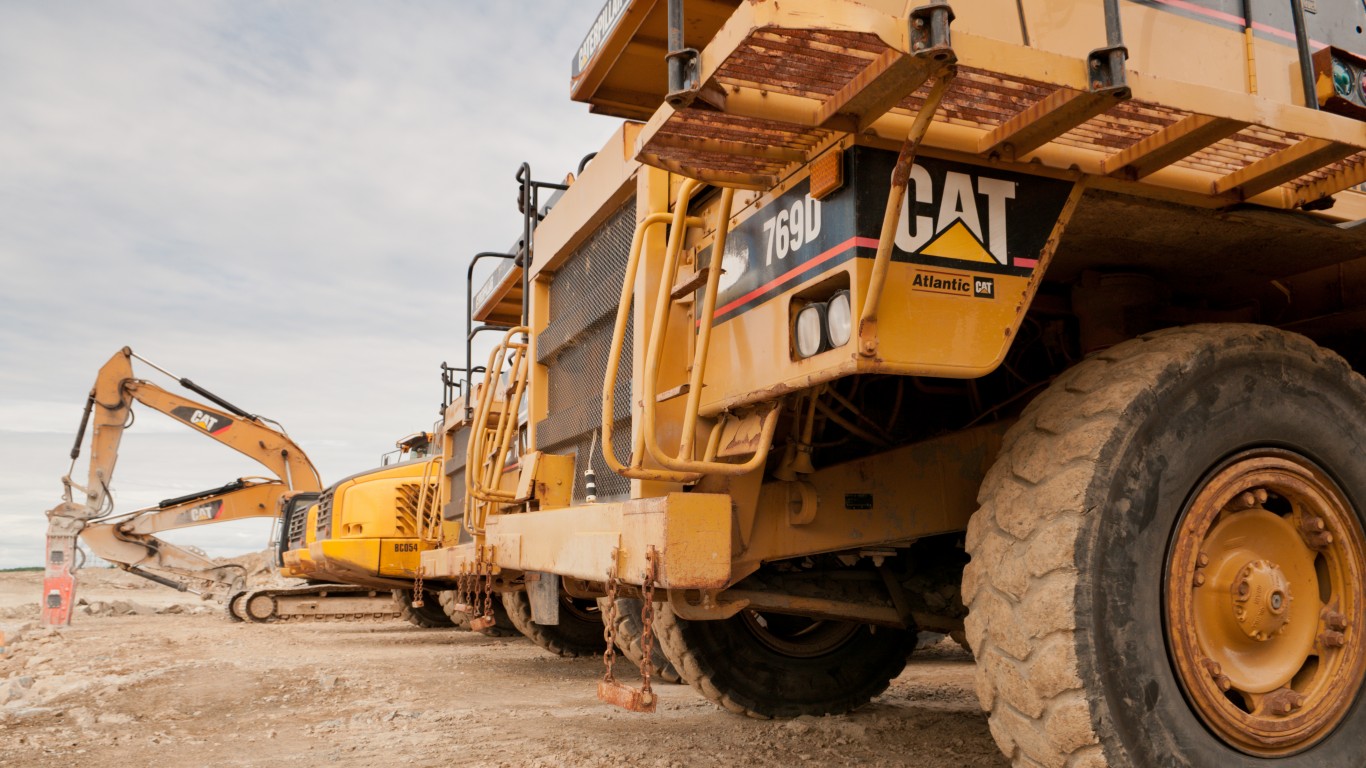
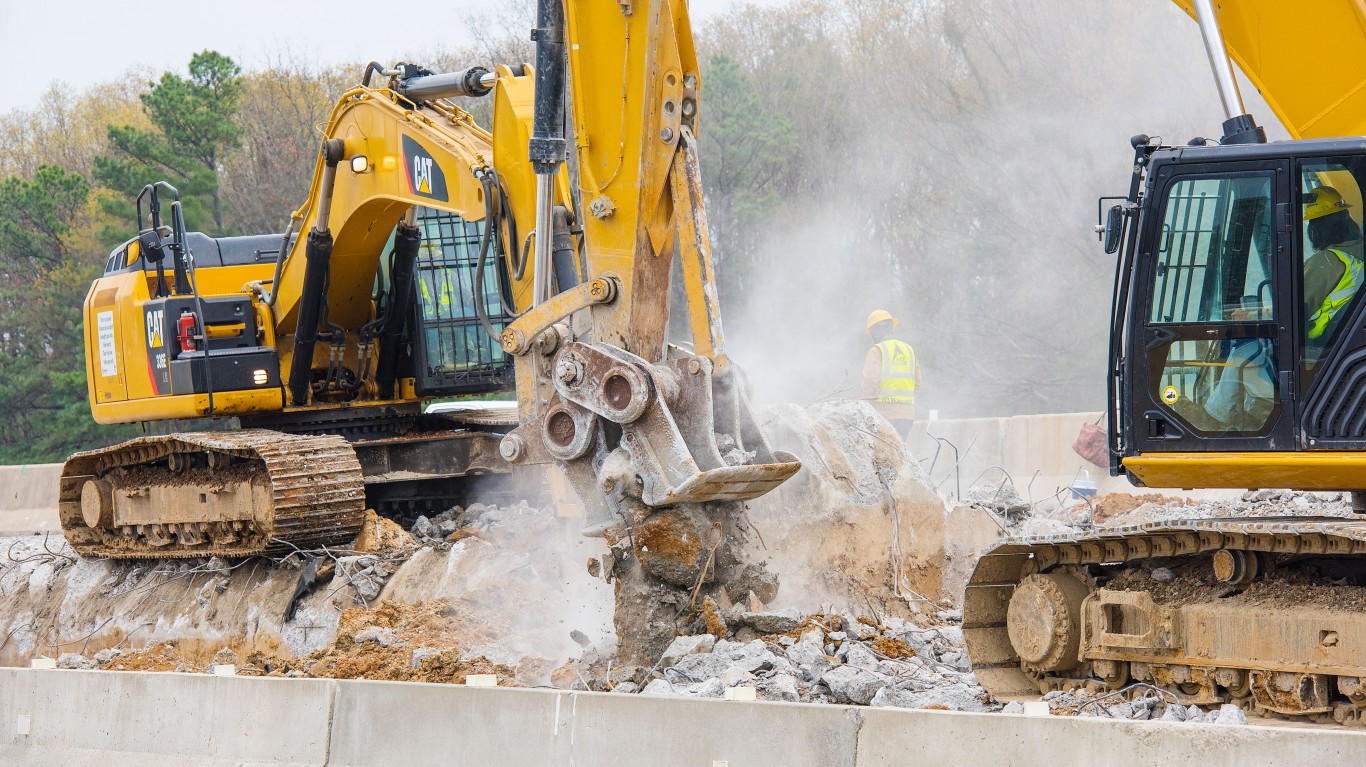
Caterpillar sells into three end markets that are all working simultaneously in 2026. The company spans construction, mining, and a Power & Energy segment that builds turbines, generators, and reciprocating engines for power generation. That mix gives Caterpillar exposure to infrastructure spending, commodity investment, and grid demand under one roof.
The financial output has followed the mix. Caterpillar reported adjusted EPS of $8.17 in Q2 2026, with revenue of $20.54 billion up 24% year over year (YoY). CEO Joe Creed described the quarter as “the first time in company history that we have generated over $20 billion in sales and revenues in a single quarter”.
Caterpillar’s Q2 net income reached $3.59 billion, and the company returned $2.2 billion to shareholders through buybacks and dividends. Caterpillar’s operating profit rose 50% to $4.29 billion. Those figures underline why CAT shares carry the biggest gains in the group.
Earlier in the year, Caterpillar’s Q1 2026 set the tone. The company posted EPS of $5.54 on revenue of $17.42 billion, up 22.2% YoY. Two consecutive quarters of accelerating growth built the momentum that carried CAT stock through midyear.
Deere Paradox: Beating a Shrinking Market
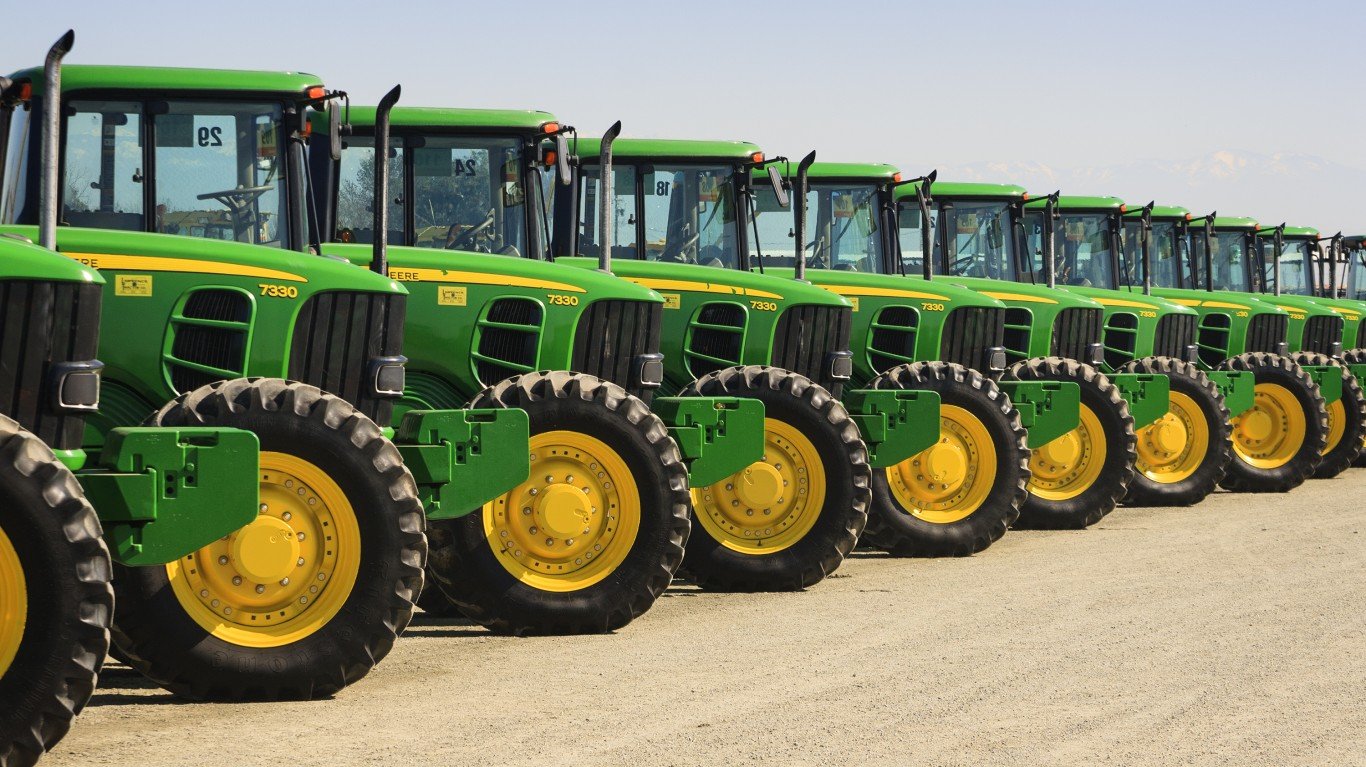
Deere is the most interesting case in this ranking. The company reported fiscal Q3 2026 results Thursday, posting $5.10 per share on agricultural equipment revenue of roughly $7.4 billion, beating Wall Street estimates of $4.69 per share on $7.3 billion. A year earlier, Deere earned $4.75 per share on $7.3 billion.
Deere’s management raised the fiscal 2026 net income forecast to a range of $4.75 billion to $5 billion, up from the $4.5 billion to $5 billion it guided in May. CEO John May stated that Deere believes 2026 marks the bottom of the current agriculture equipment cycle. Deere shares are climbing Thursday on the report.
Yet, the industry Deere serves is contracting hard. According to Association of Equipment Manufacturers (AEM) data, U.S. farm tractor purchases fell 10.9% YoY in July, and combine sales fell 5.3%. Year-to-date U.S. tractor unit sales reached 105,185 through July, a 13.1% contraction against the same period in 2025.
AEM data show sales of four-wheel-drive tractors, the machines used in large-scale row-crop farming, fell 38.7% YoY in July. Deere still expects large-equipment industry sales to fall 15% to 20% in both North America and South America, with European sales flat. The gap between a company beating expectations and an industry in double-digit decline is the defining feature of Deere stock’s 2026 story.
PACCAR Trails on a Slower Freight Cycle
PACCAR builds commercial trucks under the Kenworth, Peterbilt, and DAF brands. Its results tie to freight cycles rather than construction, power, or crops. That end market is recovering more gradually than either of the other two here.
The company’s Q2 2026 report showed EPS of $1.43 on revenue of $7.55 billion, up 0.5% YoY. PACCAR delivered 38,700 trucks, up from 33,000, and PACCAR Parts posted record quarterly revenue of $1.75 billion. Steady execution has produced a smaller PACCAR stock gain than the other two.
PACCAR CEO Preston Feight described a strengthening truck market, stating “spot rates are up 20%”. A July 9 EPA emissions clarification is expected to smooth purchasing decisions into 2027. That backdrop supports the PACCAR case, though the freight recovery is arriving more slowly than the construction and power boom driving Caterpillar.
What Investors Should Watch
Caterpillar has led 2026 on end-market breadth across construction, mining, and power. Deere has led on execution against a contracting agricultural backdrop. PACCAR has followed a slower-moving freight cycle.
Position sizing on Deere shares deserves care here. The bull case rests on management’s view that 2026 marks the cycle bottom, which is a forecast rather than a result. Deere stock has already risen 33% on that expectation, so investors adding new positions should moderate size accordingly.
Traders can watch for the next AEM monthly release to gauge whether the ag equipment contraction deepens or eases. That data point will help calibrate whether Deere’s cycle-bottom thesis is holding into 2027.
Contact [email protected] for any questions or corrections.
David Moadel is financial writer specializing in stocks, ETFs, options, precious metals, and Bitcoin. David has written well over 1,000 articles for leading online publications, helping investors understand markets, income strategies, and risk.His work has appeared in The Motley Fool, InvestorPlace, U.S. News & World Report, TipRanks, ValueWalk, Benzinga, Market Realist, TalkMarkets, Finmasters, 24/7 Wall St., and others.With a master’s degree in education, David has taught at the elementary, high school, and college levels. That teaching background shapes his writing style: clear, educational, and practical. David has also built a loyal social-media audience by providing trustworthy financial content on YouTube, X/Twitter, and StockTwits.