Plug Power Gains 4% as Risk Appetite Returns; FuelCell Inches Higher, Bloom Energy Holds Flat
Hydrogen stocks split sharply Thursday as one ticker absorbed almost every dollar of risk appetite flowing into the sector, and the reason has nothing to do with company news or fundamentals.


Risk appetite is drifting back into the hydrogen and fuel cell corner Thursday, and the market is sorting the group by share price rather than fundamentals. Plug Power (NASDAQ:PLUG) stock is up 4% to $2.26, taking almost the entire session move for the group. Bloom Energy (NYSE:BE) and FuelCell Energy (NASDAQ:FCEL) are barely green beside it.
A framing contrast makes the picture cleaner. The Global X Hydrogen ETF (NASDAQ:HYDR) is up 0.4% to $44.01, posting only a slim gain. Meanwhile, the SPDR S&P 500 ETF Trust (NYSEARCA:SPY) is up 0.6% to $770.48, edging past the sector fund in the same session.
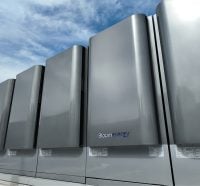
Bloom Energy stock is up 0.3% to $218.83, holding a small gain. At the same time, FuelCell Energy stock is up 1% to $19.26, posting a modest gain. Both names came into Thursday extended after huge year-to-date runs, while Plug shares entered as the clear group laggard.
Risk-On Session Reaches the Cheapest Ticker
No company announcement, contract award, earnings release, regulatory action, or analyst rating change has been verified at any of these three names today. The mechanism is a broad risk-on session reaching the lowest-priced and highest-beta name in the group. When flows chase a theme without fresh news, they gravitate to the cheapest ticker on the board.
The overall market is higher following NVIDIA‘s (NASDAQ:NVDA | NVDA Price Prediction) results and guidance delivered Wednesday after the close. That link runs through risk appetite only. NVIDIA’s data-center demand touches different suppliers than these three, and Thursday’s price action shouldn’t be read as an operational tie into fuel cell orders at any of them.
Year-to-Date Splits Tell the Real Story
Plug Power stock was up 10% year to date through Wednesday’s close, while Bloom Energy stock was up 151% year to date through Wednesday’s close. FuelCell Energy stock was up 161% year to date through Wednesday’s close. So the name that has participated least in the sector’s year is doing essentially all of the work on Thursday’s session.
That pattern is the opposite of a fundamental re-rating. When the market rebids a theme on new information, the highest-quality operators lead and the laggards follow; here it’s inverted. Plug shares trade at $2.26 and move on sentiment, with a beta of 2.22 and a 52-week range that spans $1.41 to $4.58. That profile catches flows on any risk-on session and hands them right back on the next red day.
Valuation and share price explain much of the dispersion. Bloom Energy trades at $218.83, so a dollar of new risk appetite barely nudges the percentage, while Plug Power sits at $2.26 with a market cap of roughly $3 billion, so modest buy pressure moves the price hard. FuelCell Energy sits between them at a market cap of about $1.5 billion and a share price at $19.26, closer to Plug in beta profile but with a large annual gain to protect.
The HYDR ETF’s minimal move confirms the read, as the fund carries Plug Power at 10.8% of net assets, Bloom Energy at 15.5%, and FuelCell Energy at 7.2%, with the balance spread across international fuel-cell, electrolyzer, and industrial gas names. A genuine sector re-rating would drag HYDR ahead of SPY, not behind it. Analyst positioning on Plug tells a similar story, with a consensus target of $3.55 and a rating mix skewed to 12 Hold ratings against 5 Buys and 3 Sells.
What to Watch
Investors sizing their exposure across this trio can treat them as three separate risk profiles rather than one hydrogen basket. Bloom Energy and FuelCell Energy have already delivered outsized year-to-date gains, so their BE and FCEL positions carry heavy momentum risk if the AI-power narrative cools even slightly (we profiled seven of the non-chip suppliers riding that buildout, from power to cooling, in a free report here). Position sizing on those two should reflect how much of the annual move is already in the price and how quickly high-flyers can give back a quarter of a year’s gain in a handful of sessions.
Plug Power is the opposite problem: its stock is cheap, volatile, and driven by sentiment, so traders can keep their PLUG exposure sized for the beta rather than the story. Traders can watch for whether Plug Power shares hold the $2.20 to $2.30 area through the afternoon and whether the HYDR ETF closes its gap with the SPY ETF as the session progresses. If the hydrogen fund can’t catch up by the bell, the case that Thursday’s move is flows into one ticker rather than a sector bid only gets stronger.
Contact [email protected] for any questions or corrections.
David Moadel is financial writer specializing in stocks, ETFs, options, precious metals, and Bitcoin. David has written well over 1,000 articles for leading online publications, helping investors understand markets, income strategies, and risk.His work has appeared in The Motley Fool, InvestorPlace, U.S. News & World Report, TipRanks, ValueWalk, Benzinga, Market Realist, TalkMarkets, Finmasters, 24/7 Wall St., and others.With a master’s degree in education, David has taught at the elementary, high school, and college levels. That teaching background shapes his writing style: clear, educational, and practical. David has also built a loyal social-media audience by providing trustworthy financial content on YouTube, X/Twitter, and StockTwits.