The $1 Trillion AI Data Center Buildout Is Fueling a Cost Consumers Can’t Escape
Artificial intelligence has become Wall Street’s favorite growth story. Investors have poured money into companies tied to AI chips, cloud infrastructure, utilities, and data centers as businesses race to build the computing backbone needed for the next generation of software.…

This post may contain links from our sponsors and affiliates, and Flywheel Publishing may receive compensation for actions taken through them.
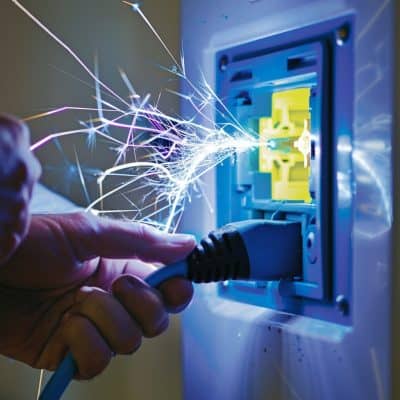
Artificial intelligence has become Wall Street’s favorite growth story. Investors have poured money into companies tied to AI chips, cloud infrastructure, utilities, and data centers as businesses race to build the computing backbone needed for the next generation of software. The opportunity is massive — and so is the spending.
Amazon (NASDAQ:AMZN | AMZN Price Prediction), Microsoft (NASDAQ:MSFT), Alphabet (NASDAQ:GOOG), and Meta Platforms (NASDAQ:META) alone are expected to spend roughly $725 billion combined on AI infrastructure in 2026. Accounting for smaller providers and regional players, the taol capex tab is expected to be $1 trillion.
But the question that needs answering is: who is really paying for all that growth? Increasingly, the answer looks like you are.
AI’s Infrastructure Boom Is Stretching Resources Thin
The AI boom did not stop at Nvidia’s (NASDAQ:NVDA) GPUs. It triggered a full-scale infrastructure arms race involving data centers, networking equipment, power generation, cooling systems, and memory chips.
That spending has created shortages across the supply chain. High-bandwidth memory chips remain constrained, advanced GPUs are booked out months in advance, and data center developers are competing aggressively for land, water access, and electricity capacity.
That last point matters most.
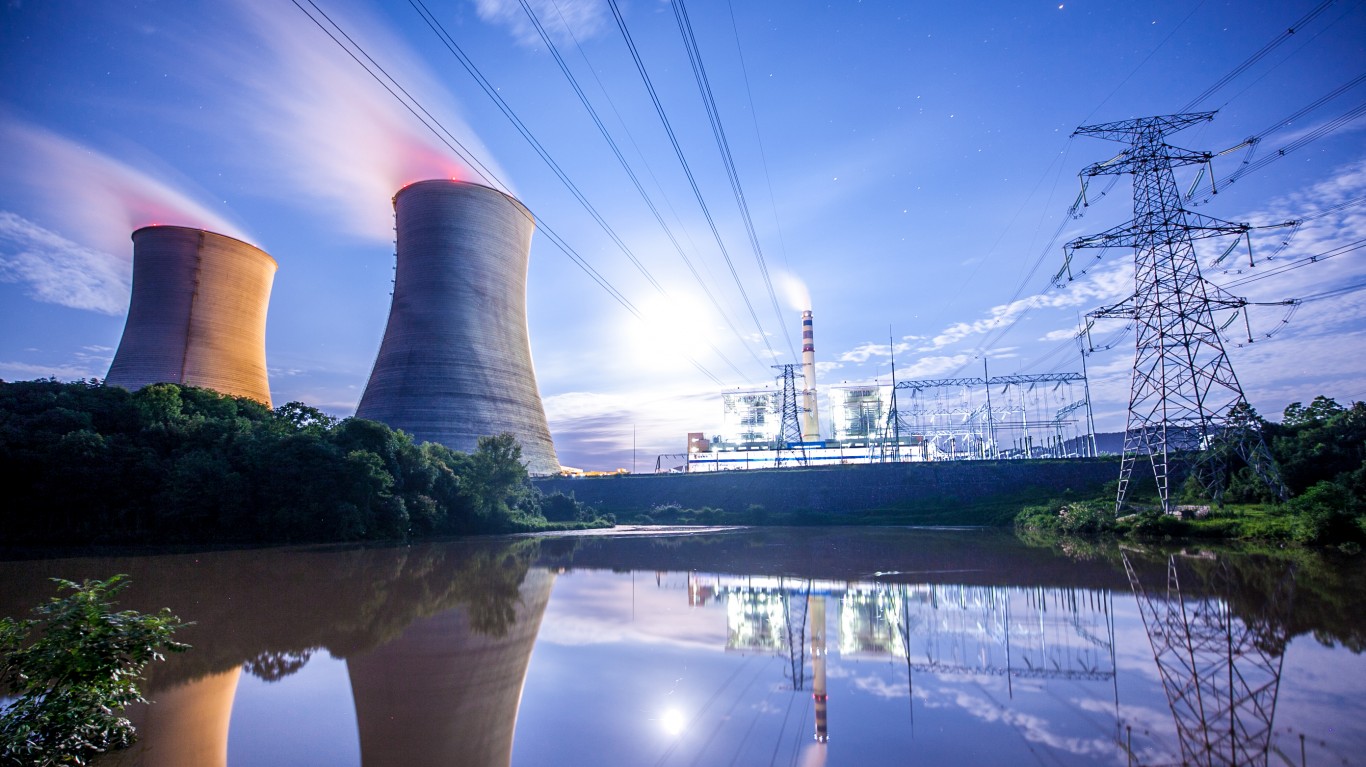
AI data centers consume enormous amounts of electricity because large language models require nonstop computing power for both training and inference workloads. As the technology transitions to always-on agentic AI, data center energy draw will rise 14-fold by 2028 and account for 12% of total U.S. electricity consumption.
According to U.S. Bureau of Labor Statistics data, electricity prices rose 6.1% year over year, marking the eighth month over the past 10 months with increases above 5%. Meanwhile, overall U.S. CPI rose 3.8% year over year — the largest increase since May 2023. In other words, electricity prices are climbing about 61% faster than broader inflation.
Regardless of how you look at it, electricity costs are rising faster than household incomes.
Here’s What Happens When AI Demand Hits the Grid
No state illustrates the trend better than Virginia, home to the world’s largest concentration of data centers, particularly in Northern Virginia’s “Data Center Alley.”
Dominion Energy (NYSE:D) — the region’s largest utility provider — has repeatedly warned in regulatory filings that data center electricity demand is growing faster than almost any previous industrial expansion in state history. PJM Interconnection, which manages the power grid for much of the Mid-Atlantic, has also warned that reserve margins are tightening as demand surges.
That pressure pushes wholesale electricity prices higher, which utilities eventually pass on to consumers through rate increases.
Granted, the data center boom creates jobs and tax revenue. Construction firms, utilities, semiconductor suppliers, and industrial REITs have all benefited. Investors in companies tied to AI infrastructure have enjoyed massive gains over the past two years.
But consumers are paying the cost and local communities are starting to push back.
Residents in parts of Virginia, Texas, Georgia, and Arizona have opposed new data center developments over concerns about water consumption, noise pollution, land use, and rising utility bills. The proposed Stratos Project in Box Elder County, Utah, that would cover roughly 40,000 acres, could generate the equivalent thermal output of 23 atomic bombs per day.
Unsurprisingly, opposition groups are now arguing that data centers are crowding out residential infrastructure while consuming disproportionate amounts of local energy resources.
Investors Need to Watch the Backlash Risk
For investors, this creates a more complicated AI narrative than the market sometimes acknowledges.
Yes, demand for AI infrastructure remains enormous. Utilities, power producers, cooling companies, and semiconductor manufacturers could benefit for years. But rising electricity costs also create political and regulatory risks that could slow future expansion.
Plainly put, when consumers see monthly utility bills climbing faster than inflation for nearly a year straight, regulators tend to notice. That could mean tighter zoning restrictions, tougher environmental reviews, delayed permits, or utility pricing reforms that shift more infrastructure costs back toward commercial customers.
Key Takeaway
In short, AI’s growth story is still intact, but the hidden costs are becoming harder to ignore.
When all is said and done, smart investors should recognize that the AI revolution is not just about chips and cloud computing anymore. It is increasingly about energy — who controls it, who profits from it, and who ends up paying for it.
Contact [email protected] for any questions or corrections.
After two decades of patrolling the dark corners of suburbia as a police officer, Rich Duprey hung up his badge and gun to begin writing full time about stocks and investing. For the past 20 years, he’s been cruising the markets looking for companies to lock up as long-term holdings in a portfolio while writing extensively on the broad sectors of consumer goods, technology, and industrials. Because his experience isn’t from the typical financial analyst track, Rich is able to break down complex topics into understandable and useful action points for the average investor. His writings have appeared on The Motley Fool, InvestorPlace, Yahoo! Finance, Money Morning, and, of course, 24/7 Wall St. He has been featured in both U.S. and international publications, including MarketWatch, Financial Times, Forbes, Fast Company, and USA Today.