PG&E Sinks 18%, Edison International Tumbles 23% as California Wildfire Bill Omits Liability Cap
California lawmakers handed utility investors a brutal surprise over the weekend, and the fallout raises an urgent question about whether PG&E and Edison International can absorb what comes next without a credit rating collapse.

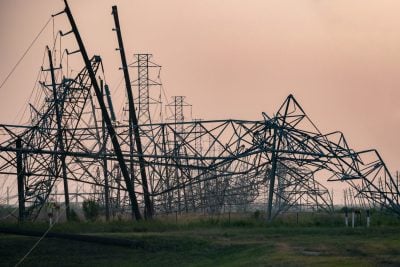
California utility stocks are cratering Monday after state lawmakers advanced an amended wildfire bill over the weekend that omits the liability protections investors had counted on this legislative session. PG&E Corporation (NYSE:PCG | PCG Price Prediction) and Edison International (NYSE:EIX) are taking the brunt of the selloff, while broader utility and market ETFs barely moved. The 2026 California legislative session ends today, forcing a same-day repricing of every California-exposed utility.
PG&E stock is down 18% to $13.57 by midday. Meanwhile, Edison International shares are falling 23% to $54.22, the company’s largest single-day decline in more than 25 years. Edison International sits at the epicenter of the Eaton Fire exposure question, while Sempra (NYSE:SRE) stock is down 2% to $82.22, cushioned by heavier Texas and Mexico infrastructure exposure.
The Utilities Select Sector SPDR ETF (NYSEARCA:XLU) is down 1% to $42.31, and the SPDR S&P 500 ETF Trust (NYSEARCA:SPY) is down 0.47% to $765.76. A sector fund off 1% against an 18% single-name decline confirms this as California statute risk landing on specific utilities.
Wildfire Bill Strips Out Investor Protections
The California Legislature advanced an amended Senate Bill 492 over the weekend. The bill speeds claims payments to wildfire victims, strengthens wildfire data sharing, and allows additional bonds to support the state wildfire fund.
Missing from the text are the items utility investors had been pricing in: Governor Gavin Newsom’s proposal barring insurers from suing utilities over wildfire claims, a $6 billion per-incident cap on wildfire fund withdrawals, repeal of the 2028 sunset for the continuation fund, and any mechanism to replenish the Wildfire Fund once it is depleted.
PG&E said in a statement that the bill “does not adequately address the financing risks created by California’s current wildfire liability framework,” and “falls short of creating the long-term durability needed to attract affordable investment to support a safer, more reliable energy system and help keep costs down for customers.”
Analysts Flag Uncapped Tail Risk
BMO cut PG&E to Market Perform from Outperform with a $21 price target, down from $28, warning the bill leaves investors exposed to open-ended wildfire-related tail risk. Wells Fargo moved PG&E to Equal Weight from Overweight with a $24 target, down from $25. Mizuho cut PG&E to Neutral from Outperform with a $16 target, down from $21, and moved Edison International to Neutral from Outperform with a $70 target, down from $86.


BMO kept its adjusted EPS estimates for PG&E unchanged at $1.65 for 2026, $1.82 for 2027, and $1.98 for 2028, so the downgrade reflects assumed wildfire liability while the underlying operating outlook stays intact. The firm now assumes uncapped wildfire liabilities beyond 2030 and raised its estimated liability drag on PG&E’s valuation to $10 per share from $6. Its scenario range runs from $3 per share in an adverse wildfire and regulatory outcome to $35 if constructive wildfire reform arrives in 2027.
Sempra is falling less than its two peers Monday because Wells Fargo kept it at Overweight, citing smaller California exposure and a growing Texas transmission business, while keeping Edison International at Underweight on unresolved Eaton Fire liability. Edison International’s exposure is quantified and growing: SCE has extended more than 2,200 offers totaling over $775 million through its Wildfire Recovery Compensation Program, while more than 30,000 claims sit in litigation.
Through Friday’s close, PG&E stock was down 6% over the past month, Edison International down 11%, and Sempra down 5%. Both management teams had flagged this outcome in July, with PG&E CEO Patti Poppe warning that “If the framework remains unresolved or insufficient, then we would need to reevaluate our capital allocation priorities and long-term investment plans.”
What to Watch
Capital allocation is the next domino for PG&E. Wells Fargo expects PG&E could repurchase about $3 billion of shares through 2030, roughly $700 million to $800 million a year, by moderating rate-base growth. BMO instead expects PG&E to lift its dividend, potentially by $0.50 per share in 2027, with remaining capital directed to buybacks.
Credit ratings are the second concern: PG&E sits one notch below investment grade at S&P, and Edison International management has warned that “There’s a strong likelihood that the day after, or a few days after, we could see credit rating downgrades for the investor-owned utilities in California and potentially for other sectors.” Investors can watch for whether S&P or Moody’s move in the coming sessions, and for any post-session action from Governor Newsom.
Position sizing matters here. Uncapped Eaton Fire exposure at Edison International and the reset in PG&E’s investment-grade timeline argue for modest weightings until rating agencies and lawmakers clarify the framework. The right sizing lets an owner absorb another 10% to 15% drawdown without being forced to sell.
Contact [email protected] for any questions or corrections.
David Moadel is financial writer specializing in stocks, ETFs, options, precious metals, and Bitcoin. David has written well over 1,000 articles for leading online publications, helping investors understand markets, income strategies, and risk.His work has appeared in The Motley Fool, InvestorPlace, U.S. News & World Report, TipRanks, ValueWalk, Benzinga, Market Realist, TalkMarkets, Finmasters, 24/7 Wall St., and others.With a master’s degree in education, David has taught at the elementary, high school, and college levels. That teaching background shapes his writing style: clear, educational, and practical. David has also built a loyal social-media audience by providing trustworthy financial content on YouTube, X/Twitter, and StockTwits.