Jensen Huang Has Become World’s 8th Richest Person
Jensen Huang turned a modest chip startup into the backbone of the global AI arms race, and his personal fortune now rivals the biggest names in tech. But three mounting challenges could test whether Nvidia's reign at the top is…

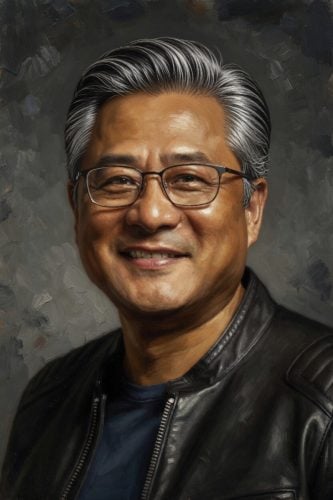
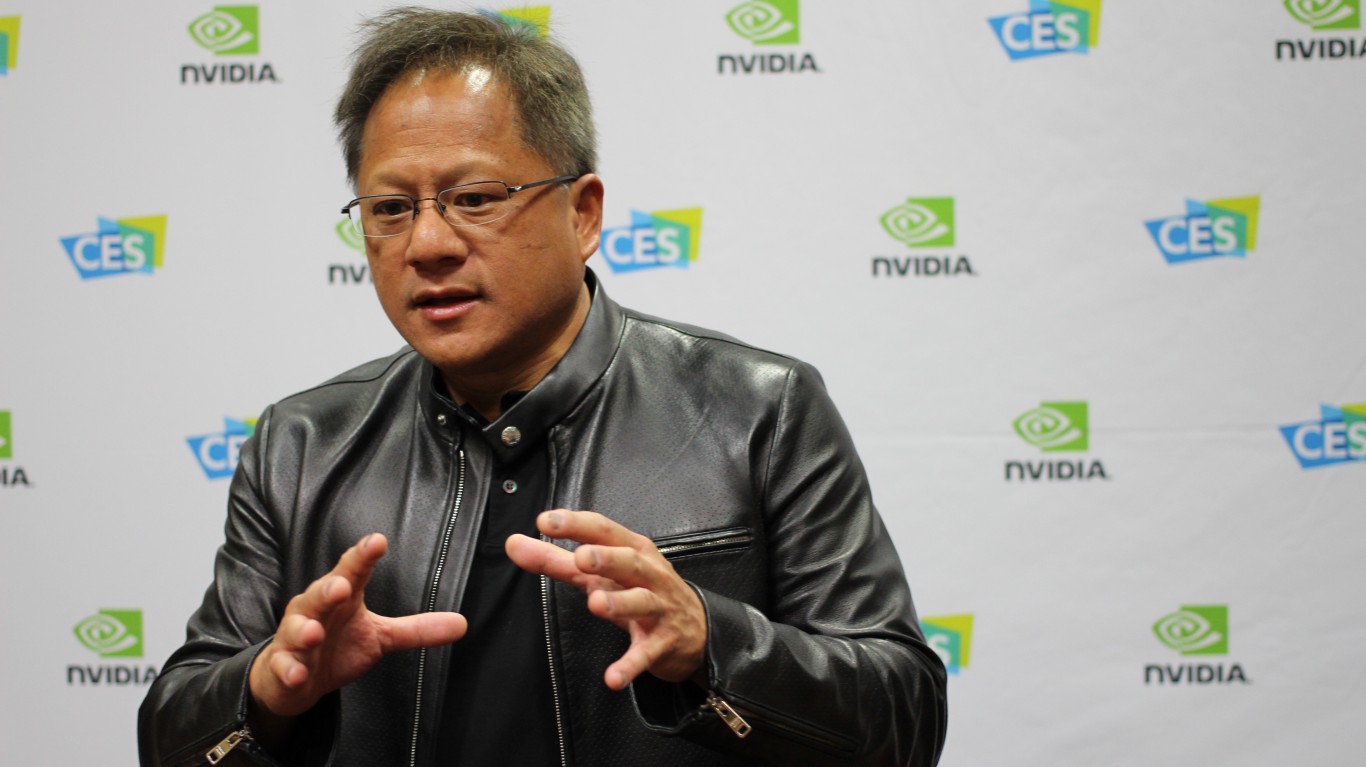
Jensen Huang is the world’s 8th-richest person, with a net worth of $180 billion, putting him just below Meta’s (NASDAQ: META | META Price Prediction) Mark Zuckerberg. Huang has turned a modest-sized computer chip company founded 33 years ago into the arms merchant of the global AI industry.
Nvidia (NASDAQ: NVDA) is also the world’s most valuable company, with a market cap of $5.33 trillion. Nvidia’s founding in 1993 is a testament to patience. The stock’s biggest run-up was in the last five years, during which it has surged 886% compared to the S&P 500 at 69%.
By last count, 50% of Nvidia’s 42,000 employees are worth over $25 million, although that figure is a guess.
Beyond its status as the arms merchant of the AI industry, Nvidia’s growth rate is breathtaking. In the most recent quarter, revenue rose 106% to $96.2 billion. Net income was up 126% to $60 billion. Nvidia expects revenue this quarter to hit $108 billion.
Nvidia faces three challenges. The first is simple. Will AI grow at its current pace? To a large extent, that depends on whether it has value for companies that makes them much more efficient or improves their business prospects. Today, depending on estimates, this could cost millions of people in the US their jobs.
The next is whether Nvidia can remain the premier AI chip company. For AI training, it has about 90%; for AI inference, the future is about 70%. Almost no one has made a powerful case that these figures will erode soon.
The final gamble is Nvidia’s huge investments in AI companies that run the data centers. These investments are into the tens of billions of dollars. Nvidia has become one of the sector’s largest banks. These include Intel, CoreWeave, Synopsys (NASDAQ: SNPS), and Coherent (NASDAQ: COHR)
Nvidia has also invested directly in data centers. Along with Apollo, BlackRock, Blackstone, Brookfield, Goldman Sachs, and KKR, Nvidia put $350 billion into future AI infrastructure build-out.
For the time being, Huang’s net worth seems safe
Contact [email protected] for any questions or corrections.
Douglas A. McIntyre is the co-founder, chief executive officer and editor in chief of 24/7 Wall St. and 24/7 Tempo. He has held these jobs since 2006.
McIntyre has written thousands of articles for 24/7 Wall St. He is an expert on corporate finance, the automotive industry, media companies and international finance. He has edited articles on national demographics, sports, personal income and travel.
His work has been quoted or mentioned in The New York Times, The Wall Street Journal, Los Angeles Times, The Washington Post, NBC News, Time, The New Yorker, HuffPost USA Today, Business Insider, Yahoo, AOL, MarketWatch, The Atlantic, Bloomberg, New York Post, Chicago Tribune, Forbes, The Guardian and many other major publications. McIntyre has been a guest on CNBC, the BBC and television and radio stations across the country.
A magna cum laude graduate of Harvard College, McIntyre also was president of The Harvard Advocate. Founded in 1866, the Advocate is the oldest college publication in the United States.
TheStreet.com, Comps.com and Edgar Online are some of the public companies for which McIntyre served on the board of directors. He was a Vicinity Corporation board member when the company was sold to Microsoft in 2002. He served on the audit committees of some of these companies.
McIntyre has been the CEO of FutureSource, a provider of trading terminals and news to commodities and futures traders. He was president of Switchboard, the online phone directory company. He served as chairman and CEO of On2 Technologies, the video compression company that provided video compression software for Adobe’s Flash. Google bought On2 in 2009.