Lucid Is A Penny Stock Again
Lucid's stock has crossed a threshold that typically signals the market has lost faith in a company's future, and the reasons behind that fall keep piling up fast.


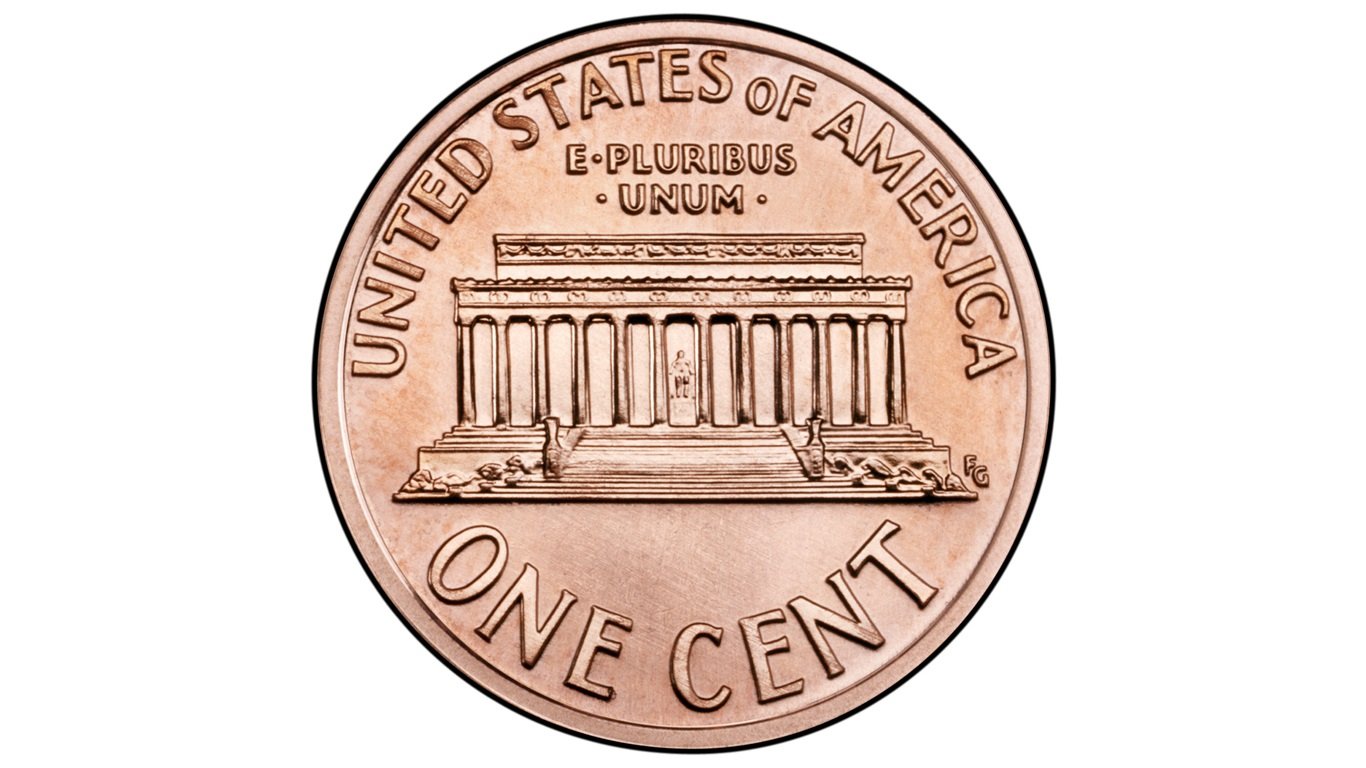
Lucid’s (NASDAQ: LCID | LCID Price Prediction) stock has dropped below $5, which by definition makes it a “penny stock.”
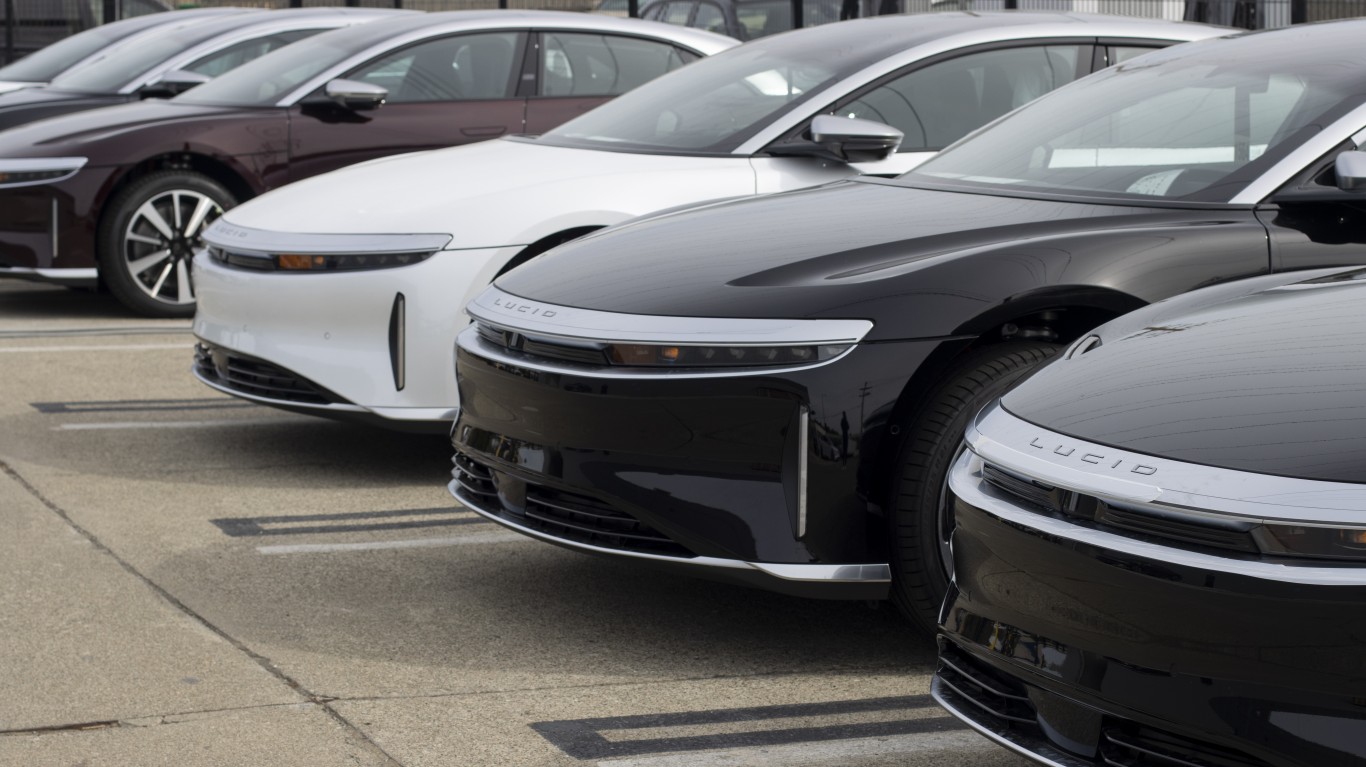
Lucid has hit another milestone, and this one will undermine its reputation. It will recall 27,185 of its flagship Air luxury sedan. It delivered 3,953 vehicles in the second quarter, which puts it at an annual run rate of 15,812. This recall is 171% higher than that run rate.
To make matters worse, according to Reuters, “The NHTSA recall notice asked owners to park their vehicles outside and away from structures until a remedy is deployed.” The problem is specifically that its exterior lighting circuit may overheat, which could increase the risk of a fire.
The Saudi Arabian-backed company is facing an avalanche of bad news. In June, it laid off 18% of its staff. In February, it laid off 12%. Commenting on the most recent layoff, Ward reported Lucid said, “These are difficult decisions taken to align production with demand, reduce inventory, and adapt to declining market conditions.” It was an admission of how deep its troubles are.
Investors were unhappy about second-quarter earnings and winced when new CEO Silvio Napoli said he had started an “operational reset.” He said current models were not enough to take the company forward and that it needed new products. He said he planned to cut expenses by another $1 billion. He said that the company’s new Cosmos model, priced below $50,000, would be delayed until next year.
Napoli’s list of plans is long. Can a company its size deliver? Lucid will use Nuro’s self-driving software to partner with Uber (NYSE: UBER). It will be built on the all-electric Gravity SUV. The announcement of the deal was unusually ambitious: “Setting a new standard for safe, sustainable, and scalable autonomous transportation worldwide with a next-generation global robotaxi program. This is a first-of-its-kind partnership built on expertise, collaboration, and trust,” the companies said.
The reason for the panic about the company’s situation is simple. Lucid continues to lose money and makes very few vehicles. It has cut costs, but it is unclear whether those cuts will be crippling. Lucid’s stock is down 53% this year.
The sub-$50,000 EV is a product most EV companies know they need to restart slow EV sales. That means competition. And the self-driving taxi business is full to overflowing. That includes Tesla (NASDAQ: TSLA) and Waymo, who have access to huge amounts of capital and have been in the field for months, if not years.
At the end of the day, nothing marks the reputation of a company and the market’s belief in its future like the movement of its stock. Lucid’s sell-off speaks volumes.
Contact [email protected] for any questions or corrections.
Douglas A. McIntyre is the co-founder, chief executive officer and editor in chief of 24/7 Wall St. and 24/7 Tempo. He has held these jobs since 2006.
McIntyre has written thousands of articles for 24/7 Wall St. He is an expert on corporate finance, the automotive industry, media companies and international finance. He has edited articles on national demographics, sports, personal income and travel.
His work has been quoted or mentioned in The New York Times, The Wall Street Journal, Los Angeles Times, The Washington Post, NBC News, Time, The New Yorker, HuffPost USA Today, Business Insider, Yahoo, AOL, MarketWatch, The Atlantic, Bloomberg, New York Post, Chicago Tribune, Forbes, The Guardian and many other major publications. McIntyre has been a guest on CNBC, the BBC and television and radio stations across the country.
A magna cum laude graduate of Harvard College, McIntyre also was president of The Harvard Advocate. Founded in 1866, the Advocate is the oldest college publication in the United States.
TheStreet.com, Comps.com and Edgar Online are some of the public companies for which McIntyre served on the board of directors. He was a Vicinity Corporation board member when the company was sold to Microsoft in 2002. He served on the audit committees of some of these companies.
McIntyre has been the CEO of FutureSource, a provider of trading terminals and news to commodities and futures traders. He was president of Switchboard, the online phone directory company. He served as chairman and CEO of On2 Technologies, the video compression company that provided video compression software for Adobe’s Flash. Google bought On2 in 2009.