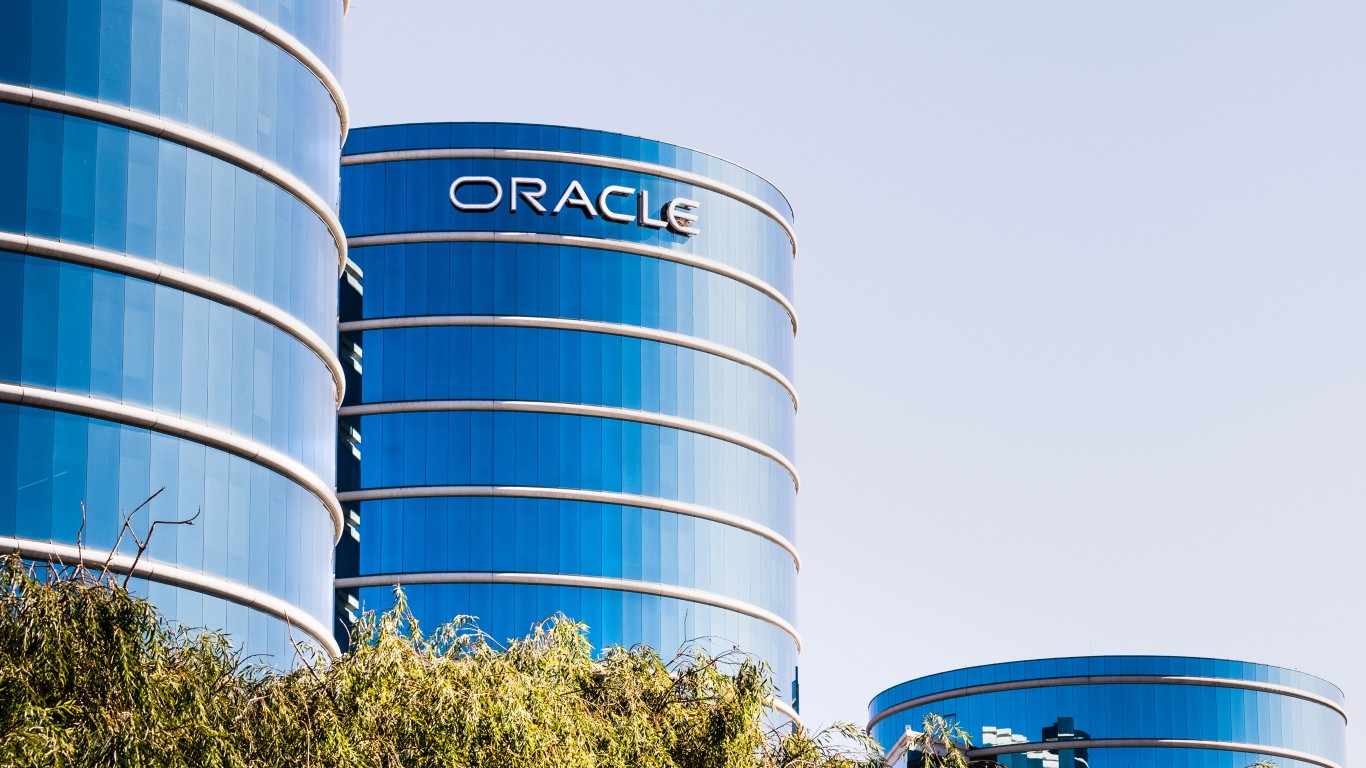
Oracle Falls 4% as Bond Selloff Tests Its Debt-Funded AI Buildout, Nebius Slips
Rising Treasury yields are hitting debt-heavy AI builders where it hurts most, and Oracle's balance sheet puts it squarely in the crosshairs. Here is what the bond market is saying about the cost of building the AI future.


A global bond selloff that lifted the 10-year Treasury yield to a recent high is landing hardest on balance sheets carrying the heaviest debt-funded AI capital expenditure. Oracle (NYSE:ORCL | ORCL Price Prediction) sits at the front of that queue, and its stock is repricing on the higher cost of the borrowing that funds its buildout.
Oracle stock is down 4% to $142.82 in Tuesday afternoon trading, extending a slide that had already left Oracle stock down 23% year to date through Monday’s close. Meanwhile, Nebius Group (NASDAQ:NBIS) stock is slipping in sympathy, down 3% to $200.45 as another AI infrastructure builder financing its expansion through debt and equity issuance.
The First Trust Cloud Computing ETF (NASDAQ:SKYY) is down 2% to $161.76. Broader tech is holding up better, with the Invesco QQQ Trust (NASDAQ:QQQ) down 0.9% to $710.30. Cloud infrastructure and software are selling harder than large-cap technology overall, and Oracle stock is falling harder than the cloud group it belongs to.
Bond Selloff Reprices the Cost of Building
Yields on the 10-year Treasury note rose to 4.78% Tuesday morning. Rising long-term rates directly lift the cost of the borrowing that funds hyperscale data-center construction. Among mega-cap AI infrastructure names, Oracle carries a relatively high leveraged balance sheet, which is why the same rate move produces a bigger price reaction here than in the broader cloud complex.
Oracle’s fiscal 2026 capital expenditure totaled $55.7 billion, up from $21.2 billion the prior year, producing a cash outflow $23.7 billion greater than the business generated. Oracle covered that gap by raising $43 billion in debt markets and a further $5 billion by selling stock. A buildout funded that way reprices directly when the cost of borrowing rises, and this can help to explain why Oracle stock is trading below its 200-day moving average of $170.66.
Where Demand Meets the Funding Cost
Co-CEO Clay Magouyrk said on Oracle’s most recent earnings call that customer demand for AI computing capacity has outpaced available supply, citing $553 billion in contracted but unrecognized revenue. Oracle posted 17% revenue growth in fiscal 2026, and its cloud infrastructure segment expanded 77%. That backlog gives Oracle unusual visibility into future revenue, and management has consistently characterized supply as the binding constraint on the business.
Oracle’s total liabilities reached $218.7 billion at fiscal year-end, against shareholder equity of $42.5 billion, with long-term debt alone at $122.3 billion. Higher long rates lift both refinancing costs on that stack and the incremental cost of the next dollar raised, which is the arithmetic doing the work on Oracle’s price today.
The tension in Oracle’s setup is that the demand signal and the funding cost are both real at the same time. A stock already down 23% year to date reflects the discount rate applied to that demand while bookings continue to grow. Nebius carries a related profile, funded through convertible notes, treasury share sales, and a first senior secured debt facility of approximately $775 million, which makes Nebius stock a natural sympathy trade on days when the long end of the curve sells off.
The Economic Times reported that Oracle is eliminating roughly 3,000 positions in India, and Oracle declined to comment on the India reductions. Oracle’s headcount shrank by 21,000 over the fiscal year ending May 31, a 13% decline, to about 141,000, and Oracle recorded $1.8 billion in restructuring charges for the year under its 2026 Restructuring Plan, with total anticipated charges of as much as $2.1 billion. These cuts read as cost discipline consistent with the funding strain, and Oracle stock rose on earlier layoff news, so today’s headlines aren’t a reliable read on the day’s direction.
What to Watch Next
Traders can watch for whether the 10-year Treasury yield continues to hover near the 4.8% level, since Oracle stock now trades with tighter sensitivity to long-end rates than to the cloud group as a whole. Investors sizing their exposure to debt-funded AI infrastructure should consider keeping their position sizes modest while the funding backdrop resets.
Nebius offers a lower-scale read on the same theme, and Nebius stock tends to move in the same direction on rate-driven days. Market watchers could look for signs that funding costs stabilize before either name attempts a durable bounce off current levels.
Analyst coverage on Oracle remains constructive on the underlying business, with 8 strong-buy and 29 buy ratings against 6 holds and one sell, and an average analyst target price of $244.12. That gap between price and target is where the funding-cost debate now sits.

Contact [email protected] for any questions or corrections.
David Moadel is financial writer specializing in stocks, ETFs, options, precious metals, and Bitcoin. David has written well over 1,000 articles for leading online publications, helping investors understand markets, income strategies, and risk.His work has appeared in The Motley Fool, InvestorPlace, U.S. News & World Report, TipRanks, ValueWalk, Benzinga, Market Realist, TalkMarkets, Finmasters, 24/7 Wall St., and others.With a master’s degree in education, David has taught at the elementary, high school, and college levels. That teaching background shapes his writing style: clear, educational, and practical. David has also built a loyal social-media audience by providing trustworthy financial content on YouTube, X/Twitter, and StockTwits.