Is AI Running Out Of Money?
Tech giants are borrowing at a pace that would have seemed unthinkable just a few years ago, betting that AI revenues will eventually justify the load. But skeptical investors, blocked construction projects, and corporate silence about real returns are raising…

The megacap companies funding AI expansion have issued nearly $250 billion in debt this year. So far, Amazon *+(NASDAQ: AMZN), Nvidia (NASDAQ: NVDA | NVDA Price Prediction), and SpaceX (NASDAQ: SPCX) are on this list. That is on top of Oracle (NASDAQ: ORCL), and Wall St. is already worried about whether it can compete with much larger companies. How big is the worry about the trend? Travis King of Voya Investment Management told The Wall Street Journal that “Everyone knows there’s a lot more coming, and so I think there’s been a hesitancy to jump in with both feet here.” And the borrowing at this level is almost certainly just the start.
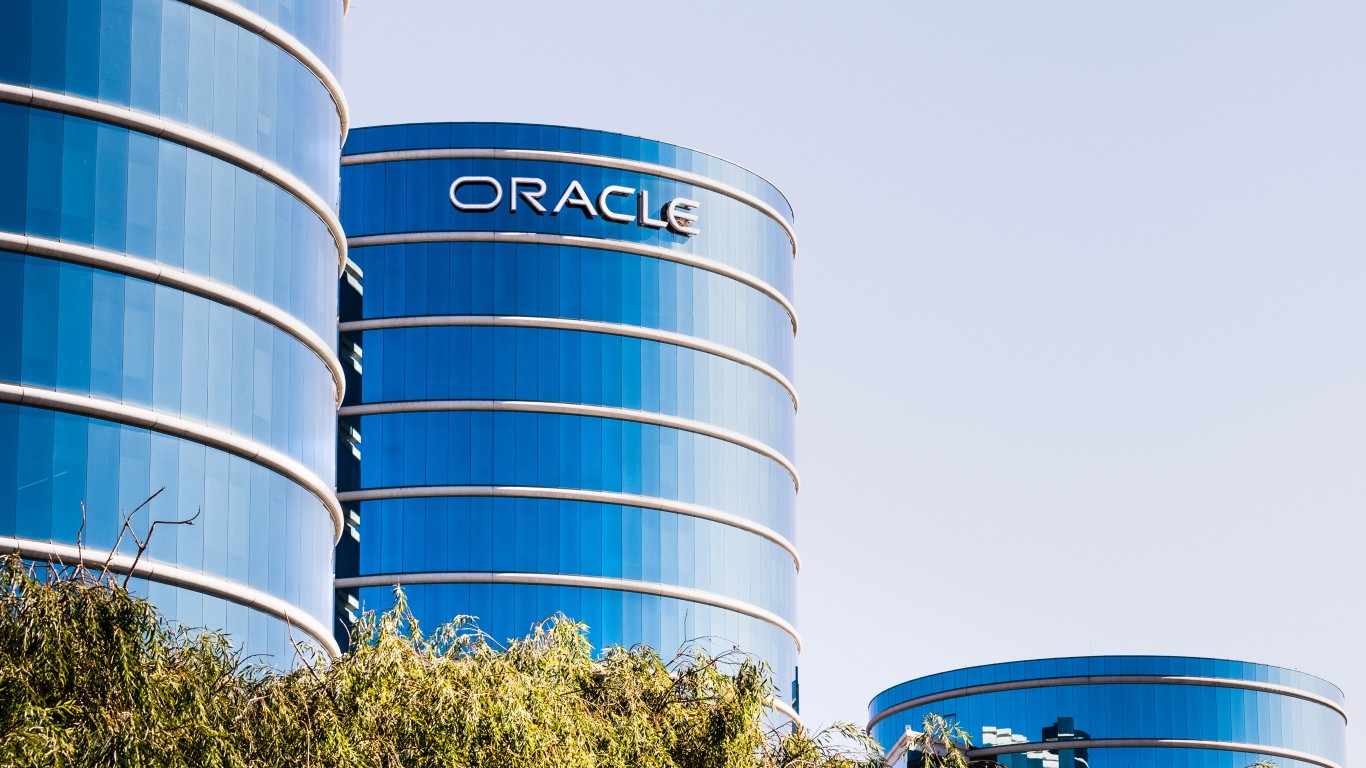
The largest tech companies used to have hundreds of billions of dollars on their balance sheets. Amazon had $140 billion at the end of the first quarter. But the company said it will invest $200 billion in AI and robotics this year. Its rivals have announced similar figures. Oracle, with much smaller revenue, has put its figure at $70 billion. Investors have punished it, pushing its shares down 28% this year. Other mega tech companies that plan these investments, called hyperscalers, have, in many cases, seen sell-offs as well.
The larger question this year is what happens next year, and the next? OpenAI, which has not tapped the public market for equity, says it needs to spend $600 billion between this year and 2030. Investors looking at its IPO need to look beyond that for OpenAI to get the market cap of $900 billion expected when it goes public.
This debt may run up against two high walls of reality. The first is, if revenue to offset massive data center equities is clearly not there, the premiums on this debt may rise sharply. The cost of being in the data center business will jump significantly. More and more large companies say that AI has helped with some efficiency, but has not begun to pay for itself, and may not in the near future. That is causing a retreat in AI demand,
The other problem AI data centers face is local resistance. Towns and cities, as states, have begun to push back against what they say will be high electricity demand and rates, and water pollution. Oil.com says $130 billion in data center construction has been blocked this year. And the year is only half over. The data center construction has become a political football.
AI data centers success is based on a period of hypergrowth in AI use that will extend for years. Current debt loads are based on that assumption. Skeptical investors believe that it is not true.
Contact [email protected] for any questions or corrections.
Douglas A. McIntyre is the co-founder, chief executive officer and editor in chief of 24/7 Wall St. and 24/7 Tempo. He has held these jobs since 2006.
McIntyre has written thousands of articles for 24/7 Wall St. He is an expert on corporate finance, the automotive industry, media companies and international finance. He has edited articles on national demographics, sports, personal income and travel.
His work has been quoted or mentioned in The New York Times, The Wall Street Journal, Los Angeles Times, The Washington Post, NBC News, Time, The New Yorker, HuffPost USA Today, Business Insider, Yahoo, AOL, MarketWatch, The Atlantic, Bloomberg, New York Post, Chicago Tribune, Forbes, The Guardian and many other major publications. McIntyre has been a guest on CNBC, the BBC and television and radio stations across the country.
A magna cum laude graduate of Harvard College, McIntyre also was president of The Harvard Advocate. Founded in 1866, the Advocate is the oldest college publication in the United States.
TheStreet.com, Comps.com and Edgar Online are some of the public companies for which McIntyre served on the board of directors. He was a Vicinity Corporation board member when the company was sold to Microsoft in 2002. He served on the audit committees of some of these companies.
McIntyre has been the CEO of FutureSource, a provider of trading terminals and news to commodities and futures traders. He was president of Switchboard, the online phone directory company. He served as chairman and CEO of On2 Technologies, the video compression company that provided video compression software for Adobe’s Flash. Google bought On2 in 2009.