Campbell’s or Lululemon: Why One Earnings Report Matters Far More Than the Other
Campbell's and Lululemon both report on the same Thursday, but one of those earnings releases carries consequences that will shape an entire portfolio year while the other is just another quarter. Knowing which is which changes everything about how retirees…

This post may contain links from our sponsors and affiliates, and Flywheel Publishing may receive compensation for actions taken through them.

Retirement-focused investors weighing Campbell’s (NASDAQ:CPB | CPB Price Prediction) against Lululemon Athletica (NASDAQ:LULU) get a rare side-by-side test this week. Both report on Thursday, September 3, 2026, with Campbell’s dropping fourth quarter and full year fiscal 2026 results before the open and Lululemon posting second quarter fiscal 2026 results later the same day. One of these reports carries far more weight than the other. Campbell’s is closing an entire fiscal year and typically resets guidance for the year ahead. Lululemon is reporting a single mid-year quarter. For a portfolio built around income and capital preservation, that asymmetry matters, and so does everything below.
Risk Profile and Portfolio Role
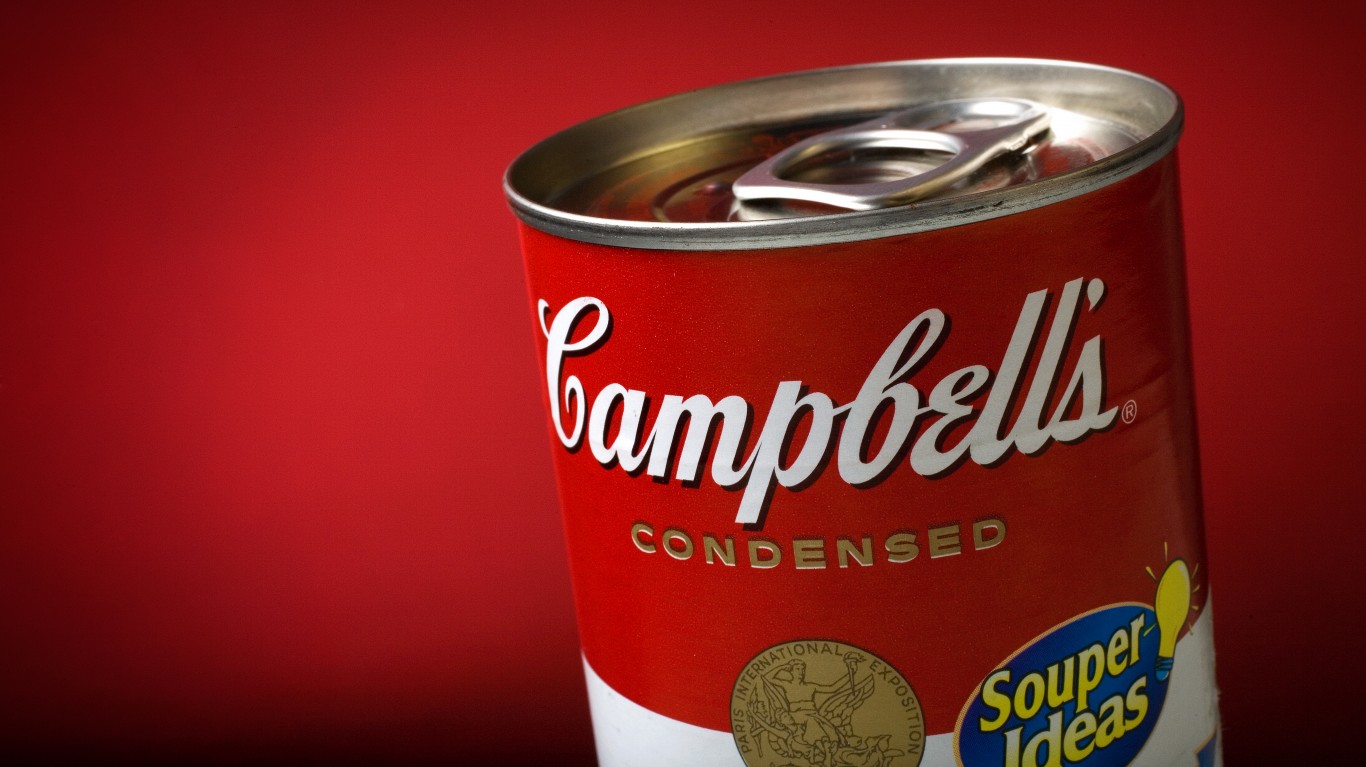
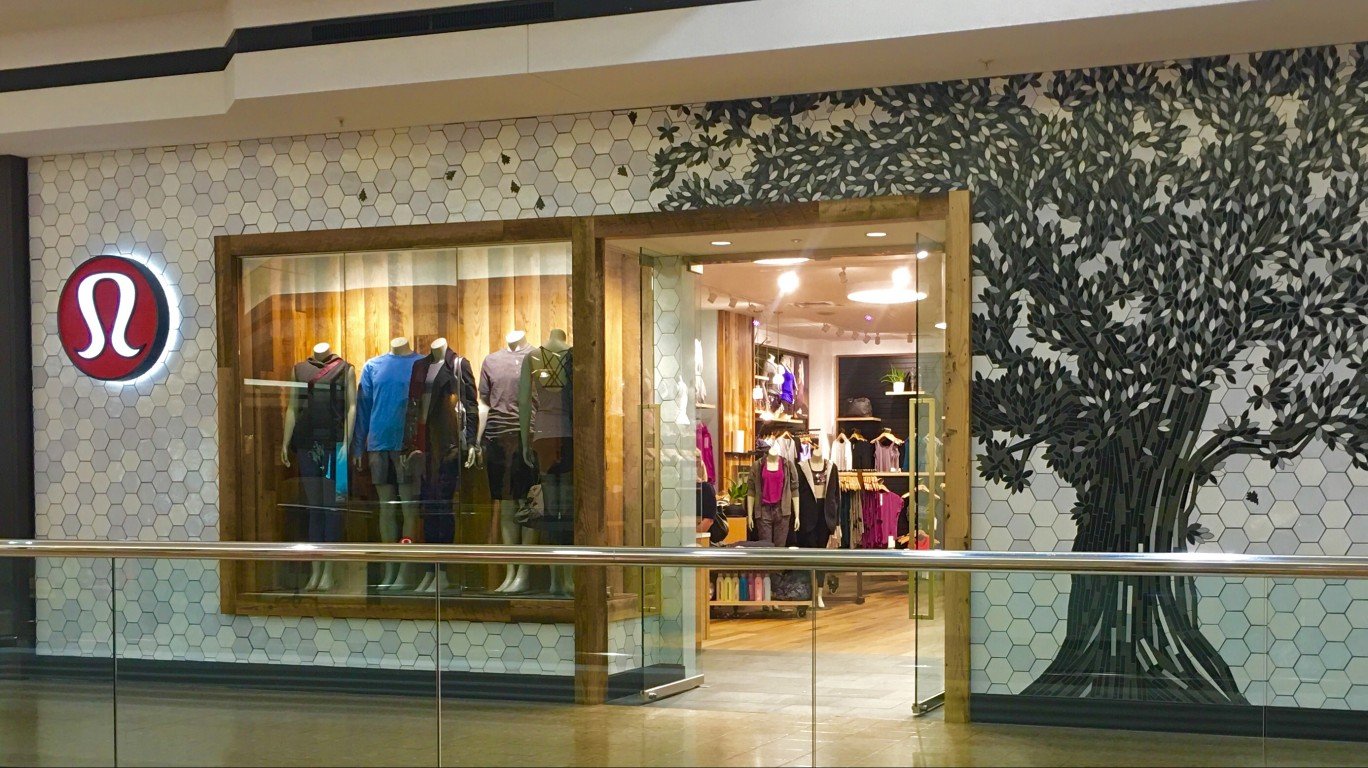
Campbell’s is a consumer defensive packaged foods business selling soup, sauce, and snacks that stay in the cart even when household budgets tighten. Lululemon is consumer cyclical apparel retailer selling $128 leggings that get deferred when the same household trims spending. The math shows up in beta, which measures how much a stock swings relative to the broader market. A beta near zero moves almost independently of the index, while a beta near one moves with it. Campbell’s beta is 0.01. Lululemon’s is 0.86. Add Campbell’s $1.56 annual dividend and 6.6% yield, versus no dividend at all from Lululemon, and the fit for a retirement account is not close.
Winner: Campbell’s.
Analyst Posture and Price Targets
The Wall Street consensus target on Campbell’s is $21.94, which is below the current price of $23.71. Ratings skew defensive too, with a consensus recommendation to hold. The 24/7 Wall St. model is more constructive, calling for $29.33 with 0.9 confidence and a Buy action. However, the sell side believes the stock is fully priced.


Lululemon’s consensus target of $127.35 is above its current $118.00. Here too, the consensus analyst recommendation is to hold. Our model targets $145.11 with 0.9 confidence and a Buy. Both the Street and the model see room in Lululemon.


Winner: Lululemon.
Setup Into the Report
Campbell’s has been quietly rebuilding. Shares are up 7.9% over the past month, though still down 14.9% year to date and 25.7% over the past year. Guidance was already cut mid-year to adjusted EPS of $2.15 to $2.25 from a prior $2.40 to $2.55, versus FY25 adjusted EPS of $2.91. The bar is on the floor, and the full-year earnings report plus the initial FY27 outlook is the single most consequential update Campbell’s will offer all year.

Lululemon enters with wreckage behind it: shares are down 43.2% year to date and 41.6% over one year. Q2 guidance calls for EPS of $1.76 to $1.81 versus $3.10 a year ago, and North America sales down in the low double digits. Expectations are low, but this is one quarter, not a full-year reset.

Winner: Campbell’s on catalyst weight and margin of safety.
Verdict
For the retirement-focused investor, Campbell’s comes out ahead. A 6.6% yield, a beta near zero, and a fiscal-year-end report that resets the entire investment case is exactly the kind of decision point income portfolios are built around. Lululemon deserves credit: the balance sheet is stronger, China mainland revenue grew 30%, and a total-return investor with a longer horizon and no need for income has a legitimate rebound candidate here at $118.
The biggest risk to owning Campbell’s is dividend coverage. With adjusted EPS guided to $2.15 to $2.25 against a $1.56 payout and $11.112 billion in total liabilities, the payout is safe only if the FY27 outlook that management delivers Thursday morning holds the line. (A 6.6% yield on a name with cut guidance is exactly the setup we walk through in a free guide to the seven warning signs a big dividend is about to be cut.)
Watch three items in the release:
- Initial FY27 organic sales and EBIT guidance
- Snacks operating margin (Q3 came in at about 10%, still down around 400 basis points year over year)
- Any commentary on the leverage path back to the low threes.
That is the report retirees want to read.
Contact [email protected] for any questions or corrections.
Trey has been an editor and author at 24/7 Wall St. for more than a decade, where he has published thousands of articles analyzing corporate earnings, dividend stocks, short interest, insider buying, private equity, and market trends. His comprehensive coverage spans the full spectrum of financial markets, from blue-chip stalwarts to emerging growth companies.
Beyond 24/7 Wall St., Trey has created and edited financial content for Benzinga and AOL's BloggingStocks, contributing additional hundreds of articles to the investment community. He previously oversaw the 24/7 Climate Insights site, managing editorial operations and content strategy, and currently oversees and creates content for My Investing News.
Trey's editorial expertise extends across multiple publishing environments. He served as production editor at Dearborn Financial Publishing and development editor at Kaplan, where he helped shape financial education materials. Earlier in his career, he worked as a writer-producer at SVE. His freelance editing portfolio includes work for prestigious clients such as Sage Publications, Rand McNally, the Institute for Supply Management, the American Library Association, Eggplant Literary Productions, and Spiegel.
Outside of financial journalism, Trey writes fiction and has been an active member of the writing community for years, overseeing a long-running critique group and moderating workshop sessions at regional conventions. He lives with his family in an old house in the Midwest.