Forget Scottsdale. Here’s Where Your Retirement Portfolio Actually Stretches Further
Scottsdale keeps landing on retirement shortlists for real reasons, but the sticker price has quietly turned a solid thesis into an expensive assumption, and one Arizona city nearby keeps almost everything that matters at a portfolio target that changes the…

This post may contain links from our sponsors and affiliates, and Flywheel Publishing may receive compensation for actions taken through them.

Every winter, a certain type of retiree lands at Sky Harbor with a real estate agent’s card in hand and Scottsdale already circled on the map. It has become the default answer for a specific age and portfolio: dry heat, mountain views, friendly tax treatment for retirement income, and the Mayo Clinic down the road. This is one of those retirement questions people ask constantly, and the answer requires running the numbers rather than reading the brochure. The default is now priced like a default, and a quieter alternative keeps almost everything a Scottsdale buyer wants at a materially lower portfolio target.
Why the Default Costs More Than It Looks
Scottsdale’s reputation is built on solid ground. Between Mayo Clinic Scottsdale and HonorHealth, the medical infrastructure is deep and well-regarded. Arizona has positioned itself as a retiree-friendly state by exempting Social Security from taxation and applying a flat 2.5% rate to other retirement income, which is exactly why the metro keeps landing on so many shortlists.
Where the default assumption starts to crack is housing. The national Case-Shiller index hit 336.7 in June 2026, a new high and up 0.4% from the month before. Arizona’s statewide cost of living sits at 100.677, essentially at the national average. But Scottsdale runs well above that baseline, and the master-planned communities like Grayhawk, DC Ranch, and Troon North layer four-figure quarterly HOA bills on top of already elevated home prices.
Then there are the desert-specific carrying costs. Summer cooling in the Sonoran Desert makes residential electricity the dominant line item from May through September. Water is no longer a background cost either. Under the federal plan for post-2026 Colorado River operations, Arizona taps won’t run dry, but water rates are headed higher. That cost curve flows through household bills, HOA landscaping assessments, and eventually through the resale value of homes that depend on green turf and shared amenities.
Tucson: Same Tax Code, Different Price Tag
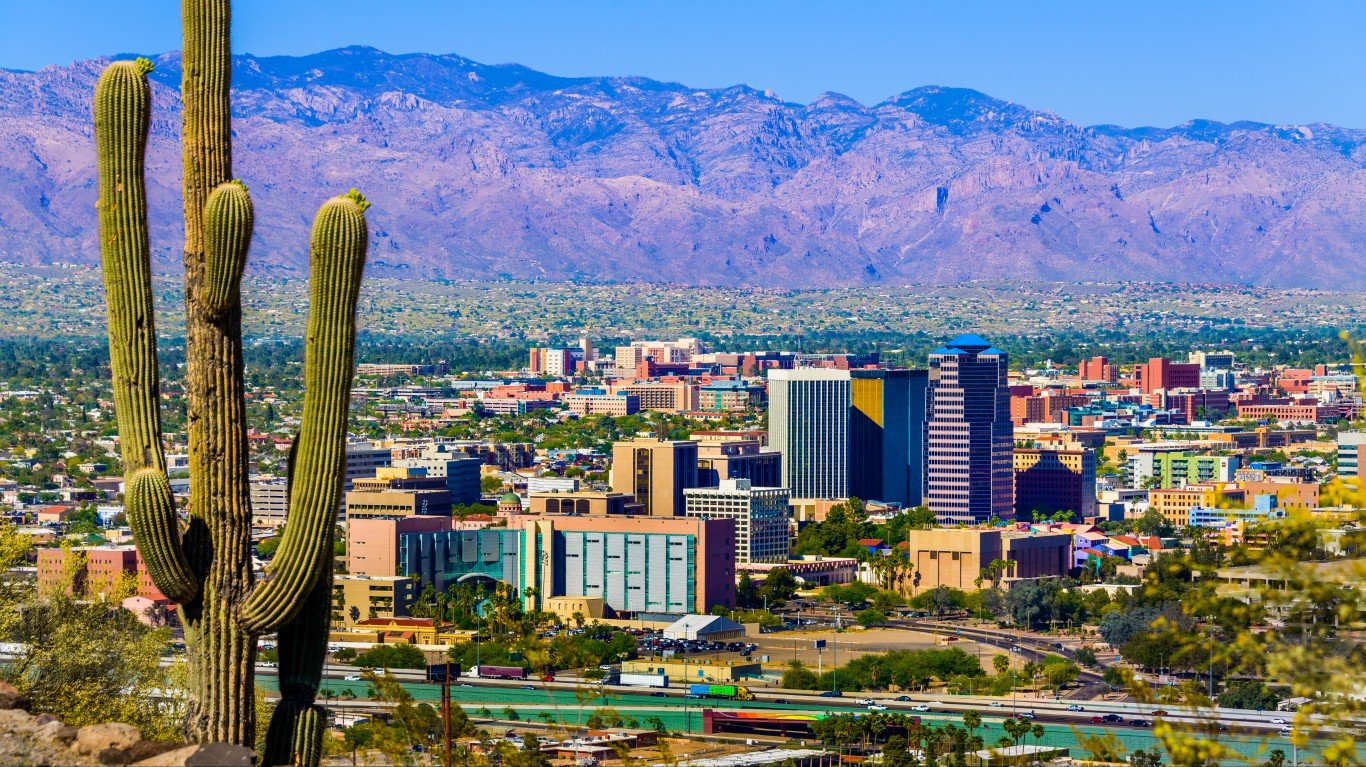
Roughly a hundred miles south, Tucson keeps the pieces of the Scottsdale thesis that actually matter to a retiree’s balance sheet. It sits in the same state, so it keeps the Social Security exemption and the 2.5% flat rate on other retirement income. Elevation is a few hundred feet higher, which shaves a few degrees off peak summer afternoons. Home prices sit well below Scottsdale’s, and Pima County’s effective property tax rates are workable for a household on a fixed income.
Healthcare is the piece most out-of-state buyers underweight, and where Tucson holds up. Banner University Medical Center Tucson is an academic medical center tied to the University of Arizona College of Medicine and has a Level 1 trauma designation. Day-to-day cardiology, oncology, and orthopedics are covered locally, and a Mayo referral is a short drive north when a case requires it.
Amenities read like the list a retiree actually uses: the Catalina Foothills, Saguaro National Park bracketing the city on both sides, Sabino Canyon, a serious food scene, and a university calendar that keeps the concert halls and lecture series full. Golf exists without being the civic personality.
Running the Portfolio Math
A useful anchor: the BLS Consumer Expenditure Survey put average annual household spending at $78,535 in 2024. Layer in 2026 Medicare Part B at $202.90 per person per month with a $283 annual deductible, and the inpatient Part A deductible at $1,736 per benefit period. Social Security will help at the margin, with the 2027 COLA tracking at 3.1%, though a cost-of-living adjustment does not close a Scottsdale housing gap.
Run the residual through a 4% withdrawal rate (a rule that has taken its share of hits lately, as we walked through in a free guide on the income-first alternative). A $60,000 annual portfolio draw requires roughly $1.5 million behind it. A $90,000 draw requires roughly $2.25 million. Priced realistically with HOA dues, summer electricity, rising water, and property taxes on a Scottsdale-median home, the Scottsdale version tends to sit at the upper end of that range. The Tucson version, holding lifestyle roughly constant, tends to sit at the lower end. The gap covers the same tax code, similar climate, roughly the same medical ceiling, at a portfolio target several hundred thousand dollars lower.
What Tucson Costs You in Return
What Most Buyers Miss About the Water
The Colorado River rate trajectory is the second-order effect that Scottsdale buyers underprice. It compounds for thirty years through the utility bill, the HOA line item, the landscaping cost, and eventually the resale market for turf-heavy communities. A retiree who lands in Tucson with a $1.5 to $1.8 million portfolio has bought roughly the same Arizona retirement as the Scottsdale buyer at $2.2 to $2.5 million, and has left themselves a cushion for the water bill everyone in the state is about to receive. A 4% draw against a portfolio in that lower range, an Arizona address, and a Banner cardiologist on speed dial cover the same retirement profile.
Contact [email protected] for any questions or corrections.
David Beren has been a Flywheel Publishing contributor since 2022. Writing for 24/7 Wall St. since 2023, David loves to write about topics of all shapes and sizes. As a technology expert, David focuses heavily on consumer electronics brands, automobiles, and general technology. He has previously written for LifeWire, formerly About.com. As a part-time freelance writer, David’s “day job” has been working on and leading social media for multiple Fortune 100 brands. David loves the flexibility of this field and its ability to reach customers exactly where they like to spend their time. Additionally, David previously published his own blog, TmoNews.com, which reached 3 million readers in its first year. In addition to freelance and social media work, David loves to spend time with his family and children and relive the glory days of video game consoles by playing any retro game console he can get his hands on.