Cramer Says Costco at 49 Times Earnings Is the Mistake Loyal Shoppers Keep Making
Jim Cramer is sounding an alarm about a beloved retailer that loyal shoppers treat as bulletproof, and the numbers behind his warning point toward a corner of retail that most investors still underestimate.

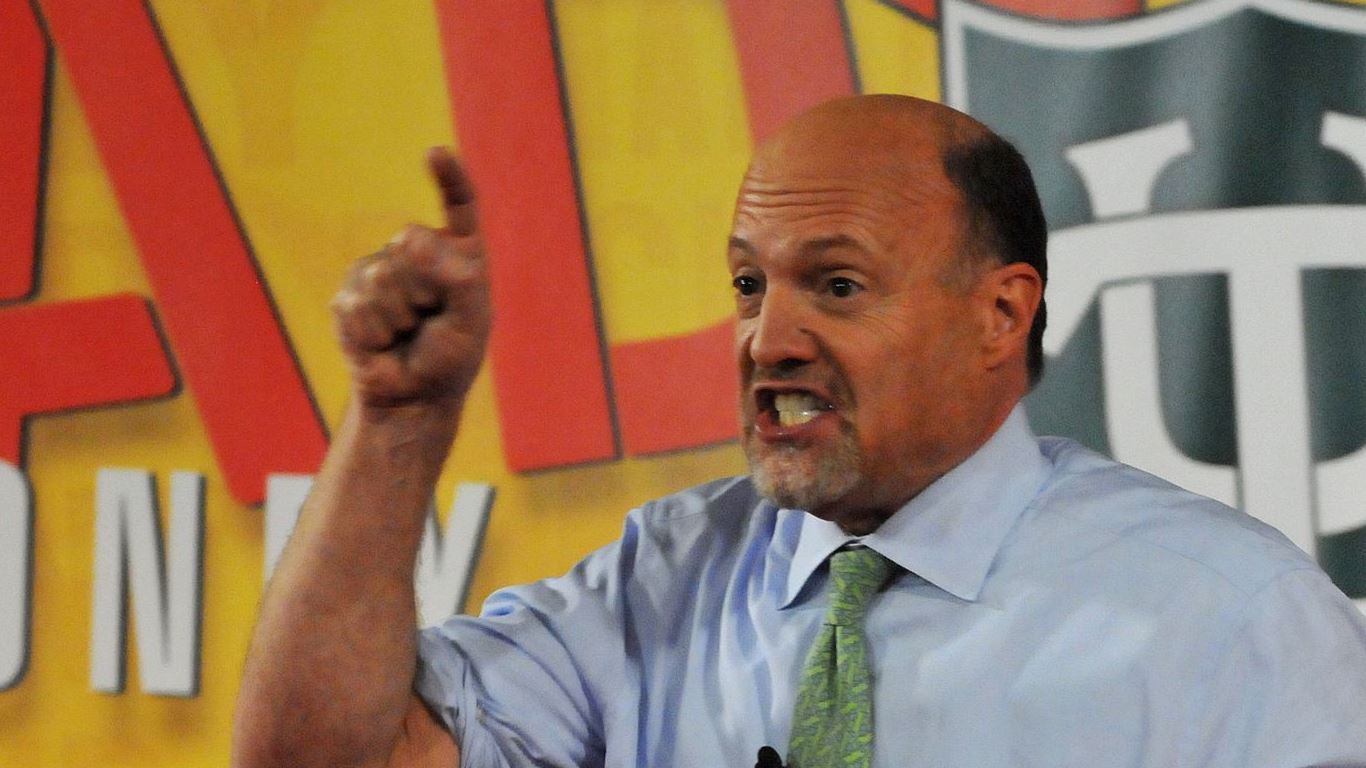
On CNBC’s opening bell on September 3, 2026, Jim Cramer laid out a split that inverts most people’s assumptions about American retail. The membership warehouse with the best reputation in the business is stumbling, and the chains people quietly hit for essentials are running away with the story.
Costco (NASDAQ:COST | COST Price Prediction) trades near 47 times trailing earnings while its comparable sales have gone the wrong way for four straight reporting periods. Meanwhile, Five Below (NASDAQ:FIVE), Dollar Tree (NASDAQ:DLTR), and Dollar General (NYSE:DG) have each reported quarters that would look strong in any market.
Cramer’s read is that the trade-down is real, and it is not treating Costco the way loyal shoppers assume it should.
Trading Down That Actually Works
Jim Cramer said, “If you want to know what trading down looks like in a positive way, you just look at what Winnie Park has done at Five Below. Still one more amazing quarter.” The endorsement lines up with the numbers.
Five Below’s second quarter delivered net sales of $1.3 billion, up 23%, with comparable sales growth of 14% and adjusted diluted EPS of $1.68. Park raised full-year adjusted EPS guidance to a midpoint of $10.07.
Trading down describes household dollars migrating toward retailers positioned where the marginal purchase now happens. Park emphasized broad-based growth across all income cohorts, geographies, and categories, which reads as trade-in behavior from higher-income shoppers rather than pure distress buying.

At roughly 31 times earnings, Five Below is priced for growth investors, and estimate revisions have moved higher across every forward quarter. That is a materially different proposition than paying 47 times for a warehouse chain whose top line is decelerating.
Costco’s Problem Runs Deeper Than a Multiple
Cramer invoked Charlie Munger’s principle that at extreme multiples the price has already paid for the future, and then applied it to Costco. He is right, and the multiple is best read as a symptom of the underlying problem.
CNBC noted that Costco’s comparable store sales declined across May, June, July, and August, and also flagged weak renewal rates for membership card purchases. Management on the last call reported the worldwide renewal rate at 89.7%, attributing the pressure to a growing mix of online sign-ups that renew at lower rates than warehouse sign-ups.

A membership retailer that struggles to keep its members has a structural issue that a rebound in gasoline traffic cannot fix. Costco’s operating leverage lives in the fees line, and although membership fees ran $1.37 billion, up 10.7% in the most recent quarter, a slower renewal cadence eventually reaches that growth rate.
The stock has noticed. Costco is down 2% over the past year and sits below both its 50-day and 200-day moving averages.
Cramer’s Generational Worry Deserves a Serious Answer
Jim Cramer said, “I don’t want it to be a generational thing where my generation is Costco and the newer generations don’t look at it like that.” That is the most interesting thing he said, and the evidence is genuinely mixed.
Bullish evidence: paid executive memberships grew 9.6% to 41.2 million, digitally enabled comparable sales rose 21.5%, and site and app traffic increased 37%. A brand losing the internet does not produce those numbers.
Bearish evidence: digital sign-ups renew at a lower rate than warehouse sign-ups. The new member is easier to acquire and harder to keep, which is the pattern you would expect if the brand’s cultural gravity were weakening at the margins.
Cramer’s fear is reasonable. The data does not yet confirm it.
Where the Value Has Moved, and What Ends the Trade
Jim Cramer said, “I’m just wondering whether the great value isn’t in these dollar stores.” CNBC reported strong results from both Dollar Tree and Dollar General.
Dollar Tree posted comparable sales up 3.7% with gross margin expanding 850 basis points to 42.9%. Dollar General reported 3.5% same-store sales growth in its fifth consecutive quarter of traffic growth, and CEO Todd Vasos cited strong trade-in across middle- and high-income cohorts.
The economics are simple. When budgets tighten, the fixed-cost base of a small-box discount format levers hard against small increases in traffic, and a $1 price point does disproportionate merchandising work for a shopper counting pennies.

Dollar Tree at 16 times earnings and Dollar General at 17 times are priced as if the trade-down ends tomorrow, which it likely will not, unless real wages accelerate meaningfully at the low end.
The trade-down winners look like a cyclical opportunity that investors would size to their own risk tolerance. What ends the trade is a genuine improvement in purchasing power at the bottom two income quintiles. Until that shows up in the data, Five Below and the dollar stores are where the incremental household dollar is going.
Contact [email protected] for any questions or corrections.
Omor Ibne Ehsan is a writer at 24/7 Wall St. He is a self-taught investor with a focus on growth, cyclical, and dividend equities that have strong fundamentals, value, and long-term potential. He also has an interest in high-risk, high-reward investments such as penny stocks.