Lutnick’s Message to the World: Take American AI and Data Centers, or Watch Another Country Get Rich Instead
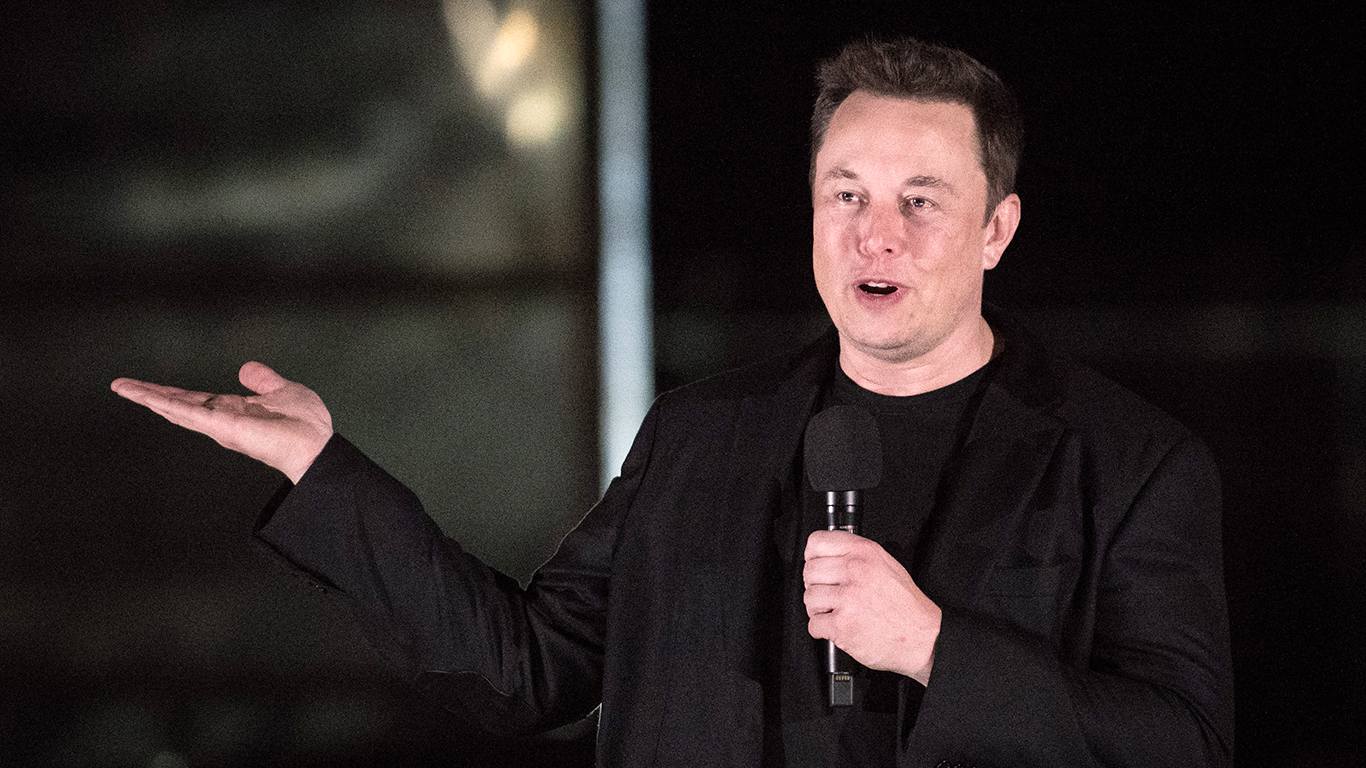
Commerce Secretary Howard Lutnick arrived at a G20 technology summit with a pitch for American AI infrastructure and a quiet warning for any government that refused it. The offer came wrapped in an education metaphor, but the economics underneath tell…


The Trump administration is weighing tariffs on imported semiconductors that could extend to servers and consumer electronics containing chips. Bloomberg reported that the tariffs under consideration could extend to servers and consumer electronics that contain chips, which are found in nearly every device sold in the country and in nearly every data center under construction.
Commerce Secretary Howard Lutnick used a G20 technology meeting in Asia to pitch American infrastructure to foreign governments while signaling consequences for those who decline, according to Bloomberg. He delivered a sales pitch and a threat in the same breath. Companies that build in the United States qualify for tariff relief, while everything else pays the tariff.
AI Reframed as Education
Lutnick’s framing was deliberate. “AI is education. It’s the ability to ask the smartest people in the world to do what you want them to do, and that is what I set out to do today: have the world understand that they can grow and build using the American tech stack and AI.”
Calling the American tech stack “education,” rather than “dominance,” changes its political shape. A minister signing on to a curriculum does something for their citizens. A minister signing on to a supply chain does something for Washington. The word travels better at a summit.
Data Center Pitch and the Warning Inside It
On infrastructure, Lutnick was blunter. “If your community embraces data centers you will have great economics and more power that will be built and the price of power in your community will go down and you will have the economic power of paying taxes and making your community better. If your community doesn’t embrace data centers, some other community will.”
The economic claim rests on two contested ideas: that hosting hyperscale sites expands local generation capacity enough to bring down retail power prices, and that tax gains outrun local costs. Data centers are the largest driver of U.S. electricity demand, and by 2023, they consumed roughly 66 billion liters of water, or over 500,000 acre-feet per year. Communities in Virginia, Oregon, and elsewhere have organized against these impacts.
Lutnick characterized criticism of AI’s environmental footprint as Chinese disinformation. The final sentence reads as a threat: capital flows to the jurisdiction that accepts it.
Teacher and Student Framing
He extended the education metaphor into competitive strategy. “We are trying to be out there in front, but if you think about AI, we talk about it as education. The smartest frontier models in the world are American. They are the teacher. If the teacher relentlessly studies to stay at the frontier, the smartest, the greatest in the world, the students are always going to be a little behind.”
This claims the American lead is structural rather than temporary. It only holds if the gap between closed-frontier systems and freely available alternatives continues to widen. Chinese labs have released capable models with open weights, meaning trained parameters are downloadable and modifiable rather than licensed through an API. A ministry that cannot buy the newest American system can still fine-tune a Chinese one on domestic data. If that trajectory continues, the teacher-student framing collapses into peer competition.
How Tariff Mechanics Work
Tariffs on imported semiconductors raise input costs for anything built with them. Server makers, cloud operators and consumer hardware companies either absorb the increase or pass it to buyers. Relief conditioned on domestic investment gives large companies a reason to commit capital to American fabrication. Bloomberg reported that the administration is pairing the new chip tariffs with exemptions for US manufacturing.
Fabrication plants take years to build. The cost hits long before capacity arrives, and that timing gap is the central risk. Companies supplying semiconductor manufacturing equipment and those building domestic capacity sit on the opposite side of this trade from firms importing finished electronics.
What to Watch
Announced domestic fabrication commitments matter only if they translate into on-schedule construction. Tariff relief matters only if granted in practice rather than held as leverage indefinitely.
Watch whether other G20 governments align with the American stack or hedge toward alternatives, and whether the price of chip-containing hardware moves once any measure is imposed, according to Bloomberg. Reuters reported that the US pushed a hands-off approach to AI regulation at the G20 tech meeting while the EU pushed a new law, which tells you alignment is not automatic, according to Bloomberg.
Does trade pressure accelerate American chip investment, or does it mostly raise costs for American buyers first? On the current design, it does both, and the cost pass-through arrives first. The investment thesis rests on whether domestic capacity is in place before cost increases erode demand for the hardware the policy is trying to onshore.
Contact [email protected] for any questions or corrections.
Omor Ibne Ehsan is a writer at 24/7 Wall St. He is a self-taught investor with a focus on growth, cyclical, and dividend equities that have strong fundamentals, value, and long-term potential. He also has an interest in high-risk, high-reward investments such as penny stocks.