Google Reveals Plan to Dominate AI: Copy Apple
Artificial intelligence has become the new arms race for Big Tech, but the battle is no longer just about who has the smartest chatbot. It is increasingly about who controls the hardware underneath it. That matters because AI models are…


Artificial intelligence has become the new arms race for Big Tech, but the battle is no longer just about who has the smartest chatbot. It is increasingly about who controls the hardware underneath it. That matters because AI models are expensive to train, power-hungry to run, and dependent on scarce semiconductor supply. So the question savvy investors should ask is simple: who owns the picks and shovels of the AI gold rush?
Surprisingly, the answer may not just be Nvidia (NASDAQ:NVDA | NVDA Price Prediction) anymore. Alphabet (NASDAQ:GOOG) appears ready to follow the blueprint that turned Apple into one of the most profitable companies on Earth — designing its own chips from top to bottom.
Apple Proved Vertical Integration Works
Apple’s advantage has never been limited to the iPhone. Its real edge comes from controlling the entire ecosystem — hardware, software, and increasingly, semiconductors.
The company began designing its own A-series chips for iPhones in 2010 and later expanded into M-series processors for Macs and iPads. In Apple’s fiscal 2026 second quarter, its services gross margin exceeded 76%, while overall company gross margin reached 49.3%. Those margins reflect the pricing power that comes from owning the technology stack.
More importantly, Apple no longer depends on third-party chip designers like Intel (NASDAQ:INTC) for its core products. That shift improved battery life, boosted performance, and gave Apple tighter cost control.
Let’s put the numbers into perspective:
| Company | Last Quarter Operating Margin | Quarterly Revenue Growth | Custom Chip Strategy |
| Apple | 32.3% | 17% | Fully in-house |
| Alphabet | 33% (operating margin in Google Cloud Q1 2026) | 22% | Semi-custom TPU strategy |
| Microsoft (NASDAQ:MSFT) | 46.3% | 18.3% | Limited custom AI chips |
| Meta Platforms (NASDAQ:META) | 41% (operating margin) | 33% | Developing in-house AI silicon |
Apple showed Silicon Valley that controlling your own chips is not just an engineering flex — it is a profit machine.
Google Wants the Same AI Advantage
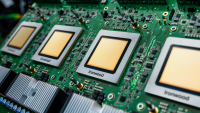
Google has quietly spent more than a decade building its own AI Tensor Processing Units (TPU). Unlike Nvidia’s GPUs, which are sold broadly across the industry, TPUs were designed primarily for Google’s internal AI workloads.
That strategy helped power products like Gemini, Search AI Overviews, and Google Cloud AI services. Alphabet’s Google Cloud revenue rose 63% year over year to $20 billion in Q1, driven largely by AI infrastructure demand.
Until now, Google relied heavily on partners including Broadcom (NASDAQ:AVGO) and MediaTek to help design these TPUs. But new reports from Taiwan suggest Google wants more control.
Tech Taiwan reports Google told Taiwan Semiconductor Manufacturing (NYSE:TSM) that it wants to become “your direct major customer.” That is a loaded phrase in semiconductor circles because Taiwan Semi manufactures nearly all of Apple’s chips. If Google bypasses partners and works directly with the foundry, it would mirror Apple’s vertical integration strategy almost exactly.
In any case, the economics are hard to ignore. Nvidia’s data center revenue climbed 427% in fiscal 2025, and rose another 92% to $75.2 billion in its just-reported Q1 results, showing just how lucrative AI hardware has become. Google likely sees custom silicon as the fastest way to lower AI costs while improving performance.
The Risks Investors Should Watch
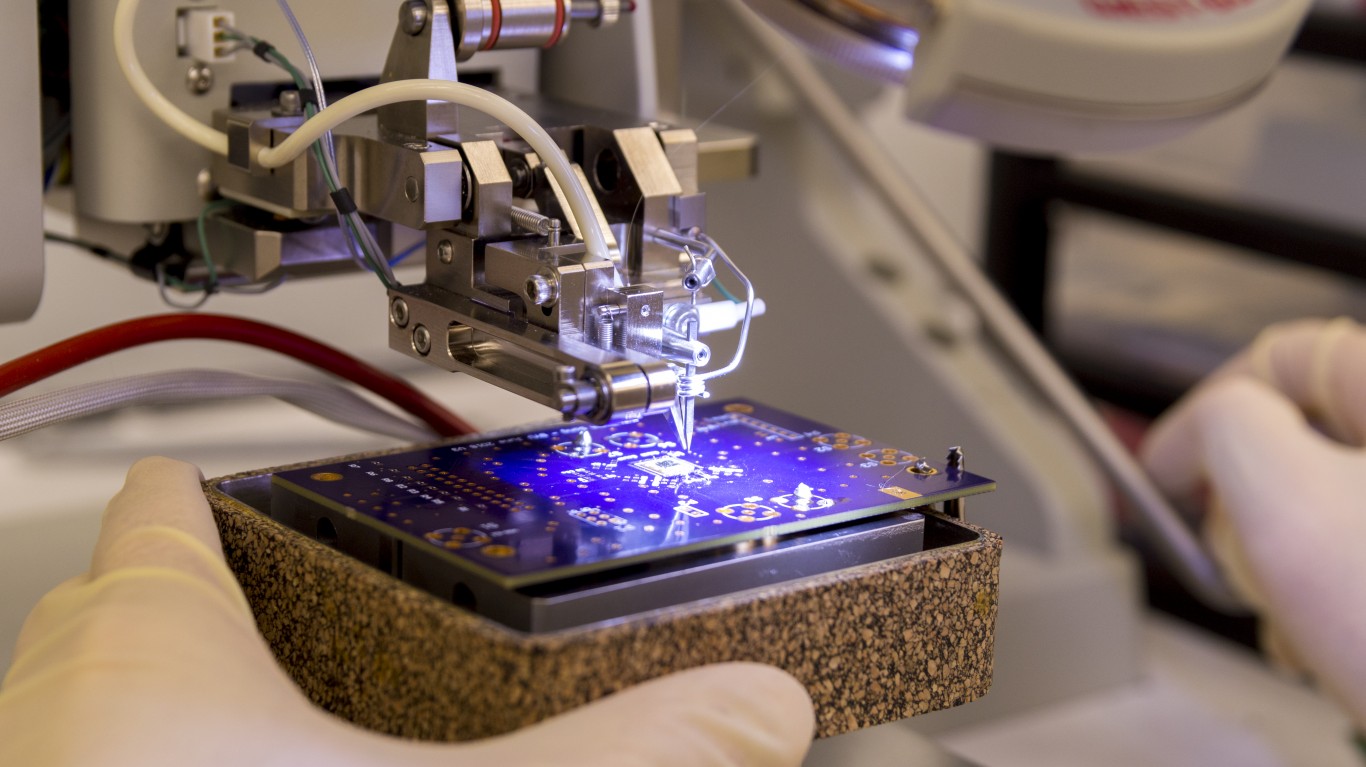
Granted, designing chips is not easy. Semiconductor development costs can exceed $500 million for a single advanced-node design, according to the Semiconductor Industry Association. Manufacturing bottlenecks also remain a risk because nearly every major AI company depends on Taiwan Semiconductor’s advanced packaging capacity.
That said, Google has advantages many rivals lack:
- $174.4 billion in trailing operating cash flow
- Existing TPU infrastructure already deployed at scale
- Deep AI software integration through Gemini
- Massive cloud-computing demand from enterprise customers
Google is not entering the chip race from scratch, but already has one foot inside the factory door.
Key Takeaway
In short, Google’s AI ambitions are evolving from software company to full-stack computing giant. Apple proved that owning your own chips can widen margins, strengthen ecosystem control, and reduce reliance on outside suppliers. Now Google appears ready to apply the same strategy to artificial intelligence.
For investors, this matters because the next phase of the AI boom may not be won solely by the company with the best chatbot. It could be won by the company with the lowest-cost, highest-performance infrastructure underneath it.
Google — by copying Apple — may be less imitation and more survival strategy in the trillion-dollar AI era.
Contact [email protected] for any questions or corrections.
After two decades of patrolling the dark corners of suburbia as a police officer, Rich Duprey hung up his badge and gun to begin writing full time about stocks and investing. For the past 20 years, he’s been cruising the markets looking for companies to lock up as long-term holdings in a portfolio while writing extensively on the broad sectors of consumer goods, technology, and industrials. Because his experience isn’t from the typical financial analyst track, Rich is able to break down complex topics into understandable and useful action points for the average investor. His writings have appeared on The Motley Fool, InvestorPlace, Yahoo! Finance, Money Morning, and, of course, 24/7 Wall St. He has been featured in both U.S. and international publications, including MarketWatch, Financial Times, Forbes, Fast Company, and USA Today.