Tesla Wants to Be Seen as an AI Company
Tesla's management is pitching investors on an AI future while the income statement tells a very different story, and the gap between those two realities is getting harder to ignore.

At $354.08, Tesla (NASDAQ:TSLA | TSLA Price Prediction) is a Sell, because the market is being asked to underwrite a hardware business at software multiples while cash flow goes the wrong way. The pitch that Tesla is really an AI company is doing a lot of heavy lifting at 369x earnings.
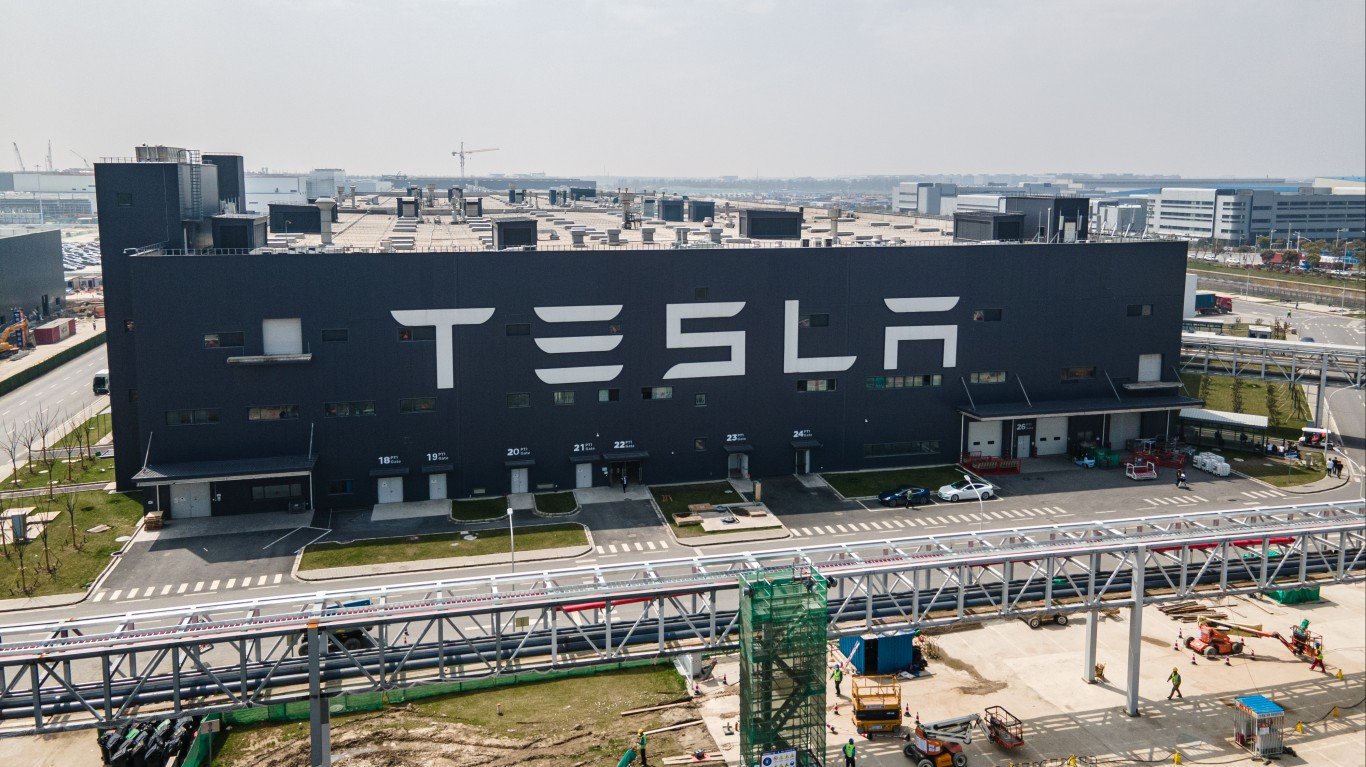
Tesla still sells cars, batteries, and energy storage for a living. Management is now steering the story toward Robotaxi, the Optimus humanoid robot, in-house AI chips, and a planned Austin semiconductor fab, arguing that “hardware-related profits” will eventually be joined by accelerating AI, software, and fleet revenue. The stock has drifted lower as that promise collides with a brutal spending cycle, sliding 21.27% year to date even after a 10.12% bounce in the last month.
Why the AI Optionality Case Still Has Teeth
Bulls have real numbers to point to. Q2 revenue hit $28.24 billion, up 25.5% year over year and beating consensus by 7.10%, on record deliveries of 480,126 vehicles. Active FSD subscriptions reached 1.48 million, up 56%, and services revenue jumped 50% at a 14% gross margin.
The Robotaxi fleet is now live in seven U.S. metros, with Ashok reporting “Zero notable incidents over 380,000 miles.” Tesla also holds $43.5 billion in cash to bankroll the AI buildout. If Optimus and Cybercab scale even partway to management’s targets, today’s multiple could look reasonable in hindsight.
Why the AI Story Is Actively Destroying Margins
The bear case is that the AI narrative is masking a rapid financial deterioration. GAAP EPS came in at $0.33, missing expectations by 38.51%. Operating income collapsed 56.88% to $398 million, operating margin compressed to 1.4%, and free cash flow flipped to negative $1.09 billion as capex more than doubled to $5.79 billion.
Management guided capex above $25 billion for 2026 and said it will keep rising for two or three more years, backstopped by a new $30 billion borrowing facility. Prediction markets are already skeptical: Polymarket puts the odds of an Optimus release by year end at 3.1% and California Robotaxi launch at 23%. The most recent Cybercab update “underwhelmed” Wall Street and knocked the shares down sharply on Friday.
Why Patient Investors Might Still Wait
The Hold argument rests on cash and delivery momentum. Tesla has ample liquidity to weather this cycle, with record deliveries, growing FSD attach rates above 55% in North America, and energy storage deployments up 41% year over year. Q1 already showed the model can snap back, with EPS beating by 14.1% and auto gross margin rebounding to 21.1%.
What tips a Hold toward Sell is the sheer breadth of what needs to work at once: TerraFab, AI5 and AI6 silicon, Optimus at scale, unsupervised Robotaxi, solar manufacturing, and the Semi ramp. A clean quarter with positive free cash flow, a real Cybercab volume number, or FSD regulatory clearance in China or Europe would justify staying put. None of that is on the near-term calendar.
What the Stock and the Targets Are Saying
Tesla currently trades at $354.08 with a P/E near 322. The average analyst price target sits at $390.09, implying roughly 10% upside, though targets are only one data point. Coverage skews cautiously constructive at 22 Buy, 19 Hold, and 5 Sell ratings.
Performance tells a different story. Shares are down 21.27% year to date and up just 4.59% over the past year. Since the July 22 earnings release, SPDR S&P 500 ETF Trust (NYSEARCA:SPY) has climbed from $738.18 to $770.19 while TSLA slipped from $379.50 to $354.08. Sentiment turned bearish this weekend, with a composite score of 33.42 and a 30-day trend of -19.92.
Why AI-Company Pricing Is the Trap
At $354.08, Tesla is a Sell. Here is why.
The core problem is a mismatch. Investors are valuing Tesla as an AI platform while the income statement is behaving like a capital-intensive manufacturer entering its most expensive investment cycle in history. Operating margin at 1.4%, negative free cash flow, and a capex plan that keeps rising through 2028 do not support a 369x earnings multiple. Every dollar of AI narrative is being funded by real cash going out the door.
The path to further downside is straightforward. Another quarter of margin compression, a serious Robotaxi safety incident, a Cybercab volume miss, or a delayed Optimus ramp would each force the multiple to reset. Musk himself framed the reliability bar as “99.999999% reliable”, a standard that leaves little room for the kind of scaling pace bulls are pricing in. Polymarket’s internal price prediction of $319.11 implies about 9.88% downside from here.
The thesis is invalidated by a clean earnings report showing positive free cash flow alongside continued delivery growth, a credible unsupervised Robotaxi expansion into California, or FSD approval in China. Absent that, the AI story is a promise investors are paying full price for today with margins that will not support the bill.
Buying Tesla at these levels means paying an AI-software multiple for a hardware business that is currently burning cash to build the AI part.
Contact [email protected] for any questions or corrections.
Alex Sirois is a financial writer with experience spanning both retail and institutional investing. He has written for InvestorPlace and held roles at BNY Mellon and Bernstein, giving him a perspective that bridges Main Street portfolios and Wall Street analysis.
Alex holds an MBA from George Washington University and has built his career across multiple industries, including e-commerce, education, and translation — a breadth of experience that informs how he breaks down complex financial topics for everyday investors. His writing is conversational, actionable, and grounded in long-term, buy-and-hold investing principles.
At 247 Wall St., Alex focuses on delivering analysis that is both accessible and useful, with a clear emphasis on helping readers make more informed decisions with their money.