Discount Hyperscaler: Oracle’s Direct Threat to AWS
Oracle is undercutting AWS on price and piling up a backlog that defies expectations, but one of these cloud giants is bleeding cash to get there. The question is whether a discount challenger can actually dethrone the incumbent before its…

This post may contain links from our sponsors and affiliates, and Flywheel Publishing may receive compensation for actions taken through them.
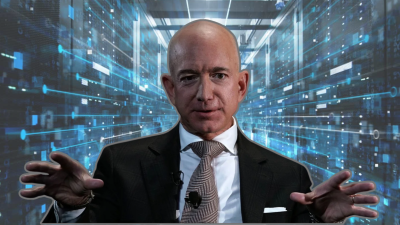
Oracle (NYSE:ORCL | ORCL Price Prediction) and Amazon (NASDAQ:AMZN) both closed fresh quarters that reframe the cloud pecking order. Oracle is signing hyperscale AI contracts at a pace that squeezes AWS from below on price. Comparing the two is a debate about who sets AI infrastructure pricing for the next decade.
OCI Sprints. AWS Compounds.
Oracle’s Q4 FY2026 showed cloud infrastructure revenue climbing 93% year over year to $5.79 billion, with total remaining performance obligations exploding to $638 billion, up 363%. Of that backlog, $75 billion is tied to bring-your-own-hardware or prepaid GPU deals. Global GPU utilization sits at 97.5%, suggesting demand is real.
Amazon’s Q2 answered with muscle. AWS revenue reached $42.23 billion, up 37%, the fastest growth in 18 quarters, at a 39.4% operating margin. CEO Andy Jassy said AI and Chips each cleared $25 billion annualized run rates, and AWS backlog reached $496 billion.
Discount Hyperscaler Meets the Incumbent
| Lens | Oracle | Amazon (AWS) |
| Core Bet | Chip-neutral, customer-funded GPUs | Custom silicon (Trainium, Graviton) |
| Pricing Angle | Lowest-cost infrastructure, outcome-based | Graviton 30% to 40% better price performance |
| Capital Load | FY26 free cash flow -$23.69B | TTM free cash flow -$7.6B |
| Key Vulnerability | Debt raise near $40B in FY27 | Enterprise price pressure from OCI |
Oracle’s pitch is that customers can prepay, bring their own GPUs, and access Oracle’s operations layer. Multicloud database revenue jumped 404% in Q4, embedded inside AWS, Google, and Microsoft regions. Amazon’s counter is vertical: Graviton is used by 98% of AWS’s top 1,000 EC2 customers, and Anthropic plus OpenAI have made multi-gigawatt Trainium commitments.
Margin Math Is the Next Referee
Watch whether Oracle’s promised high-20s ROIC at the project level shows up as gross margin recovers. Q1 FY27 guidance calls for cloud revenue growth of 58% to 64%. Track whether AWS holds that 39% margin as Oracle’s pricing bleeds into enterprise renewal talks. Amazon’s Q3 operating income guide of $22.5B to $26.5B is the first test.
Why I Lean Toward AWS for Now, With One Eye on Oracle
I trust the AWS cash engine more today. Oracle stock is down 27.98% over one year, and the FY27 financing plan of roughly $40 billion in debt and equity gives me pause. Amazon, up 9.69% over one year, funds its buildout from operating cash flow across retail, ads, and AWS. Oracle offers higher-variance turnaround torque if the RPO converts cleanly, while AWS offers scale, silicon, and margin durability.
Contact [email protected] for any questions or corrections.
Alex Sirois is a financial writer with experience spanning both retail and institutional investing. He has written for InvestorPlace and held roles at BNY Mellon and Bernstein, giving him a perspective that bridges Main Street portfolios and Wall Street analysis.
Alex holds an MBA from George Washington University and has built his career across multiple industries, including e-commerce, education, and translation — a breadth of experience that informs how he breaks down complex financial topics for everyday investors. His writing is conversational, actionable, and grounded in long-term, buy-and-hold investing principles.
At 247 Wall St., Alex focuses on delivering analysis that is both accessible and useful, with a clear emphasis on helping readers make more informed decisions with their money.