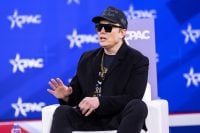
Musk’s Trillionaire Status Disappears, And Won’t Be Back Soon
Elon Musk's brief stint as the world's first trillionaire is slipping away fast, and the forces dragging him back down reveal deep cracks in two of his most powerful companies.

The trillionaire status Elon Musk posted in early June, largely on the back of a run-up in SpaceX (NASDAQ: SPCX | SPCX Price Prediction) stock after its IPO, is gone, and he’s unlikely to regain it this year. Tesla’s (NASDAQ: TSLA) stock is in trouble as it has dropped this year. SpaceX’s stock is off 8% since it went public.
A turnaround in the stock prices of at least one of the companies is almost the only way Musk gets back to $1 trillion. Based on the Bloomberg Billionaire Index, he is just above $900 billion.
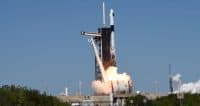
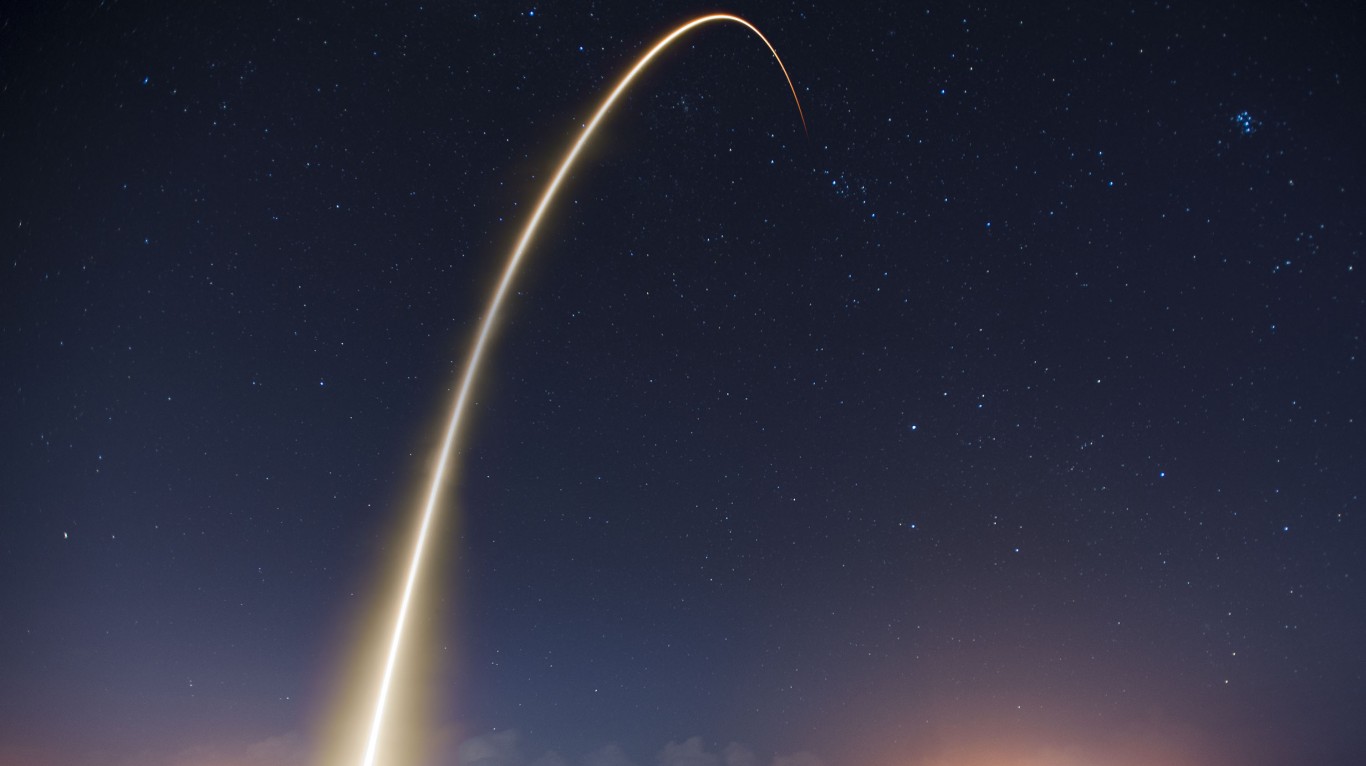
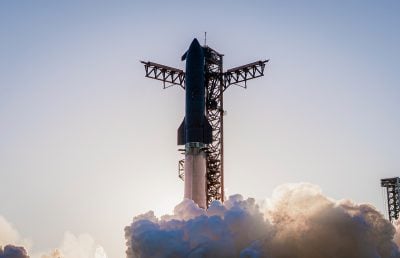
There is nothing wrong with the SpaceX rocket business or the Starlink “internet from the sky” division. SpaceX remains the only game in town for commercial satellite launches. Starlink can be used in 160 countries. It may never have any real competition. Starlink has over 11,000 low-orbit satellites, and Musk says that figure could rise into the tens of thousands.
SpaceX is dragged down by its xAI AI product. Grok, the public face of its products, is barely in a sector controlled by OpenAI, Anthropic, and several mega-tech public companies. Nevertheless, Musk continues to push forward on his mistaken assumption that he can pick up market share. Musk’s gamble, in part, is that he can spend several billion dollars moving AI data centers into orbit. That would create an edge over competitors who need to keep their data centers on the ground. There is growing resistance to these.
Musk appears willing to lease out his data centers to competitors. He has begun to do so with Alphabet (NASDAQ: GOOG) and Anthropic. It gets him cash, but it also seems like a surrender, since he’s leasing capacity.
Tesla has a worse problem. Its car sales may drop this year compared to 2025. And his robot and self-driving cab businesses don’t seem to be going anywhere. Tesla’s stock has dropped 21% since the start.
Musk is not likely to become a trillionaire this year.
Contact [email protected] for any questions or corrections.
Douglas A. McIntyre is the co-founder, chief executive officer and editor in chief of 24/7 Wall St. and 24/7 Tempo. He has held these jobs since 2006.
McIntyre has written thousands of articles for 24/7 Wall St. He is an expert on corporate finance, the automotive industry, media companies and international finance. He has edited articles on national demographics, sports, personal income and travel.
His work has been quoted or mentioned in The New York Times, The Wall Street Journal, Los Angeles Times, The Washington Post, NBC News, Time, The New Yorker, HuffPost USA Today, Business Insider, Yahoo, AOL, MarketWatch, The Atlantic, Bloomberg, New York Post, Chicago Tribune, Forbes, The Guardian and many other major publications. McIntyre has been a guest on CNBC, the BBC and television and radio stations across the country.
A magna cum laude graduate of Harvard College, McIntyre also was president of The Harvard Advocate. Founded in 1866, the Advocate is the oldest college publication in the United States.
TheStreet.com, Comps.com and Edgar Online are some of the public companies for which McIntyre served on the board of directors. He was a Vicinity Corporation board member when the company was sold to Microsoft in 2002. He served on the audit committees of some of these companies.
McIntyre has been the CEO of FutureSource, a provider of trading terminals and news to commodities and futures traders. He was president of Switchboard, the online phone directory company. He served as chairman and CEO of On2 Technologies, the video compression company that provided video compression software for Adobe’s Flash. Google bought On2 in 2009.