Musk Loses The AI Race
Elon Musk built SpaceX into a rocket empire and Starlink into a global network, but his AI ambitions may now be dragging both down. What happens when a billionaire who hates losing refuses to stop betting on a hand that…

For several months, Elon Musk’s xAI seemed to be falling behind OpenAI, Anthropic, Google’s Gemini, and the tier of AI companies just below them. Industry experts have recently reported that Musk’s Grok is well behind Claude, GPT, and Gemini in adoption. One metric people use is Apple App Store downloads. ChatGPT, Gemini, and Claude are among the top 25. Grok isn’t on the list at all.
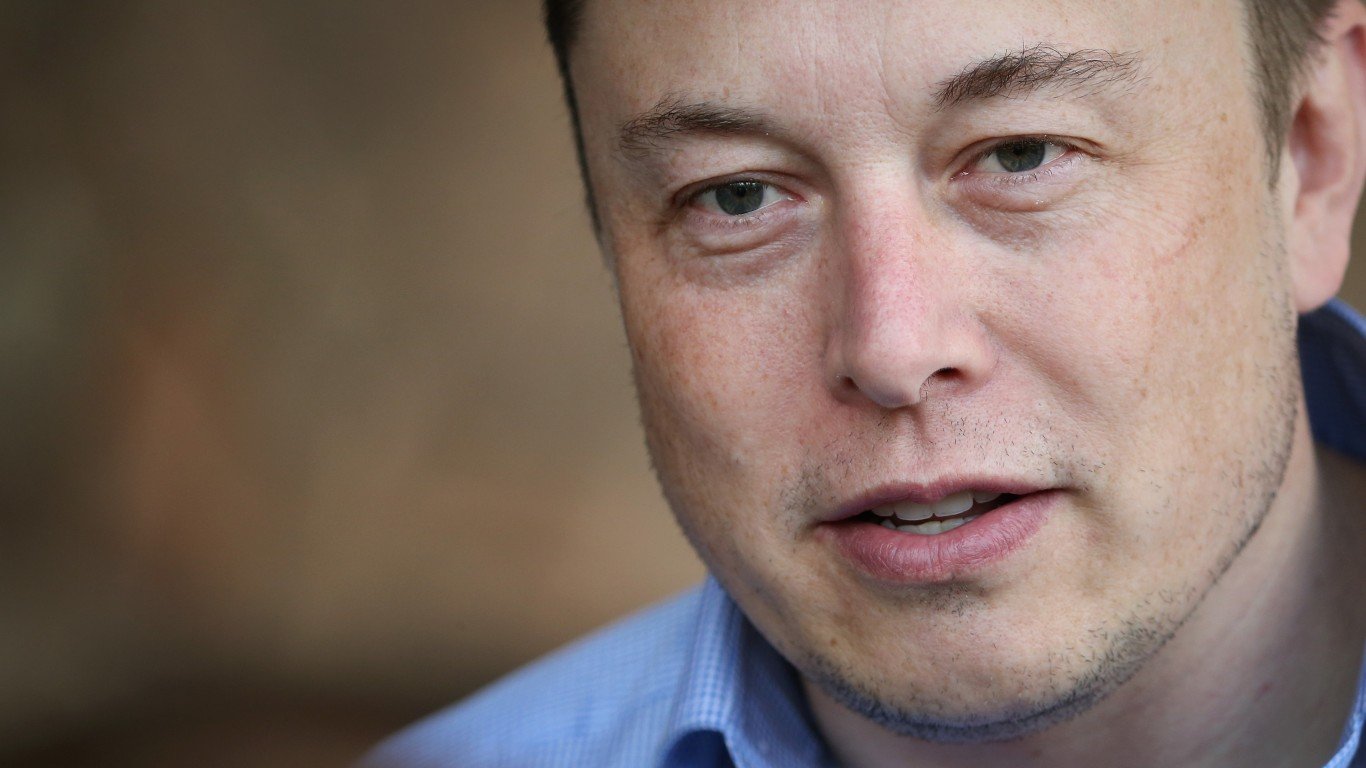
In the enterprise software business, xAI is rarely, if ever, listed as a winner in the race to do business with huge enterprises. Even SpaceX (NASDAQ: SPCX | SPCX Price Prediction) CEO Elon Musk has admitted that, while Grok has not lost the race, it is running well behind. He recently said, “SpaceXAI’s Grok Has Fallen Behind Competitors.” He added, “I’m not used to losing.”
The Grok failure does several things. Among them is that it takes one horse out of the race for AI leadership. It is already a crowded market. And it is marked by investments into the billions of dollars to build AI data centers. Mega-tech companies like Microsoft (NASDAQ: MSFT) have started to run low on cash and have turned to financial companies for assistance. BlackRock, for example, said it would put $4.9 billion into a Meta (NASDAQ: META) data center.
Musk’s problem, from the standpoint of SpaceX shareholders, is that he won’t give up. In the most recent quarter, SpaceX put $15.8 billion into AI projects. Musk said that was only a beginning. “We are building AI compute capacity at scale faster than anyone else.” Given that his primary competitors are investing hundreds of billions of dollars, SpaceX is putting its balance sheet at risk, even if Musk gets financial partners to pay some of the bills.
SpaceX’s rocket business and its Starlink division seem like industry leaders and home runs. However, SpaceX shares collapsed in mid-August. They have made a comeback but have traded flat since mid-August. Very likely, the gravity that pulls them down is Musk’s AI dream, which is almost certainly a failure.
Contact [email protected] for any questions or corrections.
Douglas A. McIntyre is the co-founder, chief executive officer and editor in chief of 24/7 Wall St. and 24/7 Tempo. He has held these jobs since 2006.
McIntyre has written thousands of articles for 24/7 Wall St. He is an expert on corporate finance, the automotive industry, media companies and international finance. He has edited articles on national demographics, sports, personal income and travel.
His work has been quoted or mentioned in The New York Times, The Wall Street Journal, Los Angeles Times, The Washington Post, NBC News, Time, The New Yorker, HuffPost USA Today, Business Insider, Yahoo, AOL, MarketWatch, The Atlantic, Bloomberg, New York Post, Chicago Tribune, Forbes, The Guardian and many other major publications. McIntyre has been a guest on CNBC, the BBC and television and radio stations across the country.
A magna cum laude graduate of Harvard College, McIntyre also was president of The Harvard Advocate. Founded in 1866, the Advocate is the oldest college publication in the United States.
TheStreet.com, Comps.com and Edgar Online are some of the public companies for which McIntyre served on the board of directors. He was a Vicinity Corporation board member when the company was sold to Microsoft in 2002. He served on the audit committees of some of these companies.
McIntyre has been the CEO of FutureSource, a provider of trading terminals and news to commodities and futures traders. He was president of Switchboard, the online phone directory company. He served as chairman and CEO of On2 Technologies, the video compression company that provided video compression software for Adobe’s Flash. Google bought On2 in 2009.