Cramer: GE Aerospace’s $12 Billion Acquisition Is ‘Going to Send This Stock Up’
Jim Cramer says GE Aerospace just made a move that flips its entire post-Culp playbook on its head, and he thinks the market is only beginning to price in what a defense-focused supply chain overhaul actually means for the stock.

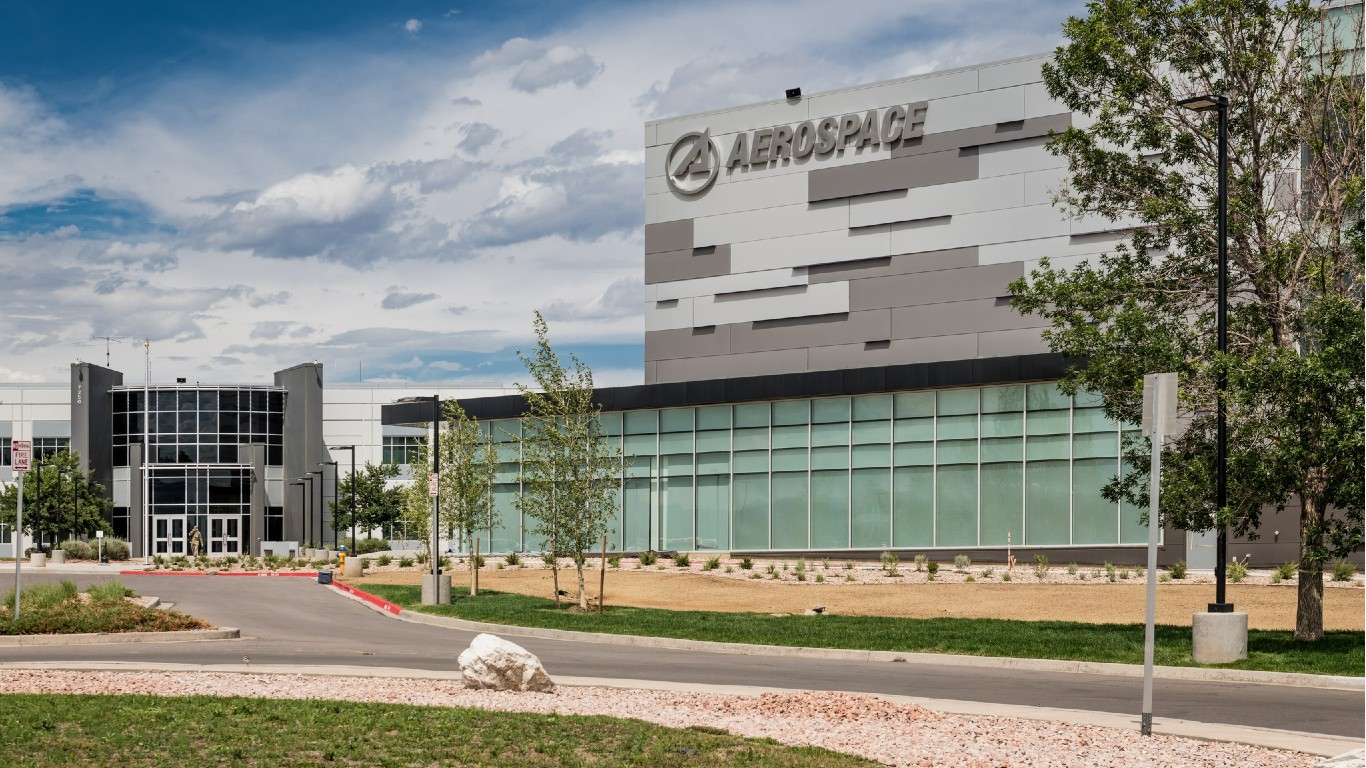
Jim Cramer used his Mad Dash on September 8, 2026, to press the case for GE Aerospace (NYSE:GE | GE Price Prediction), calling its purchase of Consolidated Precision Products the kind of consolidation the market has been asking for.
The target is a specialty castings supplier. CNBC reported that GE Aerospace will spend nearly $12 billion to bring it in-house, and CNBC identified Warburg and Berkshire Partners as the private equity sellers.
Cramer said, “GE goes in and buys Consolidated Precision Products. Now, this I think is going to send this stock up, and the reason why is because this is more defense-oriented, and everyone’s crazy to see them building up defense.”, according to CNBC
GE Aerospace closed at $334.91, up 21.94% over the past year and down 9.5% over the past month. That pullback gives the defense thesis some room to work.
What GE Bought and Why Cramer Keeps Circling Defense

Consolidated Precision Products makes the complex metal castings used in jet engines. Bringing that supply in-house addresses one of the more stubborn choke points in aerospace manufacturing.
Cramer said, “It’s a defense story. When you go over with Larry Culp, one of the things that they really turned big on is defense. They’ve got a lot of defense and they’re really great at it.”
The Defense & Propulsion Technologies segment posted $3.443 billion of revenue in Q2 2026, up 16%. The full-year operating profit outlook was raised to $1.6 billion to $1.7 billion.
Programs like the XA102 adaptive engine, the GEK1500 for small collaborative combat aircraft, and F404 orders from Turkish Aerospace and Hindustan Aeronautics give this segment a pipeline that a captive castings supplier can feed for years.
Buying Rather Than Shedding Is a Real Reversal
Cramer said, “It’s good to see them instead of constantly getting rid of stuff. Now they’re starting to acquire and there are a lot of companies that have been spun off that are kind of doing nothing.”
Under Larry Culp, the old GE conglomerate was split into aerospace, healthcare, and power. Culp spent years shrinking the balance sheet and simplifying operations.
A twelve-billion-dollar bolt-on flips that script. It says management now sees more value in owning the supply chain than in staying capital-light.
Whether that changes earnings materially is a harder question. GE Aerospace already guides to adjusted EPS of $7.65 to $7.85 and free cash flow of $8.9 billion to $9.2 billion for 2026, so a castings deal moves margins over time rather than overnight.
Where Commercial Aviation Fits in the Picture
Commercial Engines & Services posted revenue of $9.731 billion in Q2 2026, up 27%, with LEAP deliveries up 41% in the first half.
Culp told analysts, “It’s much more supply side challenge than it is demand” for the back half and beyond. Departures growth has been roughly flat, so the aftermarket carries the load.
Backlog exceeds $210 billion, about $170 billion of which is commercial services. That visibility is long, and much of it is already priced in.
Owning castings directly converts more of that backlog into delivered engines without waiting on outside suppliers. That is where the acquisition math starts to compound.
Private Equity Turning Seller Again Is the Bigger Signal
Cramer said, “I thought this was a great acquisition. And it’s also great to see the PE firms starting to unload some things because we know we want them liquid so they can do more buying.”
Warburg and Berkshire Partners cashing out of a quality industrial asset suggests private buyers are transacting again at strategic prices, according to CNBC. That matters for anyone who owns stocks broadly, because it hints at a thaw in deal flow.
For GE specifically, the deal lands against a Q2 2026 report of $2.02 adjusted EPS versus $1.8565 consensus, per the company’s 8-K.
The word “defense” is doing some of the work in the stock reaction, and the segment economics support the label.
Is GE Stock a Buy?

The setup is favorable. DPT margins are climbing, commercial services keep compounding, and management now has a captive castings supplier feeding both sides of the business.
The catch is valuation after a 433.13% five-year run. A twelve-billion-dollar deal also absorbs cash that could have funded buybacks.
GE screens attractively on the recent pullback for investors seeking defense and aftermarket exposure in a single ticker, while those who already built a position last year have less urgency to add here. I’d still tag it a buy for the long run.
Contact [email protected] for any questions or corrections.
Omor Ibne Ehsan is a writer at 24/7 Wall St. He is a self-taught investor with a focus on growth, cyclical, and dividend equities that have strong fundamentals, value, and long-term potential. He also has an interest in high-risk, high-reward investments such as penny stocks.